Politics
House Breaks Stalemate After Two and a Half Months

Clear Facts
- The House passed a Department of Homeland Security funding bill on Saturday, ending a 76-day funding standoff
- The bill passed 286-128 with strong bipartisan support, including 128 Republicans and 158 Democrats
- The final agreement removes controversial language targeting non-governmental organizations involved in border operations
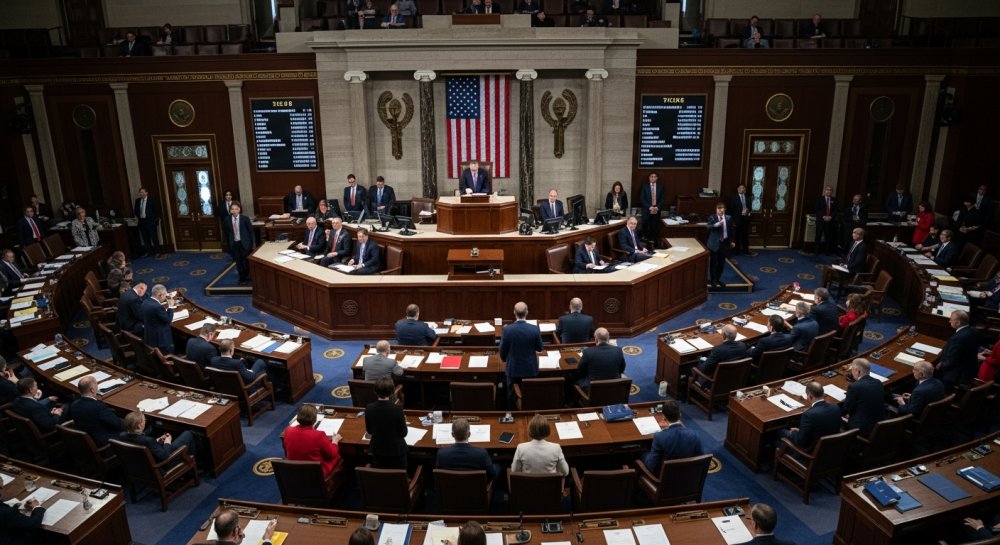
The House of Representatives finally broke through a prolonged impasse Saturday, passing critical funding legislation for the Department of Homeland Security after more than two months of political gridlock. The vote of 286-128 demonstrates broad bipartisan support, with 128 Republicans joining 158 Democrats to secure the department’s financial future.
The breakthrough came after weeks of intense negotiations over contentious provisions that had repeatedly blocked progress. Earlier versions of the funding bill contained language that would have restricted non-governmental organizations from receiving federal funds if they were deemed to be facilitating illegal immigration at the border.
That provision proved to be the primary sticking point, drawing opposition from Democrats and moderate Republicans who argued it would hamper humanitarian efforts. The final bill stripped out the controversial NGO language, clearing the path for passage.
House Speaker Mike Johnson addressed the resolution of the standoff, emphasizing unity within the Republican conference.
“We’re all working on the same team,” Johnson said.
The 76-day funding lapse represents one of the longest periods without full appropriations for the Department of Homeland Security in recent memory. During this time, the department operated under continuing resolutions and existing authorities, but faced limitations on new initiatives and hiring.
The legislation now moves to the Senate, where it is expected to receive swift consideration. Senate leadership from both parties have indicated support for the compromise measure, suggesting quick passage is likely.
For conservatives who had pushed for stricter border security measures and accountability for organizations they believe enable illegal immigration, the removal of the NGO restrictions represents a significant concession. However, pragmatic voices within the Republican conference argued that continued gridlock would ultimately harm border security operations more than the compromise bill.
The funding package includes appropriations for Immigration and Customs Enforcement, Customs and Border Protection, the Coast Guard, the Secret Service, FEMA, and other critical DHS components. With border security remaining a top priority for Republican voters heading into the 2026 election cycle, the department’s full funding provides resources for enforcement operations.
The bipartisan nature of the final vote—with more than two-thirds of the House supporting the measure—indicates that despite deep divisions on immigration policy, members recognized the necessity of funding core homeland security functions. The 128 Republicans who voted yes outnumbered the GOP members who opposed the compromise.
As the bill heads to the Senate, attention will turn to whether additional amendments or changes might be proposed, though the strong House coalition suggests momentum for the current text. The prolonged standoff and its resolution underscore the ongoing challenge of balancing policy priorities with the practical need to fund government operations.
Let us know what you think, please share your thoughts in the comments below.
