Finance
Federal Reserve Split: Four Members Break With Powell on Final Rate Decision

Clear Facts
- Four Federal Reserve officials dissented from the March 2025 decision to hold interest rates steady at 4.25%-4.50%
- The dissenters advocated for lowering rates by a quarter percentage point to 4.00%-4.25%
- This marks an unusual level of division within the Federal Reserve during Powell’s tenure
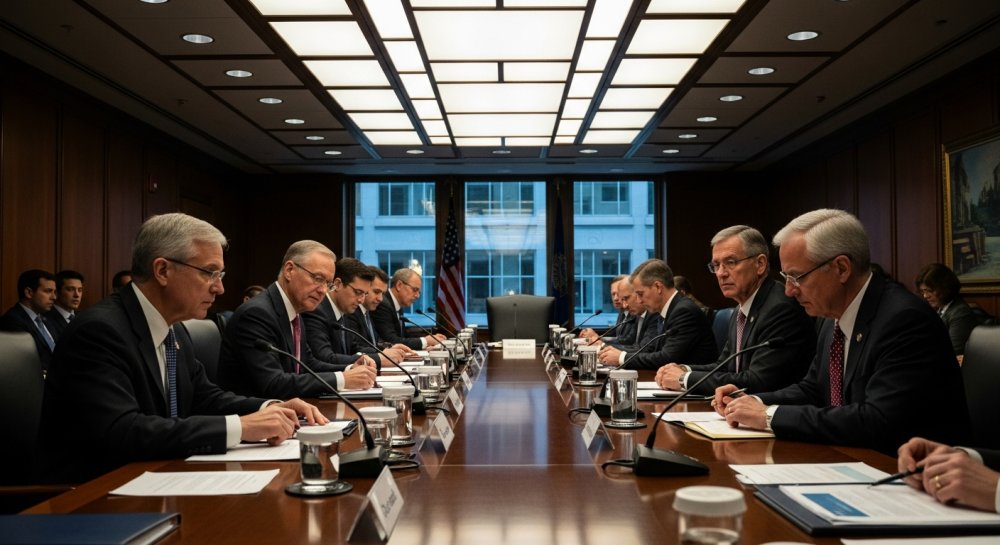
Four Federal Reserve officials publicly broke ranks with Chairman Jerome Powell during the central bank’s March 2025 meeting, voting against the decision to maintain current interest rates. The unusual split reveals growing internal tensions over monetary policy as Powell’s leadership faces unprecedented scrutiny.
The Federal Open Market Committee voted to hold the federal funds rate at 4.25% to 4.50%, but four members dissented, advocating instead for a quarter-point reduction. The dissenters argued for “additional adjustments to the target range for the federal funds rate,” signaling their belief that economic conditions warrant looser monetary policy.
This level of dissent represents a significant fracture within the Fed’s leadership structure. During most of Powell’s chairmanship, the committee has maintained relative unity on major policy decisions. The four-member opposition suggests deepening disagreements about the appropriate path forward for the American economy.
The split comes at a critical juncture for the Federal Reserve. After raising rates aggressively to combat inflation, the central bank now faces pressure from multiple directions—lawmakers demanding relief for borrowers, businesses seeking lower capital costs, and savers wanting sustained higher returns.
Conservative economists have long criticized the Federal Reserve’s reactive approach to inflation, arguing that the central bank’s delayed response to rising prices damaged American families and businesses. The current division within the Fed may reflect these ongoing debates about the institution’s effectiveness and leadership.
The dissenting votes raise questions about Powell’s ability to maintain consensus during his final months as chairman. The Federal Reserve traditionally operates through careful consensus-building, and this public split could signal diminished influence for the outgoing chairman.
For American families and businesses, the implications are clear: uncertainty about future interest rates continues. Mortgage rates, business loans, and consumer credit costs all hinge on Federal Reserve decisions, and internal discord at the central bank creates additional unpredictability in financial planning.
The four dissenters’ push for lower rates suggests they see economic weakness ahead that justifies easier monetary conditions. This more dovish stance contrasts with Powell’s apparent preference for maintaining restrictive policy to ensure inflation remains under control.
Let us know what you think, please share your thoughts in the comments below.
