Crime
Federal Employee Allegedly Stole Quarter Million While Claiming Impossible Work Hours

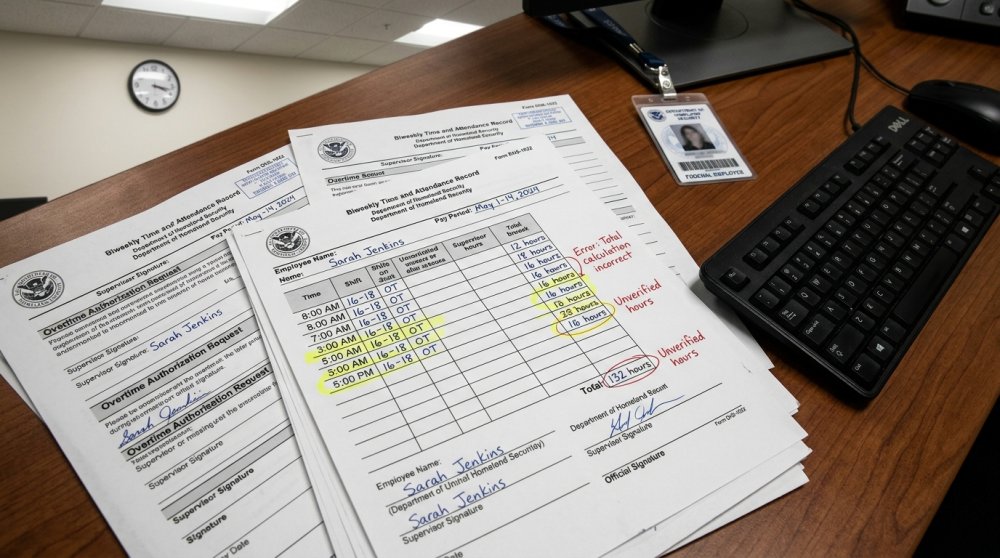
Clear Facts
- A Department of Homeland Security employee allegedly defrauded the government of over $250,000 by falsifying time records
- The employee claimed to work shifts exceeding 24 hours in a single day, including one alleged 33-hour workday
- Federal prosecutors have charged the individual with theft of government funds and wire fraud
A Department of Homeland Security employee faces federal charges after allegedly stealing more than a quarter million dollars from taxpayers through an elaborate timekeeping fraud scheme that included claims of working 33 hours in a single day.
The case highlights ongoing concerns about fraud, waste, and abuse within federal agencies. According to federal prosecutors, the employee systematically falsified time and attendance records over an extended period to receive payment for hours never worked.
The scheme involved submitting time records that claimed work shifts physically impossible to complete, including days where the employee allegedly logged more hours than exist in a 24-hour period. One particularly egregious example cited by prosecutors showed a claim for 33 consecutive hours of work.
Federal investigators uncovered the fraud through routine auditing procedures designed to detect anomalies in payroll records. The investigation revealed a pattern of inflated hours and fabricated overtime claims that netted the employee approximately $250,000 in unauthorized payments.
The charges include theft of government funds and wire fraud, both serious federal offenses that carry substantial penalties. If convicted, the defendant could face significant prison time and be required to make full restitution to taxpayers.
This case underscores the importance of rigorous oversight and accountability measures within federal agencies. Taxpayers expect their hard-earned money to be spent responsibly, not stolen by dishonest government employees exploiting weak internal controls.
The Department of Homeland Security has not commented on what administrative reforms, if any, will be implemented to prevent similar fraud in the future. Questions remain about how such obviously fraudulent claims went undetected for so long and what supervisory failures allowed the scheme to continue.
Government watchdog organizations have long warned about inadequate financial controls and oversight at federal agencies. This case provides a concrete example of how lax supervision can enable employees to steal from taxpayers with impunity until patterns become too obvious to ignore.
As federal spending continues to reach record levels, ensuring proper stewardship of taxpayer dollars must be a top priority. Cases like this demonstrate the urgent need for stronger accountability mechanisms and consequences for those who betray the public trust.
Let us know what you think, please share your thoughts in the comments below.

Mark
September 6, 2026 at 7:30 am
Really, does this surprise anyone?