World News
Drone Warfare Escalates Between Russia and Ukraine, Civilian Casualties Mount

Clear Facts
- Ukrainian drone strikes killed two civilians in Russian territory during overnight attacks
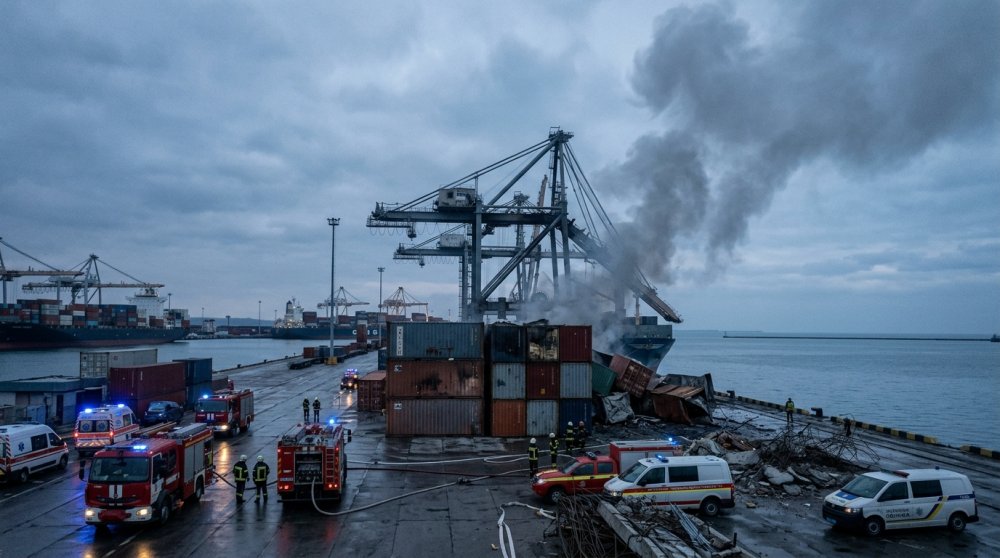
- Russia responded with drone assaults targeting Ukraine’s main Black Sea port infrastructure
- Both nations continued exchanging waves of unmanned aerial vehicle strikes against civilian and military targets
The grinding conflict between Russia and Ukraine entered a new phase of intensity as both sides escalated drone warfare operations, leaving civilians dead and critical infrastructure damaged on both sides of the border. Overnight strikes demonstrated the expanding reach and lethality of unmanned aerial systems in modern warfare.
Ukrainian drone operators successfully penetrated Russian airspace, killing two civilians in strikes that Moscow condemned as terrorism against non-combatants. The attacks mark a continuation of Kyiv’s strategy to bring the war to Russian territory, a tactic that has drawn both support and criticism from Western allies.
Russian forces retaliated by launching extensive drone swarms targeting Ukraine’s primary Black Sea port facilities. The strategic port infrastructure serves as a vital economic lifeline for Ukraine, handling grain exports and humanitarian supplies that support the nation’s war-battered economy.
The mutual escalation raises serious concerns about the expanding scope of the conflict and its impact on civilian populations. Both nations have invested heavily in drone technology, recognizing unmanned systems as cost-effective alternatives to manned aircraft and precision missiles.
Military analysts note that drone warfare allows both sides to strike deep into enemy territory without risking pilot casualties, but the strategy increasingly puts civilian areas in the crosshairs. The overnight exchanges demonstrate how technological advancement in warfare can blur the lines between military and civilian targets.
Western intelligence sources confirm that both Russia and Ukraine have dramatically expanded their drone production capabilities since the conflict began. Iran has supplied Russia with significant quantities of Shahed drones, while Ukraine has developed domestic production alongside Western-supplied systems.
The port strikes threaten Ukraine’s ability to export agricultural products, a concern for global food security given the nation’s role as a major grain supplier. International shipping companies have already expressed anxiety about operating in the Black Sea region under these conditions.
The Biden administration has provided Ukraine with billions in military aid, including counter-drone systems, but the latest attacks demonstrate the difficulty of defending against swarms of low-cost unmanned aircraft. Traditional air defense systems struggle to efficiently engage numerous small, slow-moving targets.
As winter approaches, both nations appear committed to continuing their drone campaigns despite the mounting civilian toll. The strategy reflects the grinding, attritional nature of the conflict, now entering its third year with no diplomatic resolution in sight.
Let us know what you think, please share your thoughts in the comments below.
