Politics
Defense Secretary Overrules Navy Chief on Taiwan Arms Delivery Amid Iran Conflict

Clear Facts
- Defense Secretary Pete Hegseth publicly contradicted Navy Secretary Brian Ferguson’s decision to pause weapons shipments to Taiwan during ongoing Iran operations
- Ferguson had delayed delivery of advanced air defense systems citing the need to prioritize resources for Iran conflict
- Hegseth emphasized that Taiwan arms sales should proceed independently of Middle East operations, calling the two situations unrelated
Defense Secretary Pete Hegseth has broken ranks with his Navy Secretary over a controversial decision to delay critical weapons deliveries to Taiwan while U.S. forces engage Iranian targets in the Middle East.
Navy Secretary Brian Ferguson announced the temporary pause of advanced air defense system shipments to Taiwan last week, arguing that ongoing operations against Iran required full attention to regional priorities. The decision sparked immediate concern among defense hawks who view Taiwan as a critical bulwark against Chinese aggression in the Indo-Pacific.
Hegseth got a question on Taiwan’s arms sales in this Q and A session with allies’ delegation’s. ⁰⁰The question was on the Navy Sec. recently saying the U.S. paused weapons shipments to Taiwan because of the war in Iran. ⁰⁰Hegseth responded 9:24 am local⁰⁰Hegseth said he is…
— Kellie Meyer (@KellieMeyerNews) May 30, 2026
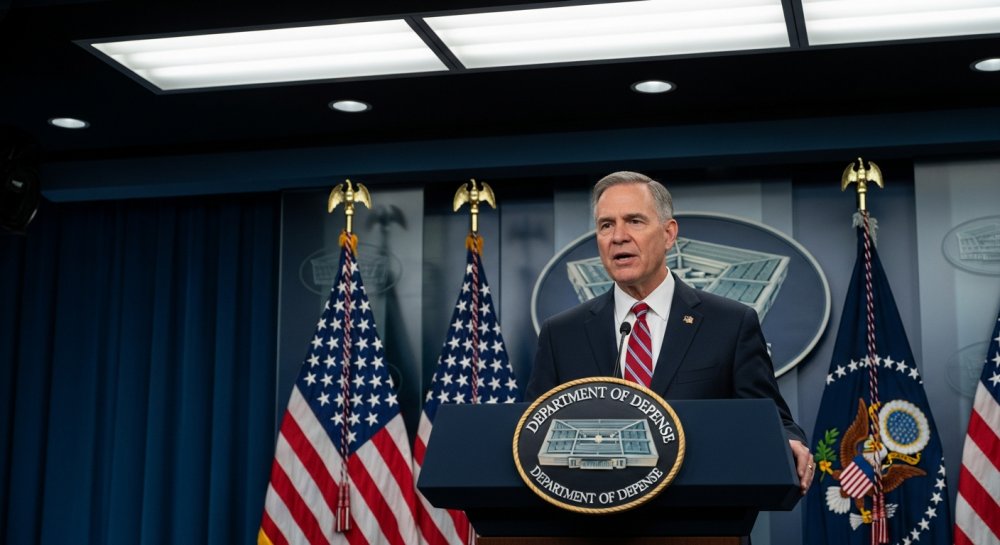
“I would not couple the two in any way,” Hegseth stated during a Pentagon briefing when asked about Ferguson’s decision.
The Defense Secretary praised Ferguson as “fantastic” but made clear his disagreement with the policy approach. Hegseth emphasized that America’s commitment to Taiwan must remain steadfast regardless of other global commitments.
“Our adversaries are watching how we handle multiple theaters simultaneously,” Hegseth explained. “Pausing Taiwan deliveries sends exactly the wrong message to Beijing at exactly the wrong time.”
The weapons package in question includes advanced Patriot missile components and radar systems that Taiwan has been awaiting for months. Congressional Republicans have expressed frustration with the delay, noting that China has increased military exercises around the island in recent weeks.
Senator Tom Cotton praised Hegseth’s position, calling it “the right call for American security interests.”
“We cannot allow operational challenges in one region to create strategic vulnerabilities in another,” Cotton said in a statement.
The public disagreement between Hegseth and Ferguson represents an unusual break in Pentagon messaging. Defense officials typically present a united front on major policy decisions, particularly those involving sensitive allies like Taiwan.
Ferguson defended his original decision in a follow-up statement, noting that “resource allocation during active combat operations requires difficult choices.” However, he indicated the pause would be reviewed in light of the Defense Secretary’s position.
China’s Foreign Ministry quickly seized on the initial pause announcement, claiming it demonstrated American unreliability as a security partner. Hegseth’s swift reversal appears designed to counter that narrative before it takes root in Indo-Pacific capitals.
The incident highlights the complex challenges facing U.S. defense planners as they attempt to maintain deterrence across multiple regions simultaneously. With threats from China, Russia, Iran, and North Korea demanding attention, the Pentagon faces difficult questions about force allocation and priority-setting.
Taiwan’s defense ministry declined to comment directly on the internal U.S. debate but emphasized the importance of maintaining delivery schedules for defensive weapons systems.
Let us know what you think, please share your thoughts in the comments below.
