Politics
Former Democratic Governor Breaks Ranks on Sanctuary Law Clash

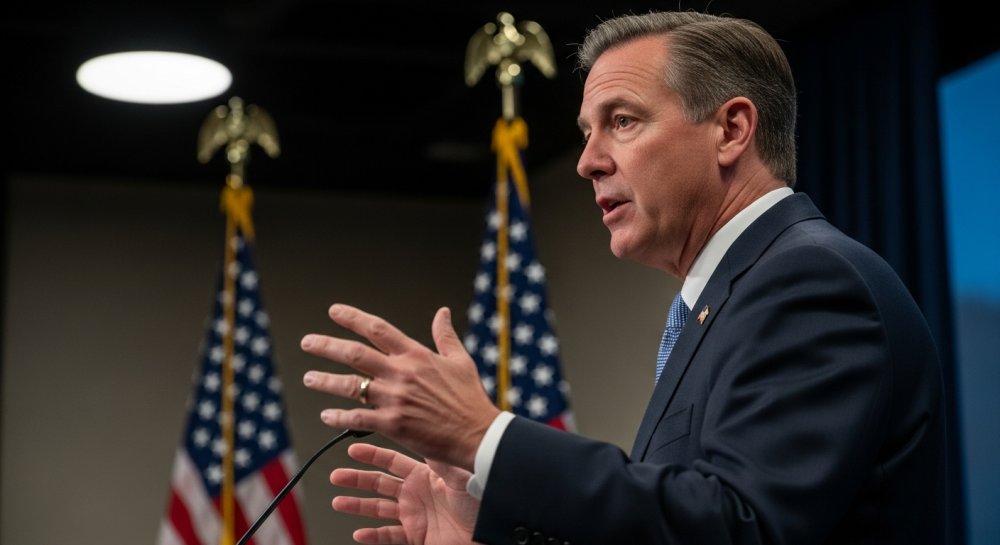
Clear Facts
- Former New York Governor Andrew Cuomo publicly criticized current Governor Kathy Hochul’s sanctuary policies that shield illegal immigrants from federal immigration authorities
- Cuomo stated federal law supersedes state and local government authority on immigration enforcement matters
- The clash highlights growing tensions between Democratic state leadership and federal immigration enforcement under changing political dynamics
Former New York Governor Andrew Cuomo has emerged as an unexpected voice of criticism against his Democratic successor, Governor Kathy Hochul, over the state’s sanctuary policies that obstruct federal immigration enforcement. The rare intra-party rebuke centers on New York’s laws that prevent state and local authorities from cooperating with Immigration and Customs Enforcement (ICE).
Cuomo made clear his position on the constitutional hierarchy of government authority during his public statements. “The federal government supersedes the local government,” he declared, taking direct aim at policies championed by Hochul and progressive Democrats in the state legislature.
Ex-Dem NY governor gives Hochul history lesson on her anti-ICE sanctuary law: ‘Egregious mistake’ https://t.co/cl4Br95yjP pic.twitter.com/8Zjat0z0uU
— New York Post (@nypost) May 24, 2026
The former governor’s remarks represent a significant break from the Democratic establishment’s unified opposition to federal immigration enforcement. New York’s sanctuary laws have become a flashpoint in the national debate over immigration policy, with conservative critics arguing these policies protect dangerous criminals and undermine national security.
Under Hochul’s leadership, New York has maintained and defended policies that limit cooperation between local law enforcement and federal immigration authorities. These policies prevent local police from honoring ICE detainer requests and restrict information sharing about the immigration status of individuals in custody.
Cuomo’s constitutional argument echoes long-standing conservative criticism of sanctuary jurisdictions. The Supremacy Clause of the U.S. Constitution establishes federal law as “the supreme law of the land,” a principle that has been invoked by those who argue states cannot nullify federal immigration enforcement.
The timing of Cuomo’s criticism comes as immigration enforcement has returned to the forefront of American politics. Federal authorities have intensified efforts to enforce immigration laws, creating friction with Democratic-led states and cities that have erected legal barriers to cooperation.
Conservative advocates have long argued that sanctuary policies endanger public safety by releasing criminal aliens back into communities rather than transferring them to federal custody for deportation. These concerns have gained renewed attention following high-profile crimes committed by individuals who were shielded from ICE by local sanctuary policies.
Hochul’s office has defended the state’s approach as protecting immigrant communities and maintaining trust between law enforcement and residents. However, critics contend these policies prioritize political ideology over public safety and the rule of law.
The public split between Cuomo and Hochul reveals potential fractures within the Democratic Party over immigration enforcement. While progressive activists demand absolute non-cooperation with federal immigration authorities, some Democrats recognize the legal and political vulnerabilities of defying federal law.
Cuomo himself signed sanctuary-style policies into law during his tenure as governor, making his current criticism particularly noteworthy. His shift suggests recognition of the constitutional and practical problems inherent in state resistance to federal immigration enforcement.
The debate over sanctuary policies extends beyond New York to dozens of jurisdictions nationwide. States and cities with similar laws face potential legal challenges and loss of federal funding, consequences that have become more likely as immigration enforcement priorities shift.
For traditional conservatives, the principle at stake is straightforward: no state or locality has the authority to nullify federal law or obstruct its enforcement. The constitutional framework established by the Founders created a system where federal authority on matters like immigration and border security takes precedence over state preferences.
As this debate continues, the tension between state sanctuary policies and federal immigration enforcement authority appears headed for further legal and political confrontation. Cuomo’s willingness to challenge his own party’s orthodoxy on this issue may signal growing recognition that sanctuary policies rest on shaky constitutional ground.
Let us know what you think, please share your thoughts in the comments below.
