U.S. News
Treasury Department Considers Historic $250 Bill for Nation’s Semiquincentennial

Clear Facts
- The Treasury Department is reportedly exploring the creation of a $250 denomination bill
- The proposed bill would feature President Donald Trump’s portrait
- The initiative is connected to America’s 250th anniversary celebration in 2026
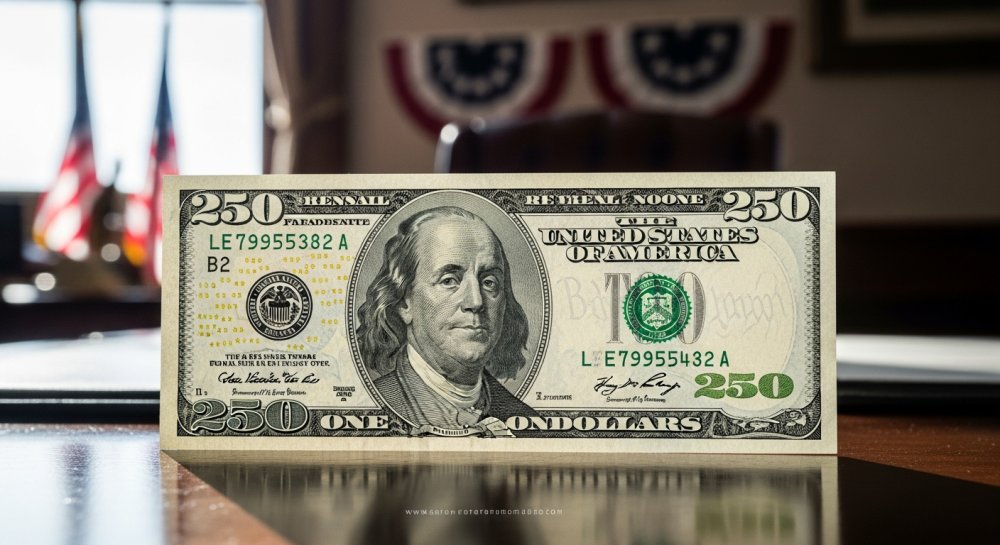
The United States Department of the Treasury is reportedly considering the introduction of a new $250 bill as part of the nation’s semiquincentennial celebration. According to reports, the proposed currency would bear President Donald Trump’s portrait in honor of America’s 250th anniversary.
The initiative represents a significant departure from current U.S. currency denominations, which currently cap at the $100 bill for general circulation. While higher denomination bills existed historically—including $500, $1,000, $5,000, and $10,000 notes—these were discontinued in 1969.
🇺🇸 The $250 Trump Banknote: What You Need to Know
A $250 bill? 💵 Trump appointees are pushing for a new banknote featuring his portrait to mark the U.S. Semiquincentennial in 2026.
Here is the quick breakdown:
The Bill: Rep. Joe Wilson introduced the "Donald J. Trump $250… pic.twitter.com/WyjM3aAHct
— Commentary Donald J Trump Truth Social Posts On X (@TrumpTruthOnX) May 28, 2026
The timing of the proposal aligns with America’s 250th anniversary of independence, a milestone that has prompted various commemorative initiatives across federal agencies. The semiquincentennial marks a quarter millennium since the signing of the Declaration of Independence in 1776.
Treasury officials have not yet issued formal statements confirming the proposal’s status or timeline. Questions remain about whether such a bill would enter general circulation or serve primarily as a commemorative issue for collectors and historical purposes.
The selection of portraits for U.S. currency traditionally involves careful consideration of historical significance and congressional approval. Current bills feature presidents and founding fathers including George Washington, Thomas Jefferson, Abraham Lincoln, Alexander Hamilton, Andrew Jackson, Ulysses S. Grant, and Benjamin Franklin.
Any new currency denomination would require coordination between the Treasury Department, the Federal Reserve, and the Bureau of Engraving and Printing. The proposal would also need to address practical considerations including production costs, circulation logistics, and potential impacts on monetary policy.
Let us know what you think, please share your thoughts in the comments below.
