Politics
Supreme Court Delivers Crushing Blow to Virginia Democrats’ Latest Scheme

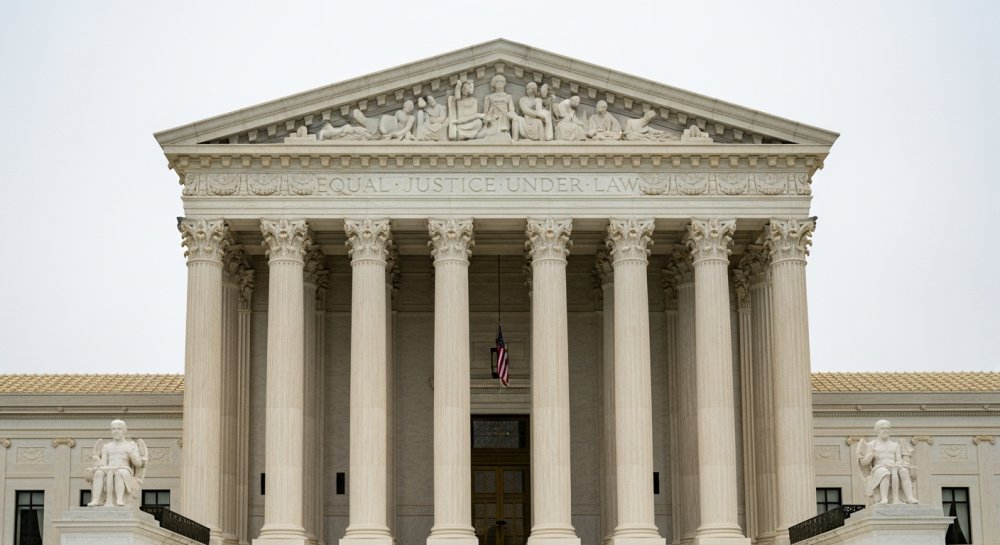
Clear Facts
- The U.S. Supreme Court unanimously rejected Virginia Democrats’ attempt to manipulate legislative district boundaries
- The ruling upholds the Virginia Supreme Court’s earlier decision protecting the integrity of the redistricting process
- This decision blocks Democrats from gaining additional seats through judicial intervention in the redistricting process
The United States Supreme Court has delivered a decisive rebuke to Virginia Democrats who attempted to seize additional political power through the court system. In a unanimous decision, the nation’s highest court affirmed the Virginia Supreme Court’s ruling, effectively shutting down what many conservatives view as a brazen attempt to manipulate the state’s legislative map for partisan advantage.
The case centered on Virginia Democrats’ efforts to challenge the state’s legislative district boundaries through litigation rather than the traditional legislative process. Democrats had hoped federal courts would intervene and redraw districts in their favor, potentially shifting the balance of power in the state legislature.
Enough with the false flag operation that you are desperately pushing @SpanbergerForVA
You told Virginia voters last fall that you wouldn’t redistrict our state and silence millions of voters, but you lied and tried to do it anyway.
You knew from the very start that your scheme… https://t.co/uoPWBEDUSO
— Jason Miyares (@JasonMiyaresVA) May 16, 2026
The US Supreme Court denies Virginia’s bid to revive their 10D-1R congressional map. No public dissents were given.
6D-5R congressional map is still in effect. https://t.co/nUOFvMwf4g pic.twitter.com/VUbgMw9gOZ
— Politics & Poll Tracker 📡 (@PollTracker2024) May 16, 2026
The Supreme Court’s decision represents a significant victory for constitutional governance and the rule of law. By refusing to allow judicial activism to override the established redistricting process, the Court has reinforced the principle that political disputes should be resolved through legitimate democratic channels, not courtroom maneuvering.
Legal experts familiar with the case praised the Court’s decision for its clarity and firmness. One observer noted the ruling sends a clear message about the limits of judicial intervention in legislative matters.
“Wisely, the Supreme Court of the United States has confirmed the judgment of the Supreme Court of Virginia,”
a statement from supporters of the decision read.
The unanimous nature of the decision is particularly noteworthy, demonstrating that even the Court’s liberal justices recognized the overreach inherent in the Democrats’ legal strategy. This level of consensus suggests the case presented clear constitutional issues that transcended typical ideological divisions on the bench.
For Virginia Republicans and conservatives nationwide, the ruling represents more than just a legal victory. It serves as a bulwark against progressive attempts to achieve through litigation what they cannot accomplish at the ballot box or through legitimate legislative processes.
The decision also has implications beyond Virginia’s borders. Similar redistricting disputes have emerged in other states where Democrats have sought to use federal courts to overturn state-level decisions on legislative boundaries. This ruling establishes important precedent that may influence how those cases are resolved.
Virginia’s redistricting process has been contentious in recent years as the state’s political landscape has shifted. Democrats have made significant gains in the state, but this Supreme Court decision confirms that such gains must be achieved through winning elections and persuading voters, not through legal manipulation of district lines.
The ruling comes at a critical time as states across the country prepare for future redistricting cycles. By establishing clear boundaries on judicial intervention, the Supreme Court has helped ensure that the redistricting process remains in the hands of elected representatives and the people, where the Constitution intended it to be.
Conservative legal scholars have long argued that excessive judicial involvement in redistricting undermines democratic accountability and separation of powers. This decision vindicates that position and reinforces the principle that courts should not become political actors in the redistricting process.
Let us know what you think, please share your thoughts in the comments below.
