Health
Your Morning Grapefruit Could Be Sabotaging Your Medications

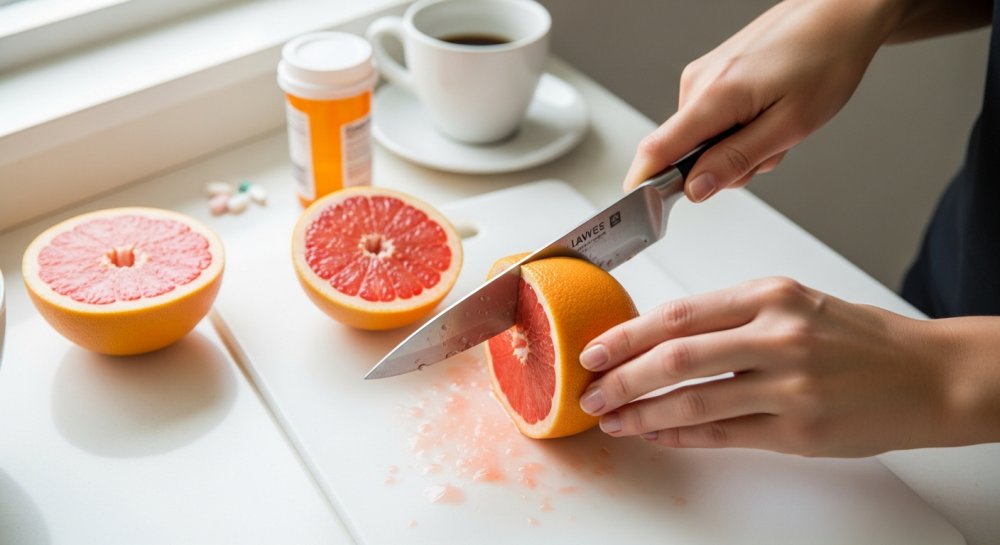
Clear Facts
- Grapefruit contains chemicals that block digestive enzymes, allowing higher concentrations of medications and caffeine to enter the bloodstream
- A Florida coffee chain is testing a drink combining espresso and grapefruit juice to extend caffeine effects, despite inconclusive scientific evidence
- Health experts warn the interaction between grapefruit and prescription drugs like statins can be dangerous, far outweighing any minor energy boost
Americans seeking to maximize their morning caffeine kick are turning to an unlikely source: grapefruit. But health experts are sounding the alarm about hidden dangers that come with this trendy combination.
The citrus fruit contains compounds that interfere with how your body processes both medications and stimulants.
Grapefruit blocks a key enzyme in the digestive system responsible for breaking down certain substances. When this enzyme is inhibited, more of whatever you’ve consumed enters your bloodstream. Drug concentrations can spike to dangerous levels, according to Harvard Medical School.
Buddy Brew Coffee, a Florida-based chain, is capitalizing on this chemical interaction with their “Buddy Brew Screw” — a shot of espresso served alongside grapefruit juice and a spoonful of salt to cut the bitterness. The concept is simple: slow down caffeine metabolism to make the buzz last longer.
But the science tells a different story.
Michelle Francl, a chemistry professor at Bryn Mawr College, says consumers would need to drink substantial amounts of grapefruit to feel any extended effect. Even then, results aren’t guaranteed.
“Compounds in grapefruit juice can theoretically slow caffeine metabolism, but the actual effect is far from a guaranteed energy boost,”
Lauren Manaker, a South Carolina-based dietitian nutritionist, explained to Fox News Digital.
Multiple studies examining the relationship between grapefruit juice and caffeine have proven inconclusive. Individual metabolism varies widely — some people naturally clear caffeine faster than others.
Interestingly, eating vegetables like broccoli, cabbage and Brussels sprouts may actually speed up caffeine processing, Francl noted.
Manaker warned that any potential extension of your coffee buzz is “likely to be very minor” and will differ from person to person.
“From a practical standpoint, this biochemical interaction is simply not strong enough to make a noticeable difference in your daily energy levels,”
she said.
The real concern, according to health professionals, isn’t about energy levels at all.
“Most importantly, grapefruit alters the absorption of many common medications, making this a potentially dangerous trend if you take certain prescription drugs, like statins,”
Manaker emphasized.
Grapefruit does offer legitimate health benefits on its own. The fruit is rich in vitamin C and antioxidants. But Americans taking prescription medications need to exercise caution before adding grapefruit or grapefruit juice to their diet.
Moderate caffeine consumption can boost mood and energy levels while enhancing cognitive and physical performance, according to the Cleveland Clinic. Research suggests it may lower the risk of diseases including Alzheimer’s and Parkinson’s, and it’s effective for headache relief.
However, caffeine can also cause increased heart rate, anxiety and digestive problems in some individuals.
The bottom line: There’s no magic fruit that will safely extend your morning coffee buzz. And for Americans on prescription medications, mixing grapefruit with their daily routine could do far more harm than good.
Let us know what you think, please share your thoughts in the comments below.
