U.S. News
Federal Agents Move to Seize 900 Bison as Ranchers Cry Foul

Clear Facts
- Federal authorities are attempting to remove approximately 900 bison from Grand Canyon National Park, sparking conflict with ranchers and conservationists.
- Ranchers and local stakeholders accuse the federal government of overreach and politically motivated enforcement actions.
- The dispute centers on grazing rights, land management authority, and the protection of the iconic American bison population.
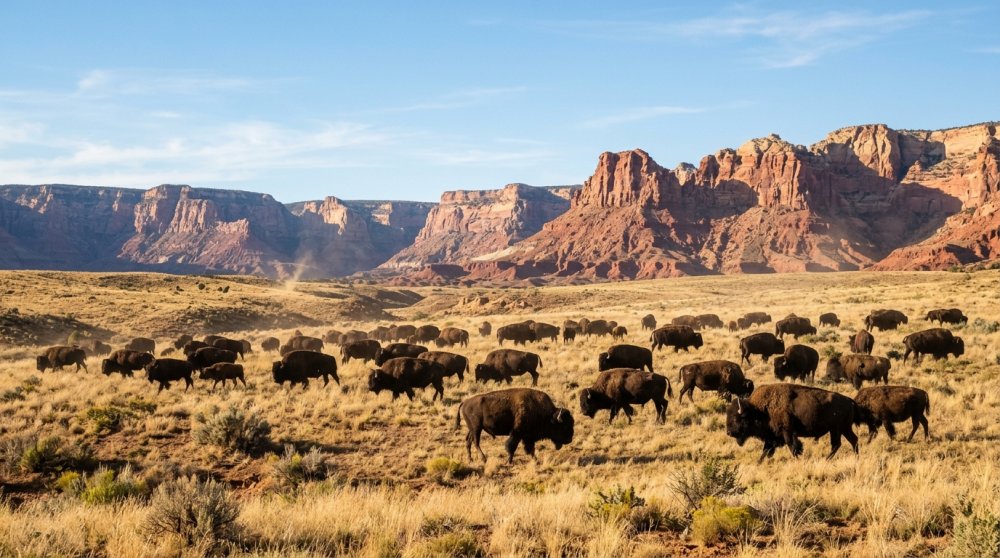
A contentious showdown is unfolding in Arizona as federal authorities, ranchers, and conservationists clash over the fate of nearly 900 bison roaming near Grand Canyon National Park. The conflict has ignited fierce debates about federal overreach, property rights, and wildlife management on Western lands.
The bison herd, which has grown significantly in recent years, has become the center of a bitter dispute between the National Park Service and local ranching operations that have long maintained grazing agreements in the region. Federal officials claim the bison threaten natural resources and water supplies, while ranchers argue the government is trampling on their contractual rights and historical use of the land.
“This is illegal and politically motivated,” critics of the federal action have declared, characterizing the government’s efforts as yet another example of Washington bureaucrats disregarding the concerns of rural Americans who depend on these lands for their livelihoods.
The bison population has flourished in the Kaibab National Forest and House Rock Wildlife Area adjacent to the Grand Canyon. While conservationists celebrate the return of this iconic American species to its historic range, ranchers warn that federal mismanagement has allowed the herd to grow beyond sustainable levels, creating competition for grazing resources and straining the ecosystem.
Local ranching families argue they have maintained grazing permits for generations and that their operations are being sacrificed to satisfy environmental activists and federal land managers with little understanding of Western land use traditions. They contend the sudden push to remove the bison represents a breach of good faith and threatens their economic survival.
Federal officials counter that the bison have exceeded carrying capacity and are damaging fragile ecosystems, including water sources and vegetation that other wildlife depend upon. The Park Service has proposed various management strategies, including relocation, culling, and fertility control measures to reduce herd numbers.
Conservationists are divided on the issue. Some support maintaining the bison population as an ecological success story and symbol of wildlife restoration, while others acknowledge that responsible management may require population control to prevent overgrazing and environmental degradation.
The dispute highlights broader tensions over federal land management in the West, where the government controls vast stretches of territory and frequently conflicts with ranchers, miners, loggers, and other traditional users of public lands. Many rural communities view federal agencies as heavy-handed regulators disconnected from local realities and unaccountable to the people most affected by their decisions.
Critics point to similar conflicts across Western states, where federal policies have disrupted long-standing grazing agreements, restricted resource extraction, and imposed burdensome regulations on families who have worked the land for generations. They argue that Washington’s one-size-fits-all approach ignores regional differences and local expertise.
The bison controversy also raises questions about wildlife management priorities. While the species was nearly hunted to extinction in the 19th century and deserves protection, opponents of the current federal approach argue that unchecked population growth creates new problems that must be addressed through practical, balanced policies rather than ideological mandates.
As the standoff continues, ranchers are exploring legal options to challenge federal authority and protect their grazing rights. They maintain that cooperative management involving local stakeholders, rather than top-down federal directives, offers the best path forward for both the bison population and the human communities that share the landscape.
The outcome of this dispute will likely set important precedents for federal land management, wildlife policy, and the rights of rural Americans across the West. It serves as a reminder that resource conflicts on public lands remain deeply contentious and that finding solutions requires respecting both conservation goals and the legitimate interests of the people who call these regions home.
Let us know what you think, please share your thoughts in the comments below.

Tom Pelletier
September 10, 2026 at 5:08 pm
Good thing man is here to save the Earth!! and control the population of every living creature, including humans. LOL
Andy Tilton
September 10, 2026 at 5:25 pm
Well said, Tom.
Steve
September 10, 2026 at 5:29 pm
Hunting is a safe and respectful use of Mother Nature’s bounty.All sportsmen and land owners out there should unite to do the responsible thing and manage the herd through hunting the Bison.They are a great reminder of where we came from way back then. Don’t let the beaurocrathire someone to kill them and leave them lay.Just saying. Bring this to Donald Trump Jr. And I believe he will get his father involved and help with the situation.
Mark
September 10, 2026 at 6:19 pm
Not too related, but I wish ranchers would decide what is in their interests and stick to it. I used to hunt prairie dogs on the Standing Rock Reservation. Handloaded my own ammo, Hornady V-Max bullets & all, to avoid ricochet. We were treated wonderfully by the Native Americans, but got nothing but grief from the ranchers who thought they owned land they were leasing. I thought we were doing them a favor by helping to rid the grazing lands of critters that left big holes all over. So I lost my sympathy for them. Just don’t mention I still love beef!!!!!
Susie Q
September 10, 2026 at 6:21 pm
Bison are not near extinction. Having some hunting permits would be good. Ted Turner bought thousands upon thousands of acreage in Colorado, Nebraska and surrounding areas. He bought up ranches and immediately put buffalo on them. My husband worked for Cherry County Road Department. They would have to maintain roads including the ones to Turner’s ranches. The buffalo are everywhere. They couldn’t leave the road equipment on the ranches because the buffalo are very destructive. So don’t buy the lie that they are practically extinct. Turner was a Humanist who believed there are too many humans on the planet and wanted the land to go back to the days of the buffalo roaming.
David
September 10, 2026 at 6:27 pm
It would seem (to me) that – since it is a matter of herd population size, (of the approaches mentioned in this article) perhaps relocating the bison overflow population to another region would help…let’s get Billy Crystal and Daniel Stern (Bruno Kirby died) to guide them over to that (other) region…fittingly, I suggest the Triple U Buffalo Ranch outside of Pierre and Fort Pierre, South Dakota – the location of the buffalo scene in the film, “Dancing With Wolves”…giddy up!!
Mike
September 10, 2026 at 9:40 pm
Copy the Custer State Park management practices. Decide what hetd size is sustainable on an annual basis as rainfall, fire, etc. can alter vegetation available for grazing. Round-up the herd annually, cull the herd, and auction off the excess. Parks get some needed revenue and over population is avoided.
Mary Thorpe
September 11, 2026 at 2:19 am
Sounds like all parties should sit down together and hear each other out. Population control sounds wise. Heavy handed government action is not.