U.S. News
Harris Pushes AI Treaty With China Despite Record of Broken Pledges

Clear Facts
- Former Vice President Kamala Harris called for a U.S.-China treaty to limit the speed of advanced AI development and impose global testing standards.
- China has repeatedly failed to honor major agreements with the United States, including the 2020 Phase One trade deal and commitments on rare earth exports.
- President Trump, Palantir CEO Alex Karp, and other technology leaders warned that any unilateral slowdown would hand a decisive advantage to Beijing.
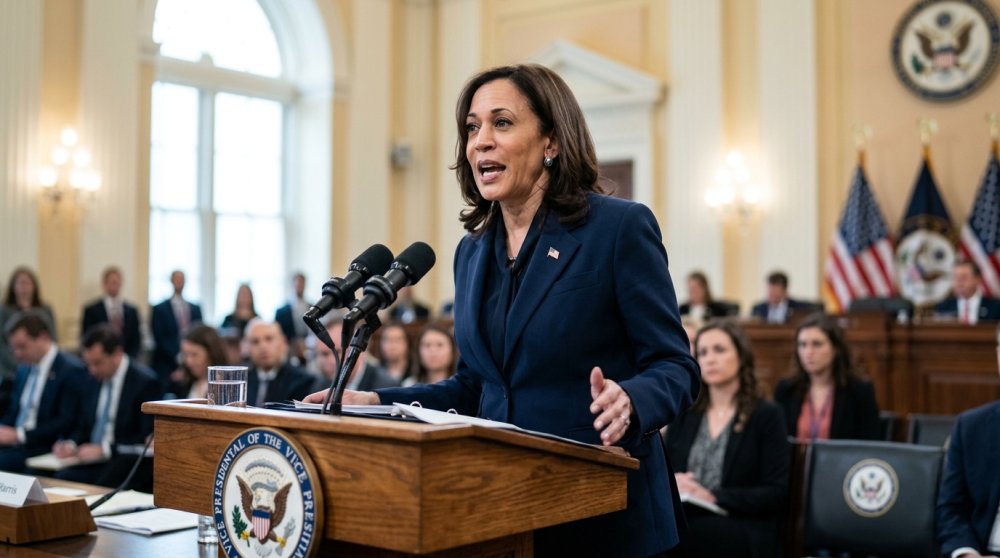
Former Vice President Kamala Harris joined calls to slow the development of advanced artificial intelligence. She urged the United States to pursue a treaty with China that would limit the pace of progress and adopt global testing standards.
“The United States must continue to lead the world in developing AI technology even as we seek to impose common-sense safety standards,” Harris said on Monday. “The president must do his job to protect America’s interests by pursuing a treaty with countries like China to stop dangerous uses of AI, limit the speed of its development, and adopt global standards for testing.”
China immediately rejected the idea. Chinese Foreign Ministry spokesman Guo Jiakun labeled the warnings “fearmongering.”
“Fearmongering, confrontation and malicious competition will only disrupt the process of global AI governance and serve no one’s interests,” Guo Jiakun said at a news briefing.
Even if Beijing signed such a treaty, past behavior raises serious doubts about compliance. China has a documented record of violating commitments made to the United States.
Treasury Secretary Scott Bessent has repeatedly called China an “unreliable partner.” He pointed to Beijing’s hoarding of oil during the U.S.-Israeli conflict with Iran and its earlier refusal to export rare earth minerals during trade talks.
“They continued buying, and they’ve been hoarding, and they have cut off exports of many products,” Bessent said.
“China has been an unreliable global partner three times in the past five years; once during COVID, when they hoarded healthcare products, second on rare earth,” he added, citing the oil stockpiling as the third example.
China also failed to meet its purchase commitments under the 2020 Phase One trade agreement. Beijing promised an additional $200 billion in American goods and services over two years but delivered none of that amount, according to the Peterson Institute for International Economics.
David Sacks, Trump’s former White House AI and cryptocurrency czar, argued that Beijing would never join a meaningful slowdown agreement.
“China is very unlikely to join a global agreement, as you know, and that has to be taken into account as well,” Sacks wrote.
Palantir CEO Alex Karp warned that any American pause would surrender a critical structural advantage to adversaries.
“If we didn’t have adversaries, I would be very in favor of pausing this technology completely, but we do,” Karp told CNBC. “You can’t pause it because it’s a structural advantage.”
President Donald Trump rejected any slowdown outright. He stressed that the United States must maintain its lead in the technology that will determine future dominance.
“We’re leading China in AI,” Trump said. “We’re the most sophisticated country in the world, and frankly, I want to keep it that way because whoever wins AI, wins.”
Let us know what you think, please share your thoughts in the comments below.
