Politics
Nikole Hannah-Jones Faces School Reality After 1619 Project Advocacy

Clear Facts
- Nikole Hannah-Jones, founder of the 1619 Project, admitted in a New York Times essay that sending her daughter to local New York City public schools harmed her child’s education.
- Her daughter attended elementary and middle schools where teachers showed little interest, homework went unchecked, and behavioral issues went unaddressed.
- Hannah-Jones has long opposed school choice and gifted programs while supporting policies that keep most families trapped in failing schools.
Nikole Hannah-Jones spent years advocating for the same public school system she later found inadequate for her own child.
She wrote that her neighbors avoided the local schools, yet she insisted on keeping her daughter enrolled.
Hannah-Jones believed her influence could improve the schools.
Instead, she watched her daughter fall behind in basic subjects like algebra.
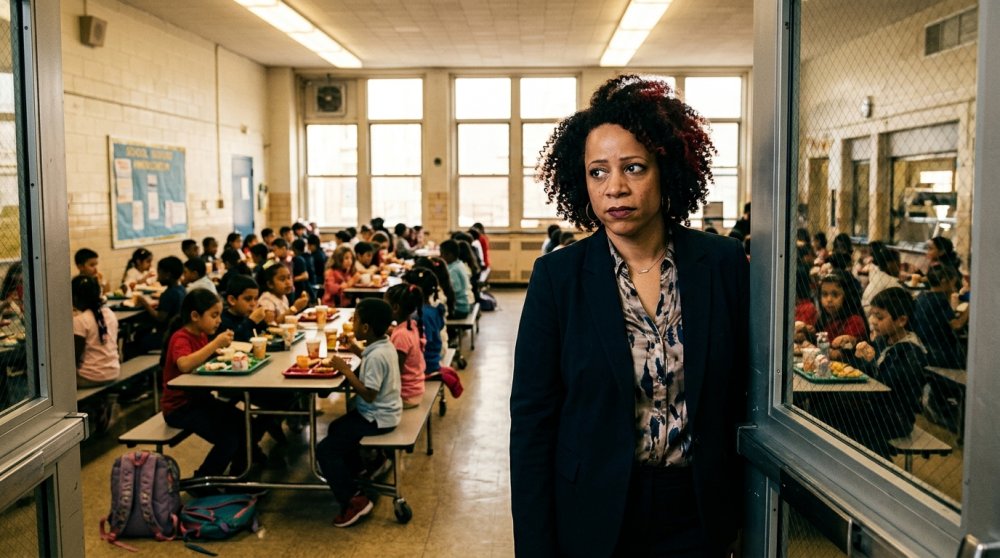
“It was not the children that horrified me — kids of all incomes are rambunctious at lunchtime. It was the callous disregard of the adults.”
Hannah-Jones blamed racism and segregation for the problems rather than the policies she supported.
She opposed competitive admissions and supported keeping disruptive students in classrooms.
“None of this surprises me. This is the reality of a segregated system, and it’s not just segregation by race and class, it’s by ability. This is the reality of school-choice systems.”
The principal’s comment ignored that capable students were forced to share classrooms with those who did not want to learn.
New York City schools removed academic screens and reduced gifted programs under progressive leadership.
Teachers’ unions prevented ineffective educators from being removed.
Standards dropped while costs rose.
Let us know what you think, please share your thoughts in the comments below.

L
September 24, 2026 at 7:09 pm
When I was in school, my class was divided into 3 groups. The teacher would then work with each group on reading. She would do the same for math, learning how to write whatever subject she was working on. Each child got individual attention that way but didn’t feel like they were being set apart from the rest of the class. Years later, I realized that she had grouped us by our learning abilities. She NEVER said anything about one group being smarter than the others or any reference that indicated why we were in our particular group. That was first grade. You know what? That prepared me for the upper grades. I could read, communicate, learned that it was okay to help someone with a problem or to ask for help if I had a problem. It also was the beginning of learning to socialize and overlook the differences in others. That was the good ole’ readin’, wrtin’ and ‘rithmetic method. We need to return to that method of schooling.