Health
When Modern Wellness Actually Works: One Man’s IV Therapy Experiment

Clear Facts
- A conservative writer tested IV vitamin therapy at a local wellness clinic to combat an aggressive cold
- The $200+ treatment included high-dose vitamin C delivered intravenously over approximately one hour
- The writer reported significant improvement within 24 hours and near-complete recovery within 48 hours
The morning started with a voice that could rival Robert F. Kennedy Jr.’s distinctive rasp. What began as a mild throat scratch the night before had evolved into something far more concerning by sunrise: the dreaded man cold, typically a multi-day affair that derails the week.
But this wouldn’t be a typical week. After dropping his child at school, the writer reached out to a local IV wellness clinic, one of approximately 25 such establishments serving his region of 650,000 residents.
He requested the “Not Today Sickness” treatment, the clinic’s most popular offering featuring mega-doses of vitamin C delivered directly into the bloodstream. Despite skepticism about whether it could restore his voice, he decided the potential benefits outweighed his doubts.
“They work,”
a friend told him bluntly, raising expectations despite the owner’s cautious assessment about vocal recovery.
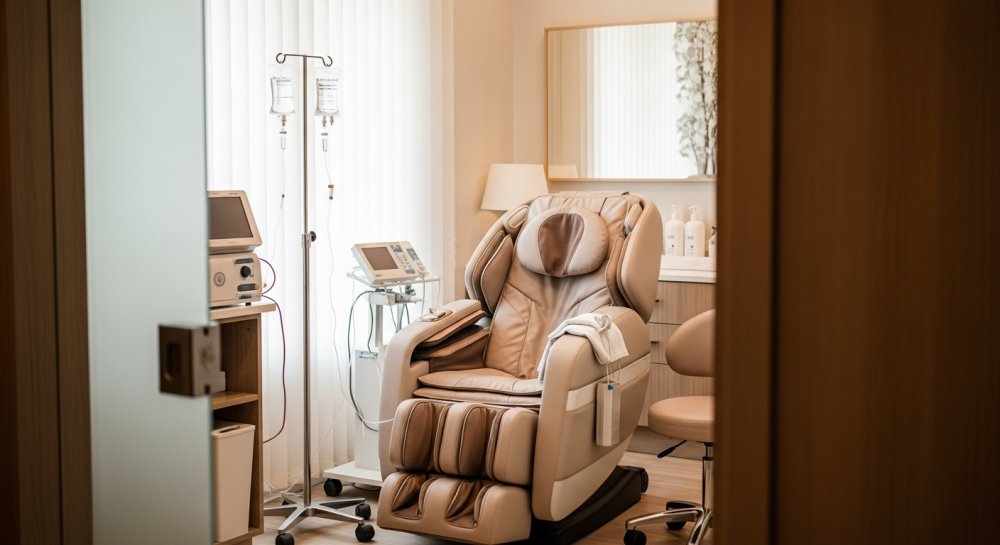
The experience itself proved unexpectedly luxurious. Far from the sterile medical environment one might expect, the clinic offered plush massage chairs, complimentary eye massagers, and attentive service during the hour-long infusion process. The writer settled in for what he describes as a thoroughly bougie experience, complete with a full-body massage cycle.
The immediate aftermath was mixed. His voice remained compromised, but energy levels began climbing noticeably. By the following morning, significant improvement was evident—white blood cells apparently well-fed and advancing against the infection.
Within 48 hours, the cold had become an afterthought. Only productive coughing remained, the body’s natural process of expelling accumulated phlegm from the defeated illness.
The financial aspect deserves examination. The treatment cost several hundred dollars—a sum that seems excessive to those accustomed to insurance-subsidized $35 copays. However, these wellness clinics operate outside the insurance system, offering transparent pricing without the hidden costs that accumulate in traditional medical settings.
The writer draws an interesting parallel: wellness clinics for humans resemble veterinarians’ offices more than general practitioners, with straightforward pricing and optional upgrades. We’re simply more expensive to maintain than household pets, particularly when massage chairs enter the equation.
His friend, who receives monthly IV treatments, reports greatly improved overall wellness. The writer plans to adopt a similar routine, recognizing that whether the benefits are mental, medical, or both, the results speak for themselves.
This experience highlights an emerging healthcare trend: Americans increasingly seeking alternatives to traditional medical care, willing to pay out-of-pocket for treatments that deliver results without insurance bureaucracy. These wellness clinics represent a market-driven approach to health maintenance, where customer satisfaction drives business rather than insurance reimbursement rates.
The broader implications are worth considering. As more Americans explore direct-pay healthcare options, the traditional insurance-based system faces competition from transparent, customer-focused alternatives. Whether this represents the future of routine healthcare or simply a niche market for those who can afford it remains to be seen.
What’s certain is that for one sick writer facing a busy week, the investment paid off. The man cold that threatened to sideline him for days was conquered in roughly 48 hours, allowing him to return to his responsibilities without the prolonged misery typically associated with such illnesses.
Let us know what you think, please share your thoughts in the comments below.
