Politics
Seattle’s Decline Accelerates as Residents Flee Progressive Policies

Clear Facts
- Seattle is experiencing a significant population exodus as residents flee the city’s increasingly progressive policies and declining quality of life
- Crime rates, homelessness, and drug abuse have surged under liberal city leadership, driving families and businesses away
- The city’s reputation as the “Emerald City” has dimmed as its once-thriving downtown areas face vacancy and deterioration
Seattle, once a shining example of American innovation and prosperity, is now facing a crisis of its own making. The city’s embrace of far-left policies has led to a dramatic decline in livability, safety, and economic vitality that has residents reconsidering their future in the Pacific Northwest.
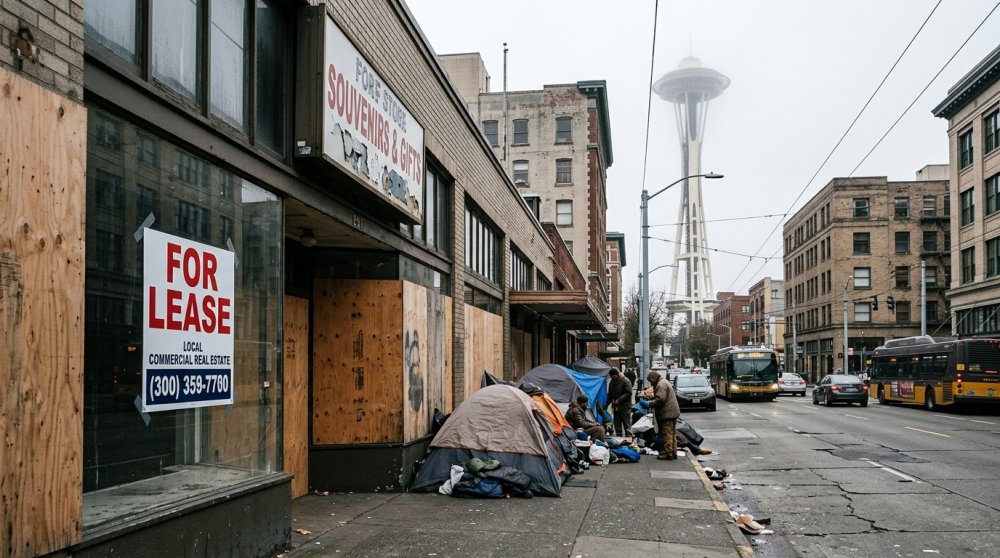
The numbers tell a stark story. Seattle has lost thousands of residents in recent years as families and young professionals seek safer, more affordable communities elsewhere. The downtown corridor, once bustling with commerce and culture, now struggles with vacant storefronts and deteriorating public spaces.
The roots of Seattle’s decline can be traced directly to progressive governance that prioritized ideology over common-sense solutions. Soft-on-crime policies have emboldened criminals, while tolerance for open-air drug markets and homeless encampments has transformed once-pristine neighborhoods into zones of urban blight. Business owners report being overrun with theft and vandalism, with little support from law enforcement hamstrung by defund-the-police activism.
The city’s tax-and-spend approach has also taken its toll. Seattle has implemented some of the most aggressive tax policies in the nation, driving businesses to relocate to more business-friendly states. The tech industry, which once called Seattle home and fueled its economic boom, is increasingly looking elsewhere for expansion opportunities.
Public safety concerns dominate conversations among residents. Violent crime has risen sharply, and the city’s police force has been depleted by retirements and resignations following years of anti-police rhetoric from city leaders. Response times have increased, and many neighborhoods report feeling abandoned by the very officials elected to protect them.
The homelessness crisis has reached unprecedented levels. Despite spending hundreds of millions of dollars on programs that fail to address root causes like drug addiction and mental illness, Seattle’s streets are increasingly lined with tents and makeshift shelters. Compassion without accountability has created a humanitarian disaster that serves neither the homeless population nor the broader community.
Education has suffered as well. Seattle’s public schools have embraced controversial curricula that prioritize social engineering over academic excellence, prompting families who can afford it to seek private alternatives or relocate entirely. Test scores have declined while administrative costs have soared.
The contrast with other American cities that have maintained law and order while fostering economic growth could not be starker. Cities with conservative leadership have demonstrated that public safety, fiscal responsibility, and traditional values create environments where families thrive and businesses flourish.
Seattle’s story serves as a cautionary tale for the rest of America. When cities abandon common-sense governance in favor of progressive experimentation, the results are predictable: rising crime, economic decline, and an exodus of productive citizens seeking communities that still believe in American values.
The question now is whether Seattle’s leaders will recognize the failure of their policies and course-correct, or whether the Emerald City will continue its descent. For many former residents, the answer no longer matters—they’ve already voted with their feet.
Let us know what you think, please share your thoughts in the comments below.
