Politics
Iran Admits Trump Blockade Working as Critical Supplies Dry Up

Clear Facts
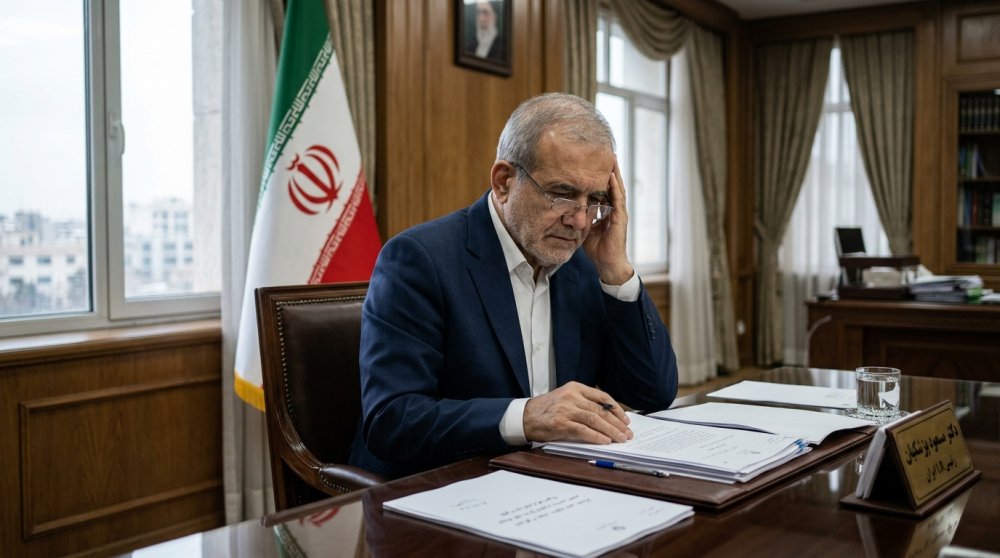
- Iranian President Masoud Pezeshkian confirmed Friday that U.S. sanctions have drastically reduced Iran’s trade capabilities
- Critical imports including gasoline are unable to enter the country under the Trump administration’s economic blockade
- The economic pressure comes as Iran faces mounting domestic hardship and potential civil unrest
The Trump administration’s economic warfare strategy against the Iranian regime is delivering measurable results, according to an admission from Tehran’s own leadership. Iranian President Masoud Pezeshkian acknowledged Friday that American sanctions have effectively choked off the country’s trade, leaving even essential goods like gasoline stranded at the border.
The public acknowledgment marks a significant moment in the escalating confrontation between Washington and Tehran. President Trump has pursued what supporters describe as a “maximum pressure” campaign designed to force Iran’s ruling clerics to abandon their nuclear ambitions and regional aggression without firing a single shot.
Pezeshkian’s comments reveal the depth of Iran’s economic crisis as the blockade tightens. The inability to import basic necessities like fuel demonstrates how comprehensive the American economic offensive has become. For a major oil-producing nation to face gasoline shortages speaks to the severity of the isolation.
The economic stranglehold arrives at a precarious time for Iran’s authoritarian government. Reports indicate growing frustration among ordinary Iranians over deteriorating living conditions, with many citizens blaming the regime’s aggressive foreign policy and nuclear program for their hardship. Past protests have shaken the government, and officials in Tehran appear increasingly concerned about renewed civil unrest.
The Trump strategy represents a departure from previous administrations’ approaches to Iran. Rather than pursuing diplomatic engagement or military intervention, the current policy leverages America’s economic power to isolate the regime and empower the Iranian people. Supporters argue this maximizes pressure on leadership while minimizing risks to American personnel.
Critics have questioned whether economic sanctions will ultimately change Iranian behavior or simply punish ordinary citizens. However, defenders of the policy note that Iran’s government has access to substantial resources and chooses to fund terrorist proxies and nuclear development rather than provide for its population. They maintain that genuine regime change or policy reversal can only come from internal pressure.
The admission from Iran’s president suggests the economic campaign is achieving its intended effect. As shortages mount and public frustration grows, Tehran faces difficult choices about its priorities. The regime must decide whether maintaining its nuclear program and regional military operations is worth the domestic political cost.
Intelligence analysts are closely monitoring the situation for signs of instability. Iran has experienced periodic waves of protest in recent years, often triggered by economic grievances. The current combination of fuel shortages, import restrictions, and general economic malaise could create conditions for more sustained opposition to the government.
The Trump administration has made clear it will maintain pressure until Iran fundamentally alters its behavior. Officials have outlined specific demands including a verifiable end to nuclear weapons development, cessation of ballistic missile programs, and withdrawal of support for terrorist organizations throughout the Middle East.
As the economic vise tightens, the question remains whether Iran’s leadership will choose to negotiate seriously or attempt to wait out the pressure. Pezeshkian’s public acknowledgment of the crisis suggests the regime recognizes the severity of its position, but whether that recognition translates into meaningful concessions remains uncertain.
Let us know what you think, please share your thoughts in the comments below.

mi_bob
August 30, 2026 at 9:18 am
Can’t even imagine these terrorist a-holes with nukes they would happily use them. Such bad timing though. Trump could and should have waited until after the mid terms to go after them. This gives the far left and commie media all the ammo they need to convince the huge population of idiots in the USA to vote commie demon-O-crat in the mid terms.
Ralphsonjonny
September 1, 2026 at 5:16 pm
Infidels!! Our intifada is strong and long lived! You can never win!!!! It is written. You are soft and weak, while goats make us strong!