Politics
Hawaii Contractor Takes On Two-Decade Democratic Stranglehold in Governor’s Race

Clear Facts
- Gary Cordery won the Republican nomination for Hawaii governor, setting up a November showdown with Democratic incumbent Josh Green
- Hawaii has been under continuous Democratic gubernatorial control since 2010, when Republican Linda Lingle left office
- Cordery faces a massive funding gap, having raised $313,000 compared to Green’s $3.5 million war chest
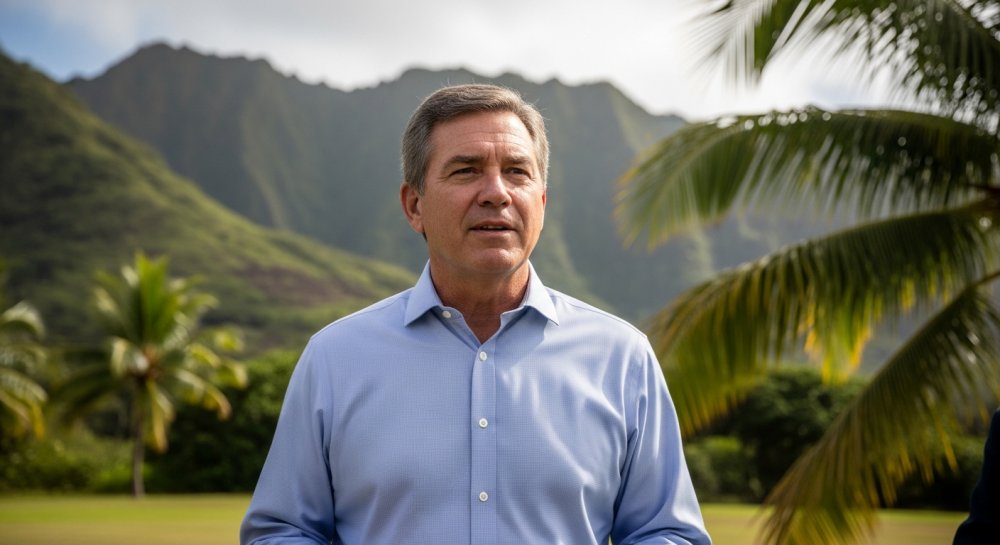
Gary Cordery, a local contracting company owner, secured the Republican nomination for Hawaii governor after defeating business owner Ken Fujiyama in Saturday’s primary. He now faces an uphill battle against Democratic Gov. Josh Green in November’s general election.
The race heavily favors the incumbent, with the Cook Political Report rating the contest as Solid Democratic and assigning Hawaii a Partisan Voting Index of D+13. Cordery confronts a formidable challenge: Hawaii hasn’t elected a Republican governor since Linda Lingle left office in 2010, marking over two decades of uninterrupted Democratic control.
Beyond the state’s Democratic voting history, Cordery must overcome significant structural disadvantages. Green enters the race with a 56% approval rating and a substantial financial advantage, having raised approximately $3.5 million compared to Cordery’s $313,000, according to Honolulu Civil Beat.
Despite these obstacles, Cordery is presenting voters with a conservative platform focused on reducing Hawaii’s notoriously high cost of living, reforming the education system, and rooting out government corruption.
“As a husband, father and grandfather, businessman and community servant, I love Hawai’i,” Cordery said in an interview with Honolulu Civil Beat.
“These islands of unique beauty have endured mismanagement for decades. Her people live under tremendous stress and anxiety. I am running to open opportunity, create abundance and ensure stewardship of her resources, bringing accountability and hope for the people.”
Cordery’s economic plan includes an ambitious proposal to build 15,000 homes across the islands for working families, with prices ranging from approximately $400,000 to $600,000. His strategy calls for utilizing state-owned land for fee-simple housing while streamlining the permitting process and opening additional land for residential development.
The Republican challenger is also proposing elimination of the state’s General Excise Tax on food and medicine and freezing property taxes for homeowners at retirement. Cordery argues that Hawaii’s government has failed to properly manage taxpayer dollars and pledges to order comprehensive audits to identify and eliminate waste.
“Hawai’i’s 20.5 billion dollar budget for 1.4 mil[lion] people is a staggering number. New Hampshire has 1.4 million people but a $7.75 billion dollar budget,” Cordery said.
“I believe our tax burden is out of control. The answer is management.”
The stark budget comparison highlights Cordery’s central argument: that Hawaii’s Democratic leadership has created an oversized, inefficient government that burdens taxpayers without delivering corresponding value. His campaign represents a direct challenge to the status quo in a state where Democrats have maintained virtually unchallenged control of state government for decades.
With November approaching, Cordery faces the dual challenge of overcoming both Hawaii’s deep-blue political culture and a well-funded incumbent with strong approval ratings. His success will depend on whether Hawaiian voters are ready for a change in leadership after twenty years of single-party control.
Let us know what you think, please share your thoughts in the comments below.
