U.S. News
Senator Launches Investigation Into Company Recording 20 Billion Monthly Car Snapshots

Clear Facts
- AI-powered Flock cameras take 20 billion snapshots of American cars every month through a network of over 120,000 cameras nationwide
- Senator Josh Hawley has opened a Senate investigation into how this data is collected, retained, searched, and sold
- Multiple law enforcement agencies have canceled Flock contracts after discovering abuse, including unauthorized personal searches and error rates as high as 71 percent
A massive surveillance network is quietly tracking American drivers, and one Senator wants answers. AI-powered cameras operated by Flock Safety capture 20 billion images of cars every month—most belonging to law-abiding citizens simply going about their daily lives. With more than 120,000 of these cameras deployed across the nation, the question isn’t whether you’ve been photographed, but how many times.
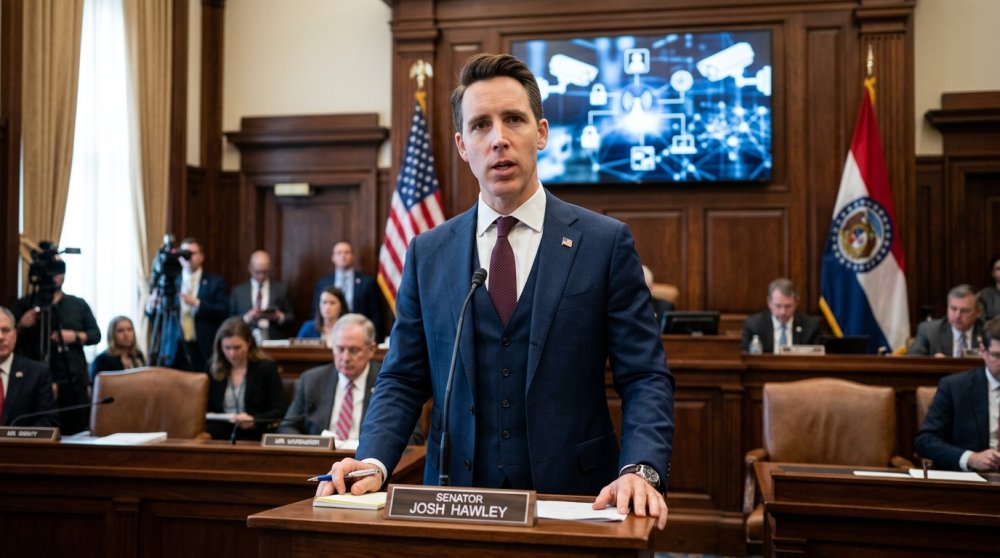
Senator Josh Hawley of Missouri has launched a formal investigation through the Senate Judiciary Subcommittee on Crime and Counterterrorism. His concern centers on a fundamental American principle: the right to privacy from unreasonable searches.
Drawing a historical parallel, Hawley pointed to James Otis, the Boston lawyer who fought British writs of assistance in 1761. These writs gave customs officers unlimited search authority—the kind of unchecked power that helped spark the American Revolution. John Adams later said American independence was born in that courtroom fight against government overreach.
Today’s surveillance technology operates in a similar vacuum of oversight. Congress has written no rules governing these AI camera networks. While older statutes and Fourth Amendment protections may apply, those questions remain legally unsettled. For practical purposes, the privacy of hundreds of millions of Americans depends entirely on one company’s internal policies.
“I don’t know if Flock has broken the law, but I do know that technology is moving faster than Congress is keeping up,” Hawley explained.
The investigation comes after troubling incidents in Missouri and beyond. St. Charles County Police Department terminated its Flock contract this month when an audit discovered a civilian employee conducting searches for personal reasons.
The abuse isn’t isolated. In Milwaukee, prosecutors charged an officer with searching his girlfriend’s license plate 124 times and her former boyfriend’s 55 times. Each search was justified with the single word “investigation” typed into the system. The audit didn’t catch the misconduct—a private citizen did, after looking up their own plate on a public website.
The systems also produce alarming error rates. A Florida woman spent 13 days in jail facing eight felony counts, including three for vehicular homicide, after investigators searched Flock’s network and arrested her based on a vehicle description match. Prosecutors later dropped all charges against the wrong person.
Los Angeles dropped its Flock contract after discovering officers had stopped 161 drivers wrongly flagged as driving stolen vehicles. Another California police department found 71 percent of its alerts were incorrect.
Beyond accuracy concerns lie questions about data handling. Flock boasts an $8.3 billion valuation, creating commercial pressures that raise serious questions. Americans deserve transparency about whether their driving data is licensed, sold, or monetized. There are also national security concerns about data being sent or stored overseas. Reports indicate Flock uses gig workers in the Philippines to classify camera data, while powerful AI models automate other parts of the process.
Hawley emphasized his support for law enforcement having necessary tools. Cameras can help recover stolen vehicles, locate missing children, and apprehend fleeing criminals. But unprecedented databases of personal information require reasonable safeguards. The Supreme Court has recognized that Americans have a reasonable expectation of privacy against comprehensive records of their movements.
“Americans do not surrender all their privacy rights every time they leave the house,” Hawley stated.
The Senator has posed straightforward questions to Flock: How long is data retained? Who controls it? Who can search it? What protections exist? Who is buying access to what the cameras record?
While Hawley hopes for company cooperation, he argues Congress cannot simply accept corporate assurances. Privacy protections must be written into law, applying to every company and outlasting current executives. The fundamental principle at stake is that rules protecting Americans should be set by law and by the people—not by venture capital funds, AI executives, or big tech companies.
Let us know what you think, please share your thoughts in the comments below.
