U.S. News
Trump’s Economic Stranglehold Forces Tehran to Choose: Surrender or Collapse

Clear Facts
- Treasury Secretary Scott Bessent announced “Operation Economic Outcast” sanctions targeting Iran’s economy, building on the successful Maximum Pressure campaign from Trump’s first term
- Iran’s oil exports dropped from 2.5 million barrels per day to under 400,000 during Trump’s first term, while the Biden administration allowed them to rise to 1.6 million barrels per day
- The U.S. blockade of the Strait of Hormuz is costing Iran $13 billion monthly, with inflation at 50% and the rial hitting a record low of 2 million to the dollar
When President Donald Trump announced last week that he would subject Iran to unprecedented economic pressure, critics crowed that this shift was tantamount to an admission that Operation Epic Fury had failed. Yet such a policy is not only completely consistent with the president’s approach during his first term, but has a significantly greater chance of working because of Epic Fury’s actual military success.
Now, with Treasury Secretary Scott Bessent’s announcement of the so-called “D-Day” sanctions of Operation Economic Outcast, the pressure on Iran is about to become intolerable, giving Trump overwhelming leverage to force the nuclear deal he wants on Tehran.
Between 2019 and 2021, Trump directed the implementation of the Maximum Pressure campaign against Iran. The most aggressive sanctions program in modern history, it was designed to prevent Iran from getting a nuclear weapon by starving it of the economic resources to build one.
Naysayers predicted it would fail, but the opposite turned out to be true. Iran’s oil exports dropped below 400,000 barrels a day, down from 2.5 million a day. Iran’s inflation soared to 30%.
Accessible foreign currency reserves were slashed from $122 billion to a dismal $12 billion. All for the simple reason: Given the choice between doing business with the United States or Iran, any country that can add and subtract picked the U.S.
What a contrast with the Biden administration’s approach. When it chose to start negotiations for a new nuclear deal with Iran by preemptively ending enforcement of the sanctions rather than increasing the leverage these sanctions provided, Iran welcomed the relief but did not make any efforts to reach a deal.
While inflation remained high, oil exports quickly rose to 1.6 million barrels a day, foreign currency reserves rose to $26 billion, and unemployment hit a record low of 7.2%. Once again, these funds were poured into a ballooning military budget, an ever-more sophisticated nuclear program and regional terrorist proxies.
What was spent domestically was not invested in drivers of economic growth but rather in food and fuel subsidies in an effort to mollify the Iranian people.
When Trump returned to office in 2025, Iran had sponsored the Hamas attacks on Israel on Oct. 7, 2023, and made alarming progress toward a nuclear weapon. The president immediately directed the reimposition of Maximum Pressure, which rapidly took effect because the structural economic weakness caused during his first term had not been remedied.
Inflation rose to 50% in the lead-up to the Twelve-Day War last year, after which the situation got considerably worse.
In the lead-up to Operation Epic Fury, inflation in Iran was at 50% and accelerating, the rial was around 1.87 million to the dollar, one major bank had collapsed, and five others were in trouble, nationwide protests had been brutally suppressed but not resolved and foreign exchange channels were narrowing. The war compounded these problems through the destruction of energy infrastructure, notably at Kharg Island and the South Pars gas field, as well as petrochemicals facilities.
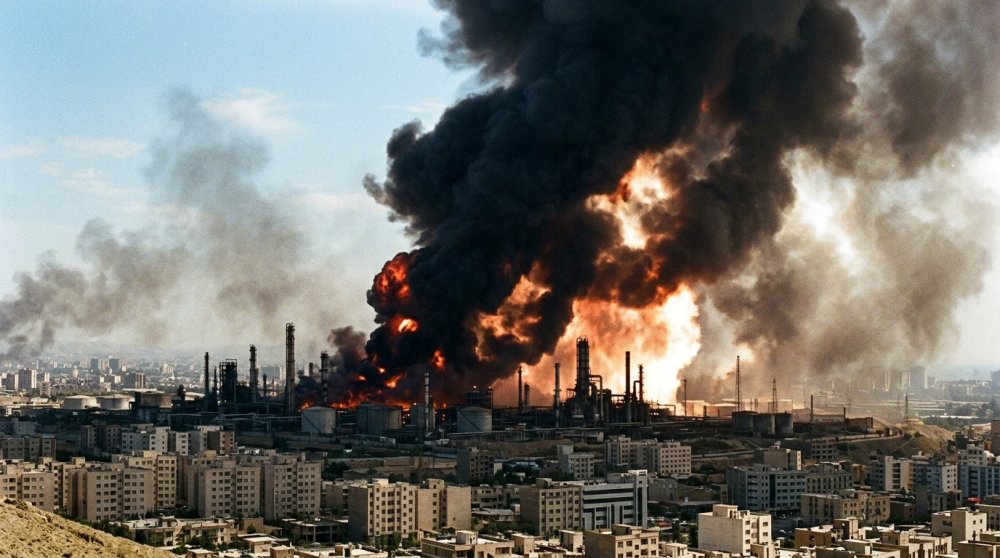
But by far Trump’s most devastating tool was the imposition of the U.S. blockade on Iranian exports through the Strait of Hormuz last April. Iran is now losing an additional $13 billion a month and is also cut off from critical imports.
Iran’s own estimate is a 10% economic contraction, the rial is hitting a record 2 million to the dollar, inflation is climbing still higher, and the pressure on the banking system remains acute. Iran is cut off, having alienated regional neighbors who might have helped it.
Even traditional clients such as China are alarmed by the exposure ongoing commerce with Iran represents.
The sanctions Bessent announced Monday are going to accelerate economic decline into a collapse. No longer are such measures being considered a discrete tool in a larger effort to encourage Tehran to negotiate. They are now part of a crushing campaign to force a surrender.
Iran’s airlines will not be allowed to fly, its bank branches will be closed, and anyone who does business with the regime will be considered complicit in its terrorism and can expect to also be cut off from the U.S. financial system.
While there is going to be a period for allies to wind down their business with Iran, no one will be exempt. All those who want to continue doing business with America should take note.
Sadly, for the people of Iran, the situation did not have to be this dire. Iran should be a wealthy, powerful country, secure at home and at peace with its neighbors.
It still could be if Tehran agrees to the reasonable deal Trump has proffered time and time again by renouncing its nuclear program and ceasing to project hostile power beyond its borders.
But if it refuses the only path to survival left open to it, according to the terms the Treasury secretary has laid out, Iran’s economy will soon simply cease to exist. And it will have only itself to blame.
Let us know what you think, please share your thoughts in the comments below.

Mark Michelsen
August 27, 2026 at 6:59 pm
Anything coming out of that White House is a LIE. They are running a game on America. Just look at the billions he has made in one year. And the billions his friends have made. My country is becoming a THIRD WORLD COUNTRY. And guess who is making all those billions,…Trump and associates.