Politics
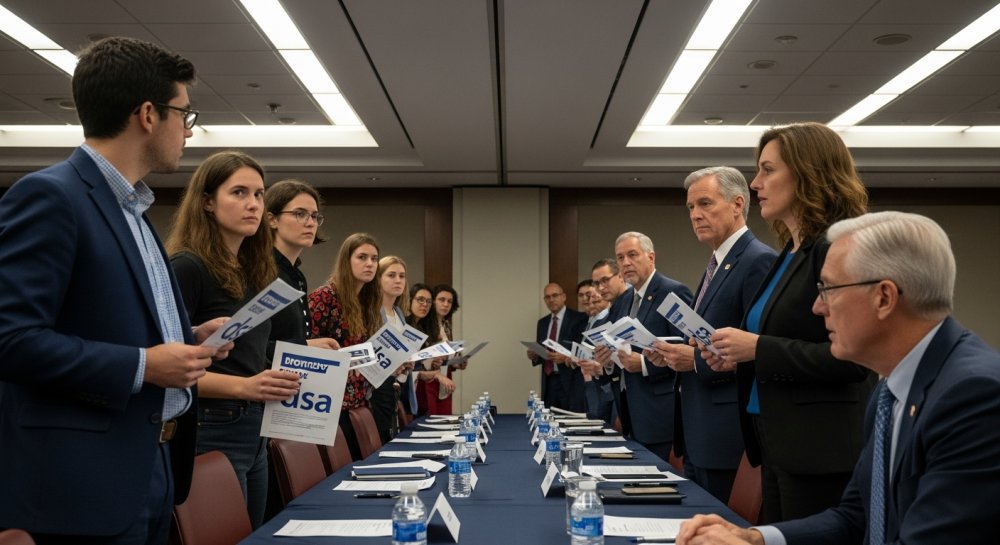
Democratic Party Faces Internal Revolt as Progressives Declare Their Own Movement

Clear Facts
- Progressive Democrats are openly comparing the Democratic Socialists of America (DSA) to the MAGA movement, signaling a fundamental power shift within the Democratic Party
- Establishment Democrats are warning that traditional party leadership structures are facing an existential challenge from their own far-left wing
- The internal conflict reveals deep fractures within the Democratic coalition as progressives demand greater control over party direction and policy
The Democratic Party is experiencing a significant internal power struggle as progressive activists openly declare their intention to reshape the party from within, drawing direct parallels to the grassroots conservative movement that transformed the Republican Party.
“DSA is our MAGA,” progressive Democrats have begun declaring, referencing the Democratic Socialists of America organization. The comparison acknowledges the success of the conservative grassroots movement in fundamentally reshaping the Republican Party and signals similar ambitions on the left.
Democratic establishment figures are sounding alarms about losing control of their own party infrastructure. One insider assessment captured the gravity of the situation with a stark warning:
“The establishment will soon become not the establishment.”
This internal Democratic conflict represents a mirror image of the populist transformation that reshaped the Republican Party over the past decade. While conservatives rallied around America First policies and traditional values, progressive Democrats are now attempting their own hostile takeover of party machinery, pushing further left on economic and social issues.
The Democratic establishment built its power through decades of institutional control, union relationships, and donor networks. That traditional structure now faces a coordinated challenge from younger, more ideologically extreme activists who view establishment Democrats as obstacles to their agenda.
The comparison to the MAGA movement is particularly revealing. Progressive Democrats have watched how conservative grassroots activists successfully challenged and ultimately replaced establishment Republicans who failed to deliver on campaign promises. Now they’re adopting similar tactics within their own party.
For conservative observers, this Democratic civil war provides valuable insight into the opposition’s vulnerabilities. A party divided against itself struggles to present a unified message to voters or execute a coherent political strategy.
The fracture also exposes the fundamental tensions within the modern Democratic coalition. Moderate Democrats who won swing districts increasingly find themselves at odds with progressives demanding adherence to far-left policy positions on everything from economic policy to social issues.
While establishment Democrats still control significant institutional power, including committee assignments, fundraising networks, and media relationships, progressives are building parallel structures. They’re cultivating their own donor base, creating independent media channels, and mobilizing activists who view traditional Democratic leadership as part of the problem.
The outcome of this internal struggle will shape American politics for years to come. A Democratic Party controlled by its progressive wing would likely pursue more extreme policies, potentially alienating moderate and independent voters who determine election outcomes in swing states.
For Americans concerned about the direction of the country, understanding these internal Democratic dynamics is crucial. The party’s internal civil war will influence everything from legislative priorities to electoral strategy in upcoming campaigns.
Let us know what you think, please share your thoughts in the comments below.
