World News
African and Caribbean Nations Demand Billions in Slavery Reparations From Western Countries

Clear Facts
- African Union and Caribbean Community adopted a 19-point reparations framework demanding financial compensation, debt cancellation, and formal apologies from Western nations that participated in the transatlantic slave trade
- The proposal will be presented at the UN General Assembly and calls for a Global Reparations Fund, return of cultural artifacts, and reforms to international financial institutions
- The U.S., Israel, and 52 other countries either voted against or abstained from a related UN resolution in March recognizing transatlantic slavery as the “gravest crime against humanity”
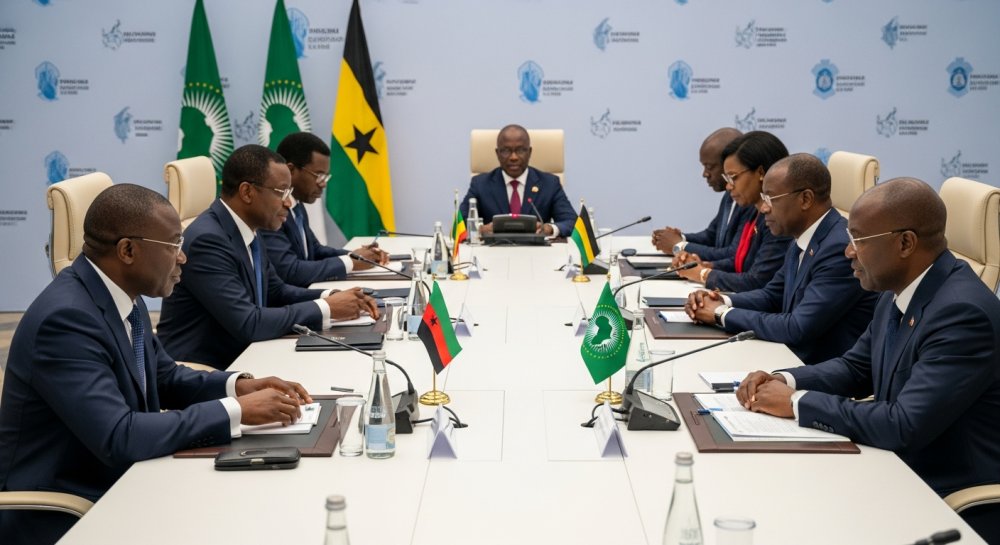
African and Caribbean leaders have adopted a sweeping reparations plan demanding financial payments, debt cancellation, and formal apologies from countries that participated in the transatlantic slave trade. The proposal, finalized at a conference in Ghana, represents an escalating international campaign to extract wealth from Western nations over historical grievances.
The 19-point framework calls for direct financial compensation, debt relief, establishment of a Global Reparations Fund, and the return of cultural artifacts and ancestral remains. It also demands reforms to international financial institutions that supporters claim disadvantage developing nations.
The plan was adopted Friday by the African Union and the Caribbean Community (CARICOM) Commission on Reparatory Justice following a three-day conference. Organizers intend to present the proposal at the next UN General Assembly as part of a coordinated push for slavery reparations.
“None of us gathered in this hall today can be held personally responsible for the atrocities of the transatlantic slave trade,”
Ghanaian President John Dramani Mahama told delegates.
“History does not ask us to inherit guilt, but it asks us to inherit responsibility,”
Mahama added.
Notably, the proposal does not identify specific countries that should provide compensation or issue formal apologies. However, it does call for debt cancellation, climate justice financing, expanded citizenship pathways for Africans in the diaspora, and what organizers describe as a “right of return” for descendants of enslaved Africans.
The framework also urges African countries to preserve former slave forts and castles as memorial sites. According to advocates, at least 12.5 million Africans were transported on European ships between the 15th and 19th centuries.
The conference follows a UN vote in March recognizing transatlantic slavery as the “gravest crime against humanity.” The resolution passed with 123 votes in favor, but the United States, Israel, and 52 other countries either voted against it or abstained.
The United States and European Union raised concerns that the resolution could create a hierarchy among crimes against humanity by treating some atrocities as more serious than others. This objection reflects broader Western resistance to reparations demands that could open the door to unlimited financial liability.
Heads of state from Namibia, Liberia, Senegal, Barbados, and Sao Tome and Principe attended the conference, along with senior officials from several other countries.
French President Emmanuel Macron addressed the gathering virtually from the Élysée Palace, acknowledging that enslaved people were “torn from their homelands, deported, dehumanised, and treated as goods.”
Reparations should not be viewed “as an end point, or a cheque written to bring the story to a close,”
Macron said, suggesting an open-ended financial commitment.
The conference in Ghana brought together separate reparations efforts previously pursued by African and Caribbean nations into a single document that organizers plan to take before the United Nations. The consolidation of these demands signals an increasingly organized international campaign targeting Western nations for historical grievances spanning centuries.
Critics of reparations programs argue they impose collective guilt on present-day citizens for actions committed generations ago, create divisive racial hierarchies, and fail to account for the complex historical realities of slavery, which existed across virtually all human civilizations throughout history. The financial implications of such programs could run into the trillions of dollars, potentially bankrupting Western economies while creating new forms of international dependency.
Let us know what you think, please share your thoughts in the comments below.

Joe Akins
June 21, 2026 at 10:03 am
And the African slave traders that started and perpetuated the slave market were just unwitting people of their times and misunderstood?
Doug Rebertus
June 21, 2026 at 10:25 am
Hold your breath. Blue is my favorite color. I’m sick of hearing this grift. Everybody wants a handout these days.
Kris Scally
June 21, 2026 at 5:30 pm
My old southern auntie would say “aren’t they cutting off their nose to spite their face?”. Meaning….
I know that the US/western countries) have provided aid ($, supplies, military support) for years to help these 3rd workd countries. Has ongoing assistance been utilized properly by those countries? We have been told that math is racist – maybe this is why.. for claims of reparations, etc. Their demands are moronic.
If France has not done their part to give assistance to 3rd world countries – by all means, they should start cutting checks. I am assuming France hasn’t been faithful in financial obligations to UN either!
Consumer kk
June 21, 2026 at 7:23 pm
It is unfortunate but demanding money is ridiculous. What about the Africans that sold their own people for money? Is Cuba named in this as they had more African slaves than USA had.
What about the awful things done to the Jewish? They were mistreated too along with Native Americans, the Irish, etc. it is never ending.
ed
June 22, 2026 at 2:17 pm
reparations in exchange for going back to Africa