World News
Total Solar Eclipse Darkens European Skies for First Time in Decades

Clear Facts
- A total solar eclipse swept across portions of Europe, marking the continent’s first such event in decades
- The eclipse path included Iceland and Spain, two of the primary viewing locations
- This rare celestial phenomenon drew worldwide attention as millions witnessed the daytime darkness
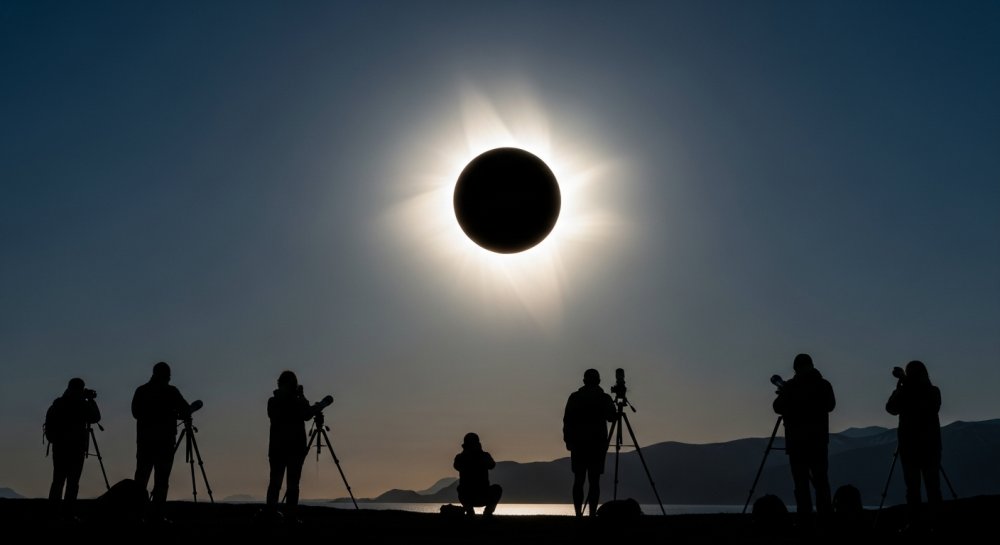
A spectacular total solar eclipse plunged parts of Europe into darkness, marking the first time in decades that the continent has experienced this rare astronomical event. The shadow of the moon swept across Iceland and Spain, offering millions of observers a chance to witness one of nature’s most dramatic displays.
The eclipse provided a rare opportunity for European sky-watchers to experience the awe-inspiring moment when the moon completely blocks the sun’s light during daylight hours. Total solar eclipses occur when the moon passes directly between the Earth and the sun, casting a shadow on the Earth’s surface.
We're lucky enough to experience the eclipse again, as we reach totality in León, Spain. pic.twitter.com/jzH66vYdkA
— NASA (@NASA) August 12, 2026
Iceland and Spain served as prime viewing locations for this celestial event, with clear skies in several regions allowing optimal observation conditions. The phenomenon attracted amateur astronomers, scientists, and curious onlookers who gathered to witness the temporary transformation of day into twilight.
Total solar eclipses are relatively rare events for any given location on Earth, making this occurrence particularly significant for the European continent. The last total solar eclipse visible from Europe occurred decades ago, making this event a once-in-a-generation experience for many residents.
Scientists and researchers took advantage of the eclipse to conduct valuable studies of the sun’s corona, the outermost layer of the sun’s atmosphere that becomes visible during totality. These observations provide crucial data about solar activity and space weather that can affect satellite communications and power grids on Earth.
The next total solar eclipse visible from Europe is not expected for several more years, underscoring the special nature of this astronomical event. Weather conditions played a crucial role in viewing success, with some areas experiencing better visibility than others.
Let us know what you think, please share your thoughts in the comments below.
