World News
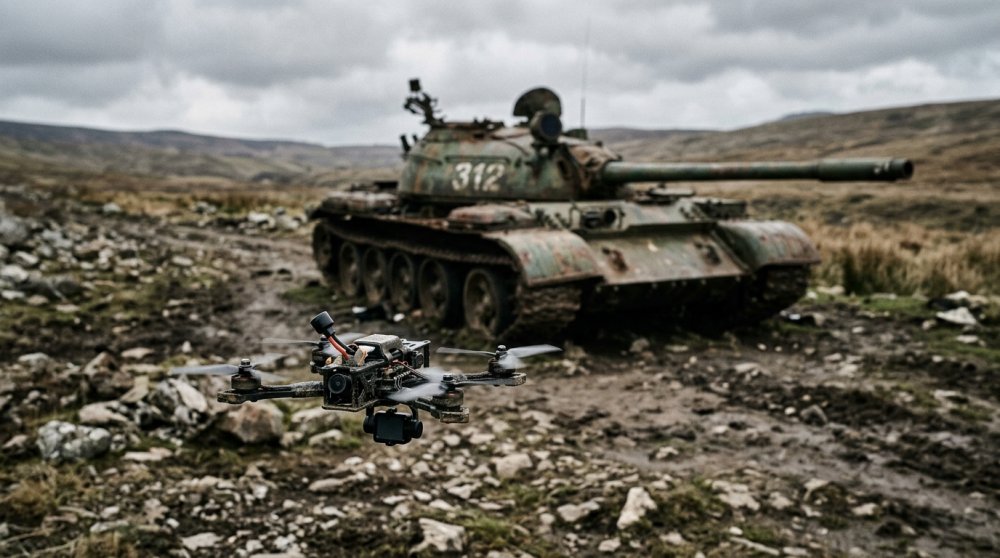
Modern Warfare Shifts as Drone Technology Challenges Tank Supremacy

Clear Facts
- First-person-view drones are demonstrating unprecedented effectiveness against main battle tanks in current global conflicts
- Military analysts have debated the viability of tanks for decades, but recent technological advances may confirm their predictions
- The rapid evolution of drone warfare is fundamentally reshaping battlefield tactics and military procurement priorities
The era of the main battle tank as the dominant ground warfare platform may be drawing to a close. First-person-view drones are proving devastatingly effective against these armored vehicles across multiple conflict zones worldwide, forcing military strategists to reconsider fundamental assumptions about modern combat.
For decades, defense experts have questioned whether tanks would remain viable on future battlefields. The latest developments in unmanned aerial systems appear to validate these concerns, as relatively inexpensive drone technology demonstrates the ability to neutralize multi-million-dollar armored vehicles with alarming consistency.
The shift represents more than just technological evolution—it signals a fundamental transformation in how nations must approach military preparedness and defense spending. Traditional heavy armor, which has formed the backbone of ground forces since World War II, now faces an existential challenge from agile, cost-effective drone platforms that can be deployed rapidly and in large numbers.
This development carries significant implications for American military doctrine and procurement strategy. As adversaries invest heavily in drone capabilities, the United States must carefully evaluate whether continued investment in traditional armored platforms represents the most effective use of defense resources.
The tactical advantages of drone warfare are becoming increasingly apparent. These systems offer operators the ability to engage targets from standoff distances, minimize risk to personnel, and achieve precision strikes at a fraction of the cost of conventional weapons platforms. Meanwhile, tanks remain vulnerable to top-attack profiles that exploit their thinnest armor.
Military innovation has always driven strategic advantage. Nations that recognize and adapt to emerging technologies maintain battlefield superiority, while those clinging to outdated systems risk catastrophic disadvantage. The question now facing defense planners is not whether drones will play a larger role, but how quickly conventional forces can integrate these capabilities while maintaining readiness across all domains.
Let us know what you think, please share your thoughts in the comments below.
