World News
Beijing Resumes Taiwan Ties After Opposition Leader Breaks Ranks

Clear Facts
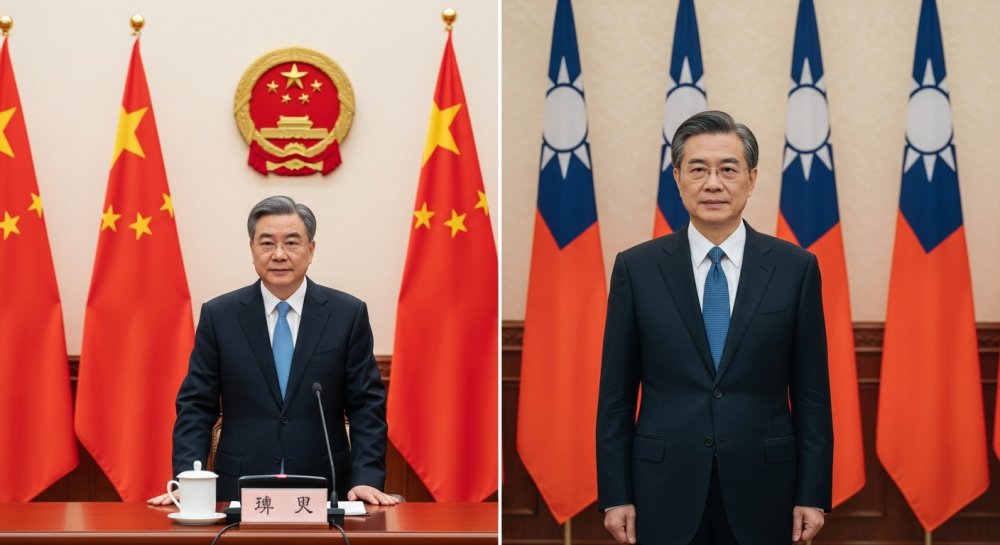
- China announced it will resume some suspended ties with Taiwan, including direct flights and imports of aquaculture products, following a visit by opposition leader Cheng Li-wun
- The Taiwan Work Office stated it will establish a communication mechanism between the Communist Party and Taiwan’s Kuomintang Party, bypassing the current Taiwanese government
- Taiwan’s Mainland Affairs Council condemned the move as a “political transaction” that circumvents the legitimate government and national interests
China announced Sunday it would resume certain ties with Taiwan that it had previously suspended, a move that comes on the heels of a controversial visit by the island’s Beijing-friendly opposition leader. The decision raises serious questions about China’s strategy to undermine Taiwan’s democratically elected government through backdoor political arrangements.
The Taiwan Work Office under China’s Communist Party issued a statement saying it would explore setting up a permanent communication mechanism between the Communist Party and Taiwan’s Kuomintang Party. The office also said it will facilitate the import of Taiwan’s aquaculture products that it had previously banned as part of economic pressure tactics.
Cheng Li-wun, head of the Kuomintang, met with China’s President Xi Jinping in a high-profile meeting Friday. The two called for peace without offering any concrete details or commitments. China continues to claim Taiwan as part of its territory and has explicitly refused to rule out using military force to annex the democratic island.
Taiwan’s Mainland Affairs Council, which oversees the relationship with China, issued a sharp rebuke of the announced measures. The council characterized moves such as promoting a communication mechanism as “political transactions” between the two parties that deliberately circumvent the legitimate government of Taiwan.
“The government’s position is clear: to ensure the interests of the nation and its people, all Cross-Strait affairs involving public power must be negotiated by both governments on an equal and dignified basis to be effective and truly protect the rights and well-being of the people.”
Relations between China and Taiwan have remained tense since the two sides split in 1949 following the Chinese Civil War. Tensions escalated significantly after the election of pro-independence President Tsai Ing-wen from the Democratic Progressive Party in 2016. Beijing responded by cutting off most official dialogue with Taiwan’s government and has since escalated military provocations, sending warships and fighter jets toward the island on a daily basis.
In its statement, China announced plans to resume direct flights between Taiwan and mainland cities like Xi’an and Urumqi. However, it remains entirely unclear how these measures could be implemented without the approval of the Taiwanese government, raising questions about whether this is more propaganda than practical policy.
China banned its citizens from individual trips to Taiwan in 2019 as part of its pressure campaign. Taiwan’s current rules require Chinese visitors to hold a valid resident visa from another country, such as the United States or a European Union nation, before they can even apply for a visitor visa to Taiwan.
China also announced it would work toward construction of a bridge connecting the mainland to Matsu and Kinmen, Taiwanese islands that are geographically closer to China. The project is a longstanding proposal that Beijing has announced multiple times before without action, suggesting this may be another empty gesture designed for political theater.
China has weaponized trade against Taiwan repeatedly in recent years. Beijing banned the import of Taiwanese pineapples in 2021 and has since extended the restrictions to other fruits and products including grouper fish, squid, and tuna. These bans were widely seen as economic retaliation for Taiwan’s refusal to accept Beijing’s political demands.
After the initial ban on grouper, Taiwan’s Ministry of Agriculture attempted to work with China to meet import requirements. China responded with a limited list of individual companies allowed to sell to the mainland but provided no explanation for the restrictions, demonstrating the arbitrary and punitive nature of the bans.
The announcement comes at a critical time as tensions in the Taiwan Strait remain at historic highs. American intelligence officials have been monitoring China’s military buildup, though recent assessments suggest no imminent invasion is planned by 2027 despite significant force expansion.
Let us know what you think, please share your thoughts in the comments below.
