Politics
States Face Federal Penalties As SNAP Loophole Lets Millionaires Claim Food Stamps

Clear Facts
- A Minnesota millionaire successfully qualified for $278 in monthly SNAP benefits due to a loophole that allows 43 states to skip asset checks on welfare applicants
- SNAP costs have ballooned from $60 billion to $100 billion annually, with one in eight Americans now enrolled in the program
- Under new federal legislation, states with payment error rates exceeding 6% by 2028 will be forced to cover 5%-15% of SNAP benefit costs, with some states currently reporting error rates as high as 15%
A retired engineer exposed a shocking loophole in America’s food stamp system — by proving he could collect benefits despite being a millionaire.
Rob Undersander was volunteering as a counselor to help elderly Minnesotans register for government benefits in 2016 when he discovered the vulnerability in the state’s Supplemental Nutrition Assistance Program. He decided to test the system himself.
“They handed out applications to show us how to fill them out for other seniors, and so I filled it out for myself, took it to the Stearns County courthouse, stood in line for a few minutes, and a few days later, I did a phone call with several questions, and three weeks later, I’m getting $278 in food stamp benefits,” he told The Daily Wire.
“Being a conservative, I just felt that was really wrong.”
Undersander, who donated the equivalent amount to charity, has testified at multiple state hearings to raise awareness about lax welfare guardrails in Minnesota. His efforts have been blocked by Democrat lawmakers who oppose Republican reform proposals.
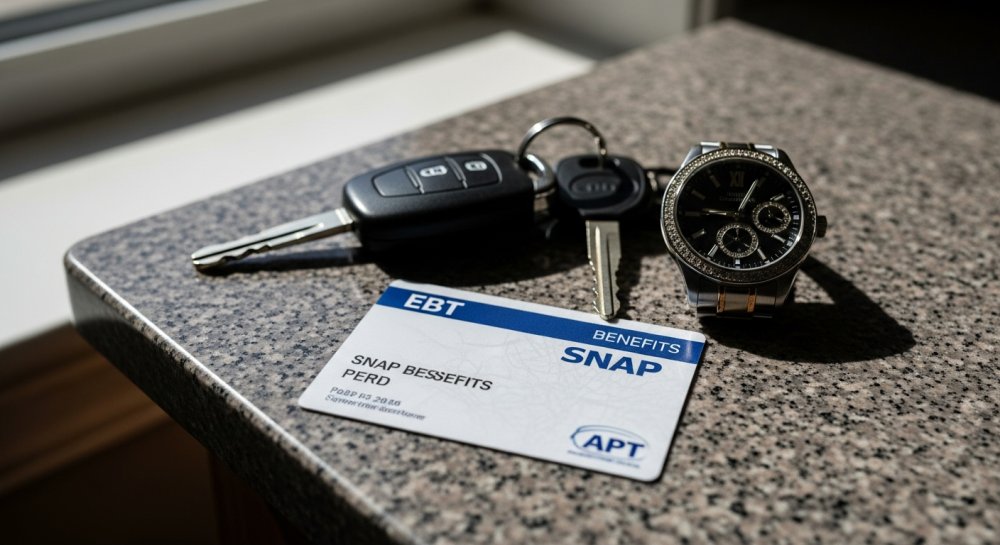
The vulnerability exists because Minnesota, like 43 other states, does not perform asset checks on welfare applicants. This policy, called broad-based categorical eligibility, means millionaires and luxury car owners can qualify for taxpayer-funded food assistance.
An Obama-era change to welfare administration made “anyone receiving small, even noncash ‘benefits’ from other welfare programs” automatically eligible for SNAP, according to a report from the America First Policy Institute. That includes people who simply receive welfare brochures or call hotlines for other benefits.
As eligibility expanded, state payment error rates for SNAP increased. In December 2025, the America First Policy Institute reported that one in eight Americans is now on SNAP, and costs for the taxpayer-funded program have increased from $60 billion to $100 billion annually.
The Big, Beautiful Bill passed in July 2025 changed the game. Under the legislation, states whose error payment rates exceed 6% by 2028 will be responsible for 5%-15% of SNAP benefit costs.
The federal government currently pays for all SNAP benefit costs. States will also be required to pay for 75% of administrative costs beginning in October 2026, up from the current 50%.
With pressure increasing to cut payment error rates, the America First Policy Institute is working with lawmakers to propose reforms shutting down the broad-based categorical eligibility loophole.
“States are responsible for administering SNAP, and over time, key guardrails around eligibility, verification, and oversight have weakened in several jurisdictions,” Matthew Schmid, the Farmers First campaign director for the America First Policy Institute, told The Daily Wire.
“Recent federal reforms establish clearer standards and introduce meaningful accountability for how states manage the program, including stronger incentives to reduce improper payments and enforce eligibility requirements.”
In Minnesota, Republican Rep. Pam Altendorf introduced the “Stop Welfare for the Wealthy” act earlier this year. The proposal would close the broad-based categorical eligibility loophole but has not progressed in the Democrat-controlled state legislature.
Altendorf began investigating Minnesota’s SNAP program after noticing benefit issuance increased dramatically between 2020 and 2021. She worries her state could lose significant federal funding if it does not reduce its payment error rate, which stands at nearly 9%.
“Minnesotans are generous,” she said.
“We want to help people who need it. But I think if you’re a millionaire and you’re qualifying for SNAP, that’s probably an abuse of the system.”
She cited a recent case where a couple was charged with fraudulently taking over $800,000 in benefits, including from SNAP, while spending thousands on luxury shopping and international travel. Prosecutors say the pair spent over $54,375 at a jewelry store and $7,000 on travel.
Prosecutors say the couple and their four children collectively owned 17 cars.
While Minnesota Governor Tim Walz has claimed to have taken sufficient steps to combat fraud, Republicans say he has not done enough.
“The guardrails completely came off under the Governor Walz administration,” Altendorf said.
“So that’s what we’re seeing, is people are abusing the welfare system.”
New Mexico has one of the worst payment error rates in the country at 14%. Senator Crystal Brantley, a Republican representing a rural part of the state, has pushed to close down broad-based categorical eligibility.
She represents some of the poorest New Mexicans and wants SNAP benefits to go only to those in need.
One recent case in her district involved fentanyl being traded for SNAP benefit cards, according to law enforcement. Investigators said a drug dealer traded 50 fentanyl pills for a SNAP benefit card.
The price for drugs is typically higher when SNAP benefit cards are used as currency, Sierra County Sheriff Joshua Baker told a local outlet.
“We find that to be a common trend, because the inconvenience of having to go and utilize the EBT card, they charge double, sometimes even triple what the going street rate would be in cash,” he said.
Brantley said the case motivated her to introduce legislation closing loopholes, but her bill has received no committee hearings.
“I would encourage state lawmakers to join me in an effort to address those overpayments, to reduce that error rate, so that the federal government will continue to work with us, to make sure that our most vulnerable population is eligible for the program, but we refuse to fund those who do not qualify,” she told The Daily Wire.
She said if New Mexico continues to mishandle SNAP dollars, it deserves to lose federal funding.
“We could lose federal funding, and I have to say as a New Mexican, and rightfully so, because we refuse to address the overpayments,” Brantley told The Daily Wire.
“We have information that has been brought forward, explaining that there are large overpayments of this program, and we are not even taking a single step to address that.”
She added that the only way she saw New Mexico officials cracking down on SNAP waste was a “real threat” from the federal government to “seriously” cut funding to the state, which is largely dependent on federal dollars.
“It’s very clear that, as a state, there is not an appetite to make changes and to be better stewards of those dollars,” she said.
“It’s gonna have to come as a threat from the federal government to be very serious and actually start clawing back money.”
Indiana Republicans have moved to close the broad-based categorical eligibility. Governor Mike Braun signed legislation earlier this year that ended Indiana’s participation in expanded eligibility for SNAP, restricted benefits to American citizens or those in the United States legally, and stipulated that SNAP could not be used to purchase candy or soda.
Braun, a member of the America First Policy Institute Governors’ Council, credited the organization for helping with the legislation.
“AFPI is building an invaluable infrastructure to support state policymakers that connects the states to federal issues where cooperation is needed, like SNAP reform,” Braun told The Daily Wire.
In Georgia, a bill cracking down on SNAP waste is making its way through the Republican-controlled state legislature. The proposal, from Rep. Martin Momtahan, would close the broad-based eligibility loophole and add increased verification for benefits.
The proposal has already passed the House but still needs to make it through the Senate.
Georgia currently has a payment error rate of over 15% and could lose federal funding if the rate is not reduced.
Momtahan has said the bill “ensures that SNAP benefits are going to families who truly qualify, while protecting Georgia’s taxpayers from federal penalties.”
While states work to clean up administration of the SNAP program, the Trump administration has pushed forward on its reforms and says it has removed over 4 million recipients who were not eligible to receive benefits. The Trump administration has also worked with states to ban the use of SNAP funds for junk food.
Agriculture Secretary Brooke Rollins, who co-founded the America First Policy Institute in 2021, recently said in an interview that in one state, there were 14,000 individuals receiving SNAP benefits driving luxury vehicles.
Researchers with the institute told The Daily Wire they expect to continue working with state lawmakers across the country to reduce SNAP waste.
“We are activating our state chapters and working directly with governors, legislators, and local partners to advance policies that strengthen oversight and close gaps in SNAP,” Ashley Hayek, the organization’s executive vice president, told The Daily Wire.
“It is a hands-on approach that takes the Administration’s momentum and turns it into policy changes where the program is run.”
Let us know what you think, please share your thoughts in the comments below.
