Christianity
Vatican Turns to Tech Elite for Guidance on Artificial Intelligence Ethics

Clear Facts
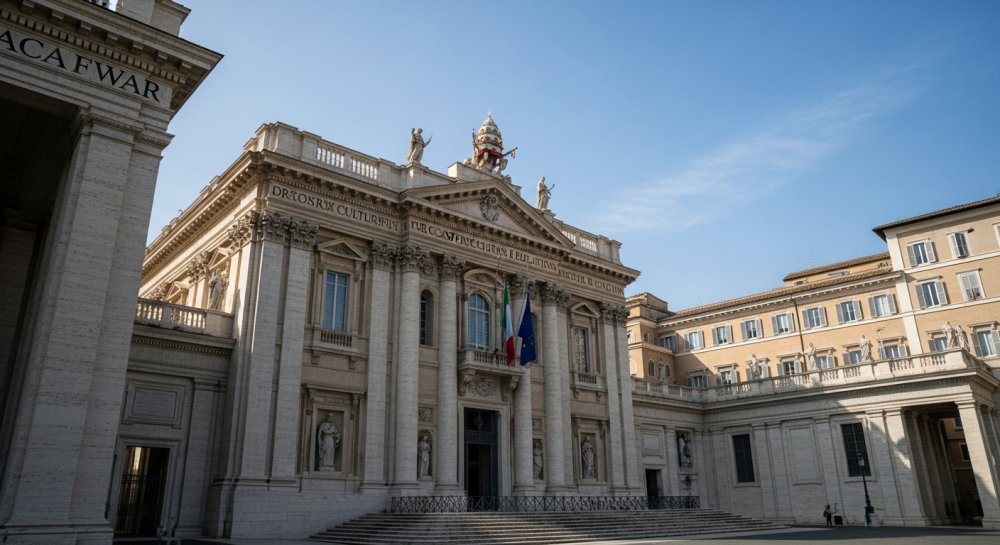
- The Vatican released new ethical guidance on artificial intelligence through its Dicastery for Culture and Education in May 2025
- Microsoft co-founder Bill Gates participated in developing the AI ethics framework alongside other tech industry leaders
- The guidance emphasizes “preserving the human person” as central to Catholic teaching on emerging technology
The Catholic Church has entered the artificial intelligence debate, publishing comprehensive ethical guidelines that involve some of the world’s most influential technology figures. The Vatican’s Dicastery for Culture and Education released the framework in May 2025, drawing on input from tech industry leaders including Microsoft co-founder Bill Gates.
The guidance places human dignity at the center of the Church’s approach to AI development and deployment. “Preserving the human person” emerged as the cornerstone principle in the Vatican’s framework, reflecting longstanding Catholic teaching on the primacy of human life and dignity in technological advancement.
The questions posed by AI are bigger than the AI community. We urgently need the world – religions, civil society, academics, governments – to participate in creating a positive outcome.
I’m glad the Catholic Church is engaging, and honored to speak at the presentation. https://t.co/l3BnKr3UZH
— Chris Olah (@ch402) May 18, 2026
The Vatican’s involvement of Gates comes at a time when his role in technology and global health initiatives has generated significant scrutiny. Gates has recently been at the center of debates regarding Pentagon contracts and defense technology partnerships, making his participation in Catholic AI ethics guidance particularly noteworthy.
The Church’s engagement with artificial intelligence reflects growing concern among religious and civic leaders about the rapid pace of technological change. Questions about AI’s impact on employment, privacy, warfare, and human autonomy have prompted institutions across the ideological spectrum to establish ethical frameworks.
Conservative voices have expressed particular concern about who shapes these frameworks and whether traditional values receive adequate consideration. The Vatican’s emphasis on preserving human dignity aligns with conservative priorities regarding the sanctity of life and the importance of human agency in an increasingly automated world.
The timing of the Vatican guidance coincides with broader debates in Washington about artificial intelligence regulation and the role of major tech companies in defense and national security. These discussions have intensified as AI capabilities expand in both civilian and military applications.
The Church’s historical role as a moral authority on technological ethics dates back centuries, from debates about early medical procedures to modern bioethics. This latest intervention signals the Vatican’s determination to remain relevant in discussions about humanity’s technological future.
Critics question whether collaboration with tech industry leaders compromises the independence of ethical guidance, while supporters argue that effective frameworks require input from those who understand the technology’s capabilities and limitations. The balance between expertise and objectivity remains a central tension in AI ethics development.
The Vatican’s framework will likely influence Catholic institutions worldwide, including hospitals, universities, and social service organizations that increasingly incorporate AI into their operations. How these institutions implement the guidance will test its practical applicability beyond theoretical principles.
Let us know what you think, please share your thoughts in the comments below.
