Christianity
Texas Church Faces Municipal Opposition After Years of Public Prayer

Clear Facts
- A Texas church has been conducting public prayer services for years without incident until recent municipal intervention
- Local government officials are now challenging the church’s long-standing practice through regulatory enforcement
- The case highlights growing tensions between religious freedom and local administrative authority
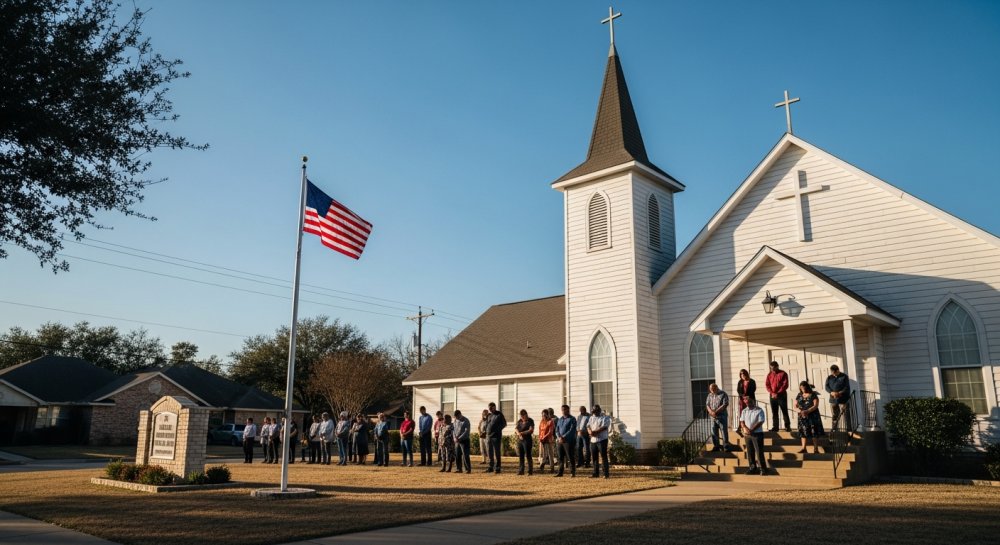
Religious liberty advocates are sounding the alarm as a Texas municipality escalates its use of bureaucratic regulations to restrict a church’s prayer activities that had been peacefully conducted for years without controversy.
The confrontation represents what many conservatives view as a troubling pattern of local governments weaponizing administrative code to target religious expression in the public square.
For years, the church had maintained its prayer services without drawing objection from city officials or residents. The sudden enforcement action marks a dramatic shift in the municipality’s approach to the congregation’s activities.
Constitutional scholars note that religious freedom protections extend beyond the walls of church buildings to public spaces where Americans have historically exercised their First Amendment rights.
The case underscores concerns among faith communities nationwide about the expanding use of regulatory authority to limit religious practice. Local zoning codes, permit requirements, and noise ordinances are increasingly being deployed in ways that disproportionately affect religious organizations.
Traditional understanding of the First Amendment’s Free Exercise Clause has long recognized that government cannot burden religious practice without compelling justification. The Supreme Court has repeatedly reinforced this principle, particularly in recent decisions strengthening religious liberty protections.
Conservative legal experts argue that when municipalities suddenly enforce regulations against long-tolerated religious activities, it raises serious questions about discriminatory intent and selective prosecution.
The church’s situation reflects broader cultural tensions as secular authorities increasingly assert regulatory control over spaces where religious Americans have historically exercised their faith freely.
Religious freedom remains a cornerstone of American constitutional order, predating even the Constitution itself in colonial charters and state constitutions. The Founders understood that protecting religious exercise from government interference was essential to preserving liberty.
As this case develops, it will test whether local bureaucratic authority can override the fundamental right to religious expression that has been protected throughout American history.
Let us know what you think, please share your thoughts in the comments below.
