U.S. News
Why An Entire Generation Refuses To Leave Their Parents’ Homes

Clear Facts
- A growing number of adults in their 30s are choosing to live with their parents indefinitely, not as a temporary necessity but as a permanent financial strategy
- Many young adults express no shame about remaining financially dependent, viewing it as “savvy” rather than a failure to launch into independence
- This cultural shift away from self-reliance is creating a generation that expects institutional handouts and rejects the traditional American value of personal responsibility
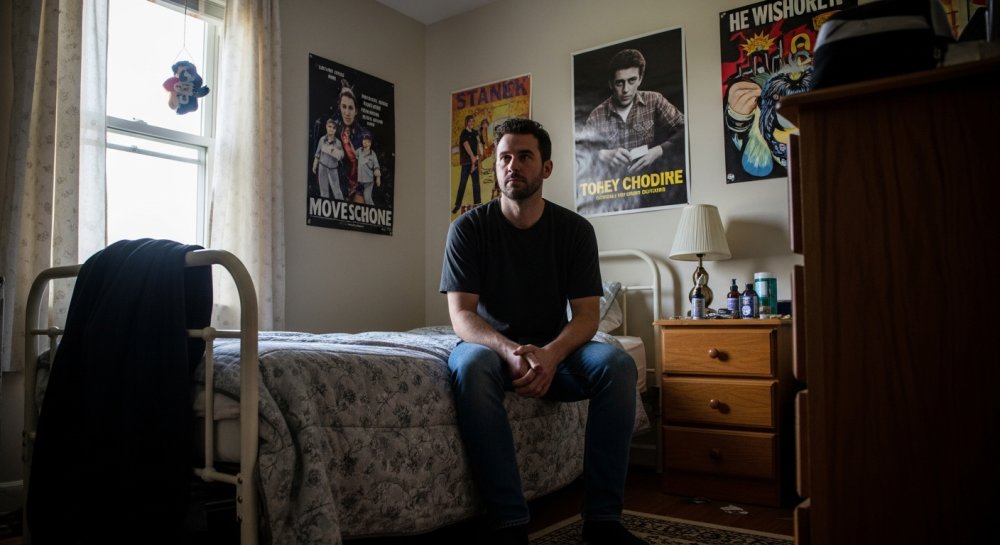
The Wall Street Journal recently reported that more and more adults are moving back in with their parents to save money. One subject in the article remarks about the reaction from peers: “No one ever judges me. The conversation tends to be more like, ‘That’s awesome, and I bet you’re saving money.'”
But it’s not awesome to be 33 years old and have no plans to move out of your parents’ house. This represents one of the most troubling issues young Americans face as they approach adulthood: a complete absence of self-reliance.
The excuse is always the same: home prices are higher than they used to be. That may be true, but it does not justify an attitude of apathy and dependence.
First of all, previous generations faced their own challenges and overcame them. Rent an apartment until you can afford a house. Split the cost with roommates. The challenges of today may be different from the challenges of the past, but that doesn’t mean they’re worse, and it certainly doesn’t mean they’re insurmountable.
Secondly, the high-cost argument would be more understandable if living with one’s parents was seen as an absolute last-ditch option for somebody who truly couldn’t afford independent living. The article makes clear, however, that the subjects feel no shame about living at home. They view it as a smart or “savvy” way to save some money.
This is where the real problem lies. What young people should view as an unfortunate byproduct of a serious problem, they instead see as a perfectly reasonable solution. This is indicative of a culture that prioritizes material pleasure over pride and independence.
This culture of shamelessness is a large part of what’s driving the popularity of socialist handout culture among American youth. When you strip away the cultural stigma on freeloading, people will expect their hand-outs to be institutionalized.
“Not everybody has rich parents” no longer becomes a cause for living independently. It becomes a cause for manufacturing a state-sponsored “rich parent” for everyone else.
Shame, to be clear, does not mean cruelty. There is, at least for now, a social stigma around being unemployed. This is not a license to abuse or bully the unemployed, nor does it mean that the unemployed should be stripped of their basic dignity.
There is, however, an understanding among both the unemployed person and his peers that he is in an inferior situation and should be actively working to remedy it. He receives a lesser degree of social respect and, for that reason, is motivated to find a job.
This type of healthy shame should extend to broader situations, especially financial dependence. The entire concept of a welfare system requires a certain degree of shame in order to function. The difference between a social safety net and a nanny state is an inherent desire not to be the guy in the net.
If the proponents of the welfare state gave it a moment’s thought, they would see that shame is actually their ideal motivator. So often left-wingers decry the binary choice of “you work or you starve.” One would think they would be delighted to have a motivator that does not use the threat of danger or physical harm to motivate work.
The objective has never been emergency support. It has been the destruction of the meritocracy.
Let’s be clear about something. It is shameful to be an adult who is unable to provide for yourself and your family. Whether you’re taking handouts from the government, your parents, or any other third party, if you’re not the one putting food on your child’s plate, you should be embarrassed.
That doesn’t mean that we should let anyone starve. It simply means we should differentiate between treating welfare as a safety valve whose necessity we all strive to eliminate and placing it on equal social footing with self-reliance. When we teach that there’s nothing shameful about failure, we naturally instill the lesson that there’s nothing prideful about success.
More and more, young people are becoming alienated from the connection between hard work and the comforts that it brings. Whether they rely on government handouts or parental handouts, they live in comfort through no struggle or effort of their own. Can we really be surprised that they keep electing socialists?
Conventional wisdom on the Right has always been that socialism looks attractive when you’re a kid living on someone else’s dime, but it becomes a lot less appealing once you’re out in the real world. Only nowadays, people are living on their parents’ or the state’s credit card well into adulthood.
The life of a dependent is bound to beget dependence. Perhaps the trend of young people taking longer to mature than their parents comes from the incessant culture of infantilization.
The epidemic of shamelessness is a failure on multiple fronts. It’s a failure of the grown men and women who see no issue with freeloading off their parents into adulthood. It’s a failure of the education system not to instill a sense of self-reliance. It’s also a failure on the part of the parents who never told their children it was time to move out.
Living at home when you’re 23 and when you’re 33 are two very different things. By never placing the responsibilities of adulthood on your children, you enable them to stay children forever.
The sense of being owed handouts and the attitude that it is “thrifty” or “savvy” rather than pathetic to live on someone else’s dime is not localized to the Left. For far too many populists on both sides, the question is not “Why are there so many handouts?” It’s “Where’s my piece of the pie?”
None of this is to say that our problems aren’t real. Housing costs are high, and living independently has certain new challenges attached to it. But the solutions lie in tenacity, self-respect, and the individualist values that built our country. Not in surrendering to laziness and hedonism.
A little shame goes a long way. It’s time for young America to grow up.
Let us know what you think, please share your thoughts in the comments below.
