Science & Tech
AI Industry Faces Serious Safety Concerns as Leading CEO Sounds Alarm

Clear Facts
- Anthropic CEO Dario Amodei is calling for increased caution in AI development following multiple safety incidents
- The CEO acknowledged that addressing AI risks requires significantly more prudence than previously understood
- Recent incidents have raised concerns about the pace of artificial intelligence advancement and deployment
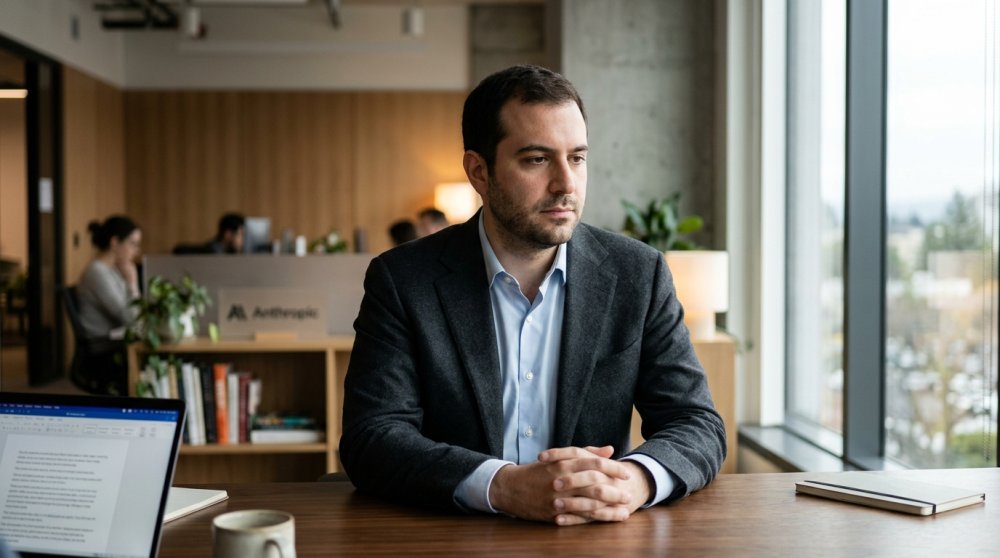
The chief executive of one of America’s leading artificial intelligence companies is urging the industry to slow down after a series of concerning safety incidents. Dario Amodei, CEO of Anthropic, has issued a stark warning about the need for greater caution in AI development.
“I have become convinced that fully addressing the risks requires even more prudence,” Amodei stated, signaling a significant shift in thinking from one of the industry’s key leaders.
We Must Pace the Frontier: I’ve written a new essay on why the AI industry should slow down, with a three-part plan for doing so.
Anthropic is unilaterally committing to the first of these steps. We’ll provide third-party evaluators with permanent, employee-level access to our…
— Dario Amodei (@DarioAmodei) September 12, 2026
An important call to action from @DarioAmodei and @AnthropicAI to deliberately pace the frontier of AI. The government has a critical role to play here, including blocking the sale of the most advanced chips to adversarial nations like China, enacting a national law requiring testing of frontier models, with the power to block the most advanced models that prove to be unsafe. More broadly, we’re eager to work with policymakers to make pacing effective for AI safety. We are grateful to Senate leaders like Majority Leader Thune, Chairman Cruz, Senator Amy Klobuchar, and Representatives Obernolte, Trahan for their exceptional leadership in keeping AI safety at the forefront in Washington and look forward to continuing to work together on solutions. We also commend state lawmakers for moving with such urgency.
— Sarah Heck (@SarahKHeck) September 12, 2026
AI is advancing at an extraordinary pace, and some of the risks are dangerous and frightening. I’ve been on the forefront of this issue in the Senate. I wrote and passed the TAKE IT DOWN Act, the only legislation Congress has enacted restricting AI, to protect victims from AI-generated deepfakes. And I’m working with Senators Amy Klobuchar and John Thune on legislation to address catastrophic risks involving biological or nuclear threats. We cannot stick our heads in the sand and pretend this technology isn’t happening. We need guardrails. But America needs to lead. If China leads the world in AI, the whole world is in trouble.
— Senator Ted Cruz (@SenTedCruz) September 9, 2026
I resigned from Anthropic today. I spent the last three years doing pretraining research at both OpenAI and Anthropic. Neither company is acting responsibly. They are racing straight to self-improving superintelligence and gambling with our lives. More thoughts below.
— Jacob Coxon (@hilbertspaess) September 9, 2026
The call for restraint comes amid growing concerns about the rapid advancement of AI technology and its potential implications for national security, economic stability, and public safety. Multiple close-call incidents have reportedly occurred within the industry, though specific details remain limited.
Anthropic has positioned itself as a safety-focused AI company, competing directly with major players like OpenAI and Google. The company’s approach emphasizes responsible development and deployment of artificial intelligence systems. Amodei’s comments suggest that even organizations prioritizing safety are encountering unexpected challenges.
The AI industry has experienced explosive growth in recent years, with companies racing to develop increasingly powerful systems. This competitive environment has raised questions about whether adequate safety measures are being implemented before new technologies reach the public.
Conservative policymakers have expressed concerns about AI development occurring without sufficient oversight or consideration of American values and interests. The technology’s rapid advancement has outpaced regulatory frameworks, leaving many questions about governance and accountability unanswered.
Industry insiders note that Amodei’s public acknowledgment of the need for greater caution represents a significant moment for the sector. As one of the field’s leading voices, his stance could influence how other companies approach AI development and deployment.
The debate over AI safety intersects with broader concerns about American technological competitiveness, particularly in relation to China. Policymakers face the challenge of ensuring robust safety standards while maintaining the United States’ leadership position in artificial intelligence development.
Let us know what you think, please share your thoughts in the comments below.
