Politics
Virginia Democrats Approve Radical Redistricting Plan Stripping Rural Communities of Representation

Clear Facts
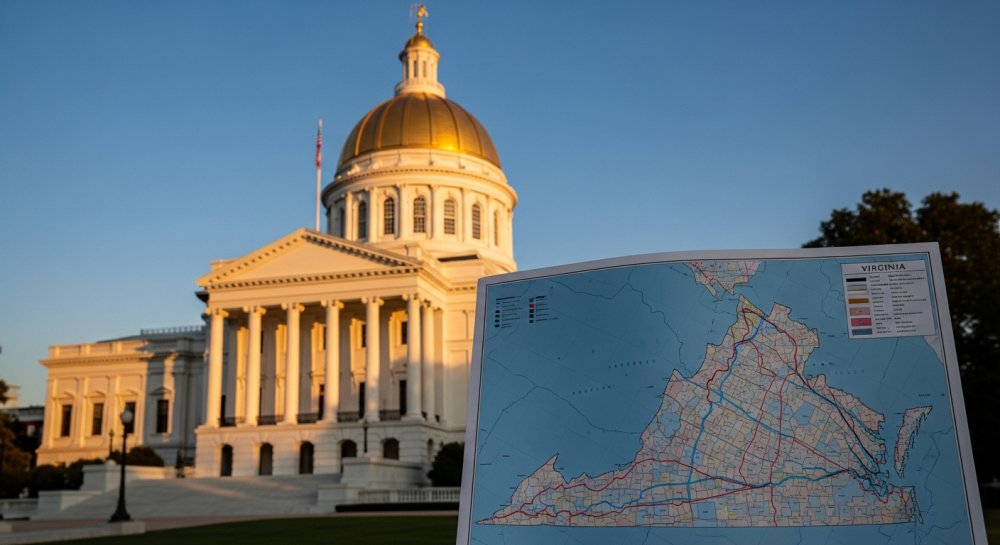
- Virginia’s Democrat-controlled legislature approved a controversial redistricting map that concentrates rural voters into a single district spanning multiple regions
- The new map has been labeled the ‘lobster district’ due to its unusual shape stretching across distant rural areas
- Rural communities argue the redistricting dilutes their political representation while consolidating Democratic power in urban centers
Virginia’s General Assembly has pushed through a redistricting plan that rural voters are calling a blatant power grab designed to silence conservative voices across the Commonwealth.
The controversial map consolidates far-flung rural communities into a single, sprawling district that critics say violates basic principles of fair representation. Dubbed the “lobster district” for its bizarre, elongated shape, the new boundaries connect distant rural areas while carving up traditional community boundaries.
Conservative lawmakers and rural advocacy groups have condemned the redistricting as a transparent attempt to dilute the voting power of Virginia’s heartland communities. The new district configuration effectively packs rural voters together while allowing Democrats to strengthen their hold on surrounding suburban and urban districts.
The redistricting comes as Democrats seek to cement their electoral advantages following recent legislative gains. Rural Virginians, who tend to vote Republican and hold traditional conservative values, find themselves grouped into a single district despite living in geographically and culturally distinct regions separated by hundreds of miles.
Political analysts note that this type of redistricting — stretching districts across vast distances to group similar voters — represents exactly the kind of gerrymandering that Democrats have historically claimed to oppose. The hypocrisy has not been lost on Virginia’s conservative voters, who see the move as confirmation that Democrats will manipulate district lines when it serves their political interests.
The map’s approval highlights the ongoing battle over representation in state legislatures nationwide. As rural America continues to see its voice diminished in state capitals increasingly dominated by urban priorities, redistricting fights have become flashpoints in the broader cultural and political divide.
Republican legislators attempted to block the measure, arguing it violates the principle of keeping communities of interest together. Their objections were overruled by the Democratic majority, which pushed the redistricting plan through on a party-line vote.
The redistricting plan now faces potential legal challenges from rural advocacy groups and Republican organizations, who argue the map violates both state constitutional requirements and federal voting rights protections. Legal experts suggest the unusual district configuration could be vulnerable to court challenges, particularly if opponents can demonstrate it was drawn with discriminatory intent.
Let us know what you think, please share your thoughts in the comments below.
