Sports
Why America’s Top Female Athletes Stay Silent on the Biggest Threat to Women’s Sports

Clear Facts
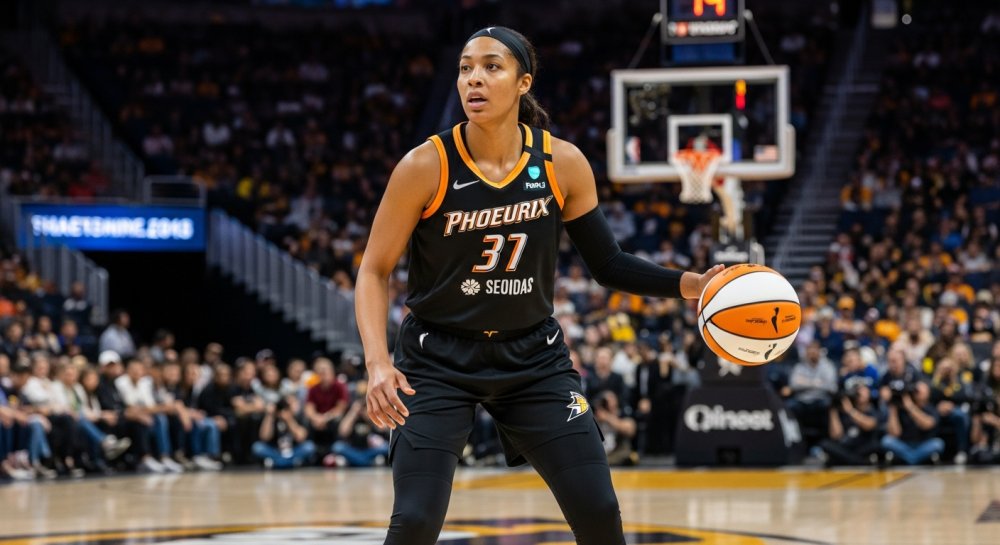
- WNBA player Sophie Cunningham is one of very few prominent female athletes to publicly oppose biological males competing in women’s sports
- Simone Biles publicly supported transgender “inclusion” in women’s sports during a 2025 dispute with Riley Gaines, later apologizing for personal attacks but maintaining her position
- Most elite female athletes, including Caitlin Clark, A’Ja Wilson, Katie Ledecky, and Serena Williams, have either avoided the topic entirely or provided carefully measured responses when asked
The question of biological males participating in women’s sports has dominated national conversation for years, reaching from the highest levels of government to kitchen table discussions across America. Yet despite the prominence of this issue, many of the world’s most influential female sports stars have never publicly addressed it.
Some have unfortunately embraced male “inclusion” outright, while others offer carefully measured responses. Shockingly, many have simply never been asked about it in any public forum.
Sophie Cunningham became one of just a handful of prominent female athletes to take a strong stance in the effort to protect young girls by keeping women’s sports female. Her statements have raised an important question: what exactly have some of the most prominent female athletes said on this critical issue?
Simone Biles became one of the highest-profile female athletes to directly weigh in on the issue in June 2025 during her public dispute with Riley Gaines on social media. Biles, arguably the most influential and popular female athlete currently competing today, criticized Gaines after commenting on a Minnesota high school softball championship team playing with a male.
“Truly sick,” Biles wrote of Gaines, later arguing that sports organizations should find ways for transgender athletes to compete in women’s sports rather than excluding them altogether. A wildly anti-woman position that contradicts everything Title IX was designed to protect.
After receiving relentless backlash, Biles apologized for her personal attacks against Gaines but did not retract her support for “inclusion.” When speaking to media following the dispute, she reaffirmed that she supports “inclusion” while acknowledging the conversation around fairness is complex in her opinion.
Back-to-back WNBA MVP A’Ja Wilson has not publicly commented on transgender participation in women’s or girls’ sports. Throughout her career, Wilson has frequently spoken about equality, diversity, and inclusion, just like most WNBA players, but there is no known public statement from Wilson addressing eligibility rules involving women or girls sports.
From what the public record shows, there is no confirmed instance of Wilson being directly asked about the issue by a reporter, podcast host, or media outlet.
Serena Williams, widely regarded as the greatest female tennis player of all time, has never publicly stated a definitive position on male participation in women’s sports. Interestingly, statements she made during a 2013 appearance on David Letterman are now used to showcase the biological superiority of men in sport.
When discussing the differences between men’s and women’s tennis, Williams said that if she played Andy Murray she would lose “6-0, 6-0 in five to six minutes,” adding that men’s and women’s tennis were “almost two separate sports.”
Those remarks were made in response to questions about whether she could compete with top male players, not about women’s sports eligibility policies. Those comments have undoubtedly been some of the most impactful in the fight to keep women’s sports female, though.
Williams has been a catalyst for the cause, even without knowing what women’s sports would face in the decade following those comments.
Nine-time Olympic gold medalist swimmer Katie Ledecky has not publicly taken a side in the issue. Despite swimming having become one of the central sports in the national debate following the Lia Thomas controversy, Ledecky has largely avoided commenting on political or cultural issues.
Katie Ledecky was directly asked in a June 2024 profile about the NCAA Title IX lawsuit stemming from Lia Thomas’ participation in the 2022 NCAA Championships. Rather than endorsing or opposing transgender participation in women’s sports, Ledecky declined to take a position, saying she “preferred not to weigh in.”
“I think we’re lucky to live in a country where issues can be debated,” Ledecky added, emphasizing learning from different perspectives.
When asked more broadly about politics, Ledecky said, “I don’t want to get into politics,” explaining that she prefers to focus on swimming rather than controversial public debates.
Top-5 women’s tennis player Coco Gauff has publicly supported LGBTQ communities and has participated in Pride-related messaging for many years, but she has not publicly addressed transgender participation in women’s sports specifically. Recently on social media, Riley Gaines called on Gauff to speak on the issue, asking, “Should women’s sports be exclusive to women?”
Gaines has yet to hear a response.
WNBA superstar and Indiana Fever sharpshooter Caitlin Clark is one of the few athletes on this list who has been directly asked about the issue. During Clark’s 2024 interview as TIME Athlete of the Year, the magazine asked Clark about transgender participation in women’s sports amid the broader national debate.
“Everybody should have the same rights. I think everybody should be able to be who they are,” Clark responded.
She also said transgender people “deserve the same rights and should be treated with the same respect as anybody else.”
Clark unfortunately did not directly answer whether biological males should be permitted to compete in women’s sports. It was a major letdown for many conservatives and parents across the country.
Many are hoping, myself included, that Cunningham will inspire Clark to use her platform to help protect women and girls in their sports and spaces too.
Dallas Wings star Paige Bueckers has been very outspoken on racial justice issues and has expressed support for LGBTQ communities throughout her career. However, when it comes to justice for females in their sports, Bueckers has not publicly commented on transgender participation in women’s or girls’ sports.
Recently, Bueckers weighed in on the lack of black female head coaches in the WNBA saying she wants to see “equal opportunity and no discrimination based on what you look like, who you like, and anything of that nature,” but has not spoken up about fairness and equal opportunity in regards to men competing in women’s sports.
WNBA Champion Sabrina Ionescu has not publicly stated a position on transgender participation in women’s sports, although she has spoken extensively about growing women’s basketball and expanding opportunities for female athletes.
Olympic gold medalist sprinter Sha’Carri Richardson has not publicly commented on transgender participation in women’s sports. Richardson has frequently spoken about inclusion, respect, and individuality, but there is no known statement specifically addressing male athletes competing in women’s events.
There appears to be no interview or podcast where she was asked about the issue. Still, silence is deafening when athletes like Richardson are happy to talk about a litany of other social issues but have nothing to say about this.
Richardson is dating a female, while reportedly identifying as bisexual according to past social media posts, so she may align with athletes like Megan Rapinoe who have openly supported biological males competing against women.
Olympic gold medal hockey captain Hilary Knight has publicly supported transgender inclusion in sports. Following changes to international hockey policies and broader conversations about eligibility rules, Knight expressed support for maintaining welcoming environments for transgender athletes while also respecting governing body decisions.
This position is particularly notable because any high-level high school boys team could join the PWHL (women’s pro hockey league) and dominate. Knight’s comments came during media discussions surrounding policy changes affecting international hockey.
While she was directly asked about inclusion and policy decisions, she did not advocate for blanket exclusion and instead emphasized inclusion and respect for all athletes.
As Cunningham has said as she doubled down on her stance, this issue is “common sense.” So when will one of these prominent female athletes, or others like them, use their platform and voice to speak up for the girls who are desperately looking for one of their inspirations and athletic idols to help protect them from men who are invading their sports and spaces?
The silence from America’s top female athletes on this fundamental issue of fairness speaks volumes. Young girls watching their heroes compete deserve better than carefully crafted non-answers or outright support for policies that undermine everything Title IX achieved.
Let us know what you think, please share your thoughts in the comments below.
