Sports
Olympic Runner Who Claims Transgender Identity Calls Americans ‘Scary’ After Court Upholds Biological Reality

Clear Facts
- The Supreme Court ruled 6-3 to uphold West Virginia and Idaho laws protecting women’s sports based on biological sex
- Nikki Hiltz, who identifies as transgender nonbinary but competes in women’s races, expressed disappointment with the ruling
- More than half of U.S. states can now enforce protections for female athletes without legal challenge
An American Olympic runner who identifies as transgender nonbinary spoke out against Tuesday’s landmark Supreme Court decision protecting women’s sports, characterizing concerns about biological males in female competitions as fear-mongering.
The Supreme Court delivered a decisive 6-3 ruling in favor of West Virginia and Idaho, upholding state laws that require student-athletes to compete on teams corresponding with their biological sex at birth. The states were represented by Alliance Defending Freedom (ADF), while transgender athletes challenging the laws were backed by the ACLU and Cooley Legal.
In the highly anticipated rulings in West Virginia v. B.P.J. and Little v. Hecox, the high court affirmed that states have the authority to maintain sex-based eligibility requirements for women’s and girls’ sports teams.
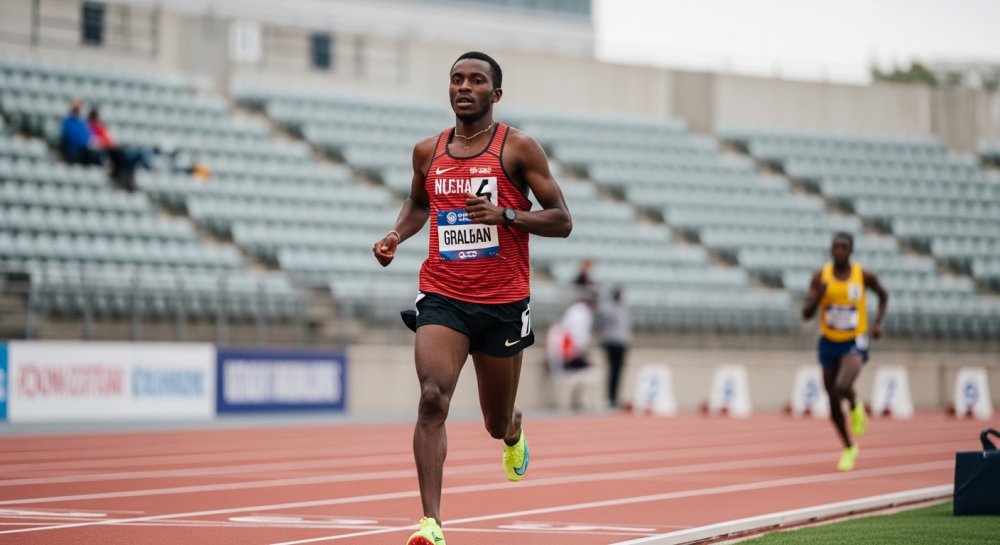
Nikki Hiltz, who competed in the Prefontaine Classic in Eugene, Oregon, winning the mile race with a 4:17.49, responded to the ruling following the victory.
“I wasn’t surprised, but I was obviously still disappointed. For me, I want to show that trans people can be in sport, be affirmed in their gender. We’re not these big, scary things,” Hiltz told The Athletic.
“It’s a really weird time in our country for a lot of different communities, mine specifically,” Hiltz added.
Hiltz has consistently competed in women’s races and previously discussed personal gender identity in social media posts.
“The best way I can explain my gender is as fluid. Sometimes I wake up feeling like a powerful queen and other days I wake up feeling as if I’m just a guy being a dude, and other times I identify outside of the gender binary entirely,” Hiltz wrote in an Instagram post last year.
Justice Brett Kavanaugh authored the Supreme Court’s majority opinion, which clearly established the constitutional foundation for protecting female athletics.
“Consistent with Title IX and the Equal Protection Clause, we hold that the States may maintain women’s and girls’ sports for biological females. They may determine eligibility for women’s and girls’ sports based on biological sex,” the opinion stated.
The ruling empowers more than half of U.S. states to enforce protection of women’s sports without fear of successful legal challenges. This represents a major victory for female athletes and parents who have advocated for fairness in athletic competition.
However, 23 states, including California, New York and Massachusetts, still lack laws protecting biological females in sports. Some of these states have enacted laws specifically designed to allow biological males to compete in girls’ and women’s athletics.
Let us know what you think, please share your thoughts in the comments below.
