Politics
States Risk Losing Billions in Federal Funds Under New Immigration Enforcement Rule

Clear Facts
- DOJ’s Office of Legal Counsel issued a legal opinion requiring all state agencies to report known illegal immigrants to DHS, reversing a 1998 interpretation that limited reporting to welfare program administrators only
- States failing to comply risk losing over $76.5 billion in annual federal welfare funding from Temporary Assistance for Needy Families and Supplemental Security Income programs
- The new requirement expands reporting obligations to all state agencies, including colleges and departments of motor vehicles, not just those directly administering welfare programs
The Justice Department issued a stark warning to states Wednesday: comply with federal immigration reporting requirements or lose billions in welfare funding. The move represents a significant expansion of immigration enforcement cooperation between federal and state governments.
The DOJ’s Office of Legal Counsel released a legal opinion reversing a 1998 interpretation that had limited immigration reporting requirements. Under the new guidance, states participating in two major welfare programs must now require all state agencies—not just those administering the programs—to report individuals known to be unlawfully present to the Department of Homeland Security.
This expanded mandate means state colleges, departments of motor vehicles, and other government entities will now share the reporting obligation previously limited to welfare program administrators. The shift aligns with President Donald Trump’s comprehensive approach to immigration enforcement since returning to the White House.
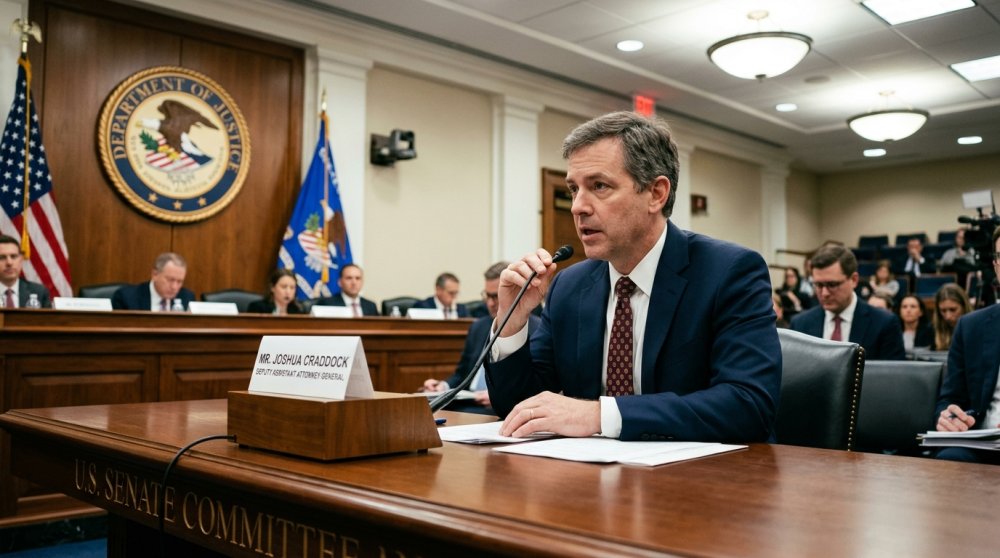
“Failure to comply may lead to serious consequences, including loss of program funding,” Deputy Assistant Attorney General Joshua Craddock stated.
The financial stakes are substantial. Federal Temporary Assistance for Needy Families grants exceed $16.5 billion annually, while Supplemental Security Income federal benefits surpass $60 billion each year. All 50 states and Washington, D.C., participate in these programs and are subject to the new reporting requirements.
Importantly, illegal immigrants are not eligible for either program, making the reporting requirement a matter of enforcement rather than benefit eligibility. The administration argues this measure will help identify individuals who are unlawfully present while ensuring federal welfare dollars serve only those legally entitled to them.
The president’s immigration enforcement strategy has included deploying federal agents to conduct operations in cities across the country and increasingly partnering with state and local law enforcement. The administration has also sought cooperation from private companies to locate suspected illegal immigrants.
Democrat-led states have resisted federal immigration enforcement cooperation, prompting the administration to leverage federal funding as a compliance mechanism. Several states have already filed lawsuits attempting to block DHS from collecting personal details of people receiving Temporary Assistance for Needy Families funds.
Legal challenges appear likely, as courts have previously limited some administration efforts requiring information sharing on migrants with DHS. However, judges have also allowed federal immigration authorities to collect certain categories of information, including Medicaid data, in some cases.
The new interpretation represents a significant policy shift that could reshape how states interact with federal immigration enforcement. By extending the reporting requirement beyond welfare agencies to all state government entities, the administration aims to create a comprehensive network for identifying individuals unlawfully present in the United States.
Critics argue the expanded mandate could discourage illegal immigrants from accessing state services like education or obtaining driver’s licenses, potentially creating public safety concerns. Supporters contend that enforcing immigration law requires cooperation across all levels of government and that states should not shield those who have entered or remained in the country illegally.
The financial pressure on states is considerable, and governors will face difficult decisions about compliance versus potential loss of federal welfare funding that serves their most vulnerable legal residents. The coming months will likely see legal battles as states challenge the administration’s authority to impose these expanded requirements.
Let us know what you think, please share your thoughts in the comments below.

Donald Cook
September 3, 2026 at 5:31 am
All States should lose funding if they refuse to follow Federal Laws
Matthew Brockton
September 3, 2026 at 8:05 am
It’s too bad blue states hurt their citizens who may be on assistance thru no fault of their own. That they would punish citizens while protecting law breaking illegals may help speed the end of libtardisum in blue states. That, my friends, is a good thing!!
Randy
September 6, 2026 at 5:43 pm
“ Critics argue the expanded mandate could discourage illegal immigrants from accessing state services like education or obtaining driver’s licenses, potentially creating public safety concerns”
If illegal immigrants are found through this effort, and deported, as they have been by every single president before Trump, they won’t be around to create a public safety concern. Problem becomes a non-problem, by default.