Politics
Why America Must Rethink How We Handle Homelessness and Mental Illness

Clear Facts
- Homelessness and untreated mental illness have created dangerous conditions in American cities, with many citizens feeling unsafe in public spaces
- Historical institutions like workhouses and asylums were dismantled without adequate replacement systems, leaving vulnerable populations without proper care or accountability
- Conservative leaders are calling for a return to structured solutions that balance compassion with public safety and personal responsibility
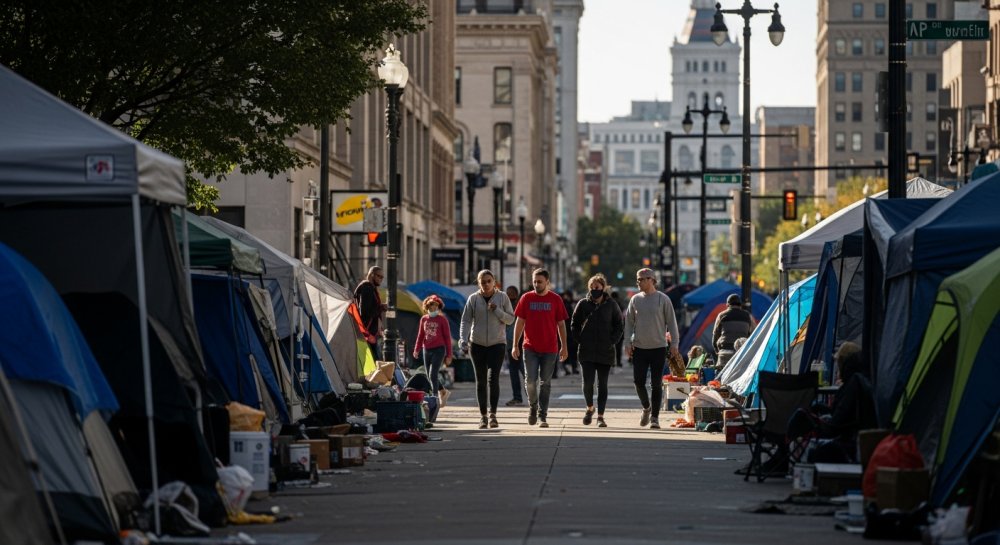
American cities have become unrecognizable. What was once the hallmark of civilization — safe streets, orderly public spaces, and communities where families could thrive — has been replaced by open-air drug markets, tent encampments, and the heartbreaking sight of mentally ill individuals wandering without care or supervision.
The crisis didn’t happen overnight. It’s the predictable result of decades of misguided policies that prioritized ideology over outcomes, feelings over facts, and the false notion that removing structure equals compassion.
In the mid-20th century, America dismantled its system of asylums and workhouses. The intentions may have been noble — to end abuses and integrate people back into society. But what replaced these institutions? Virtually nothing. We released thousands of vulnerable individuals onto the streets with nowhere to go, no treatment plan, and no accountability.
The result is what we see today: tent cities in our parks, needles on our sidewalks, and citizens who no longer feel safe walking through their own neighborhoods. Hardworking Americans avoid downtown areas that were once thriving centers of commerce and culture.
This isn’t compassion. This is abandonment dressed up in progressive rhetoric.
The left tells us we must simply accept this new normal, that any attempt to restore order is somehow cruel or unconstitutional. But there’s nothing compassionate about allowing someone in the grip of severe mental illness or addiction to slowly die on a street corner. There’s nothing humane about permitting public spaces to become dangerous for law-abiding citizens.
Real compassion requires structure. It requires holding people accountable while also providing them with the resources they need to get back on their feet. For those with severe mental illness, that means supervised care in facilities designed to treat them. For those capable of work but unwilling, it means work requirements tied to public assistance.
The concept of workhouses — updated for the 21st century — isn’t about punishment. It’s about dignity through responsibility. Every able-bodied person should contribute to society. Trading work for housing and meals isn’t exploitation; it’s the social contract that built this nation.
Similarly, modern asylums wouldn’t be the horror stories of the past. They would be humane facilities with proper oversight, medical care, and treatment plans. They would protect both the mentally ill and the communities around them.
Cities that have experimented with “housing first” policies — giving free housing with no strings attached — have seen mixed results at best and catastrophic failures at worst. Without addressing underlying issues of addiction, mental illness, and personal responsibility, simply providing housing becomes enabling.
The rule of law must be restored. Camping on public property, public drug use, and aggressive panhandling cannot be normalized as acceptable behavior. Laws exist for a reason, and enforcing them isn’t cruelty — it’s necessary for a functioning society.
This isn’t about lacking compassion. Conservative Americans are the most charitable people on earth. We give billions to charity, volunteer in our communities, and believe deeply in helping those who truly need it. But we also believe in tough love, personal accountability, and the understanding that sometimes the most compassionate thing you can do is enforce boundaries.
The current approach has failed spectacularly. Drug overdose deaths are at record highs. Crime rates in cities with permissive homeless policies have skyrocketed. Quality of life for everyone — including the homeless themselves — has deteriorated.
It’s time for a different approach, one that our grandparents would have recognized: structure, accountability, and genuine care for those who cannot care for themselves, combined with consequences for those who simply refuse to follow the rules the rest of us live by.
Public safety isn’t optional. Clean streets aren’t luxuries. The ability to walk through your city without fear isn’t too much to ask. And demanding these things doesn’t make you heartless — it makes you sane.
America built the greatest civilization in human history by balancing freedom with responsibility, compassion with accountability. We can do it again, but only if we’re willing to speak plainly about what works and what doesn’t, regardless of how it sounds to those who prioritize sounding compassionate over actually being effective.
Let us know what you think, please share your thoughts in the comments below.
