Politics
Progressive Insurgent Threatens Democrat Establishment in Michigan Senate Battle

Clear Facts
- Retiring Sen. Gary Peters reversed his neutrality pledge to endorse establishment candidate Rep. Haley Stevens over progressive Abdul El-Sayed in Michigan’s August 4 Democratic Senate primary
- Democrat Party leadership including Chuck Schumer has rallied behind Stevens while Bernie Sanders backs El-Sayed, exposing deep divisions within the party
- The winner will face Republican Mike Rogers in November’s general election for the crucial Senate seat
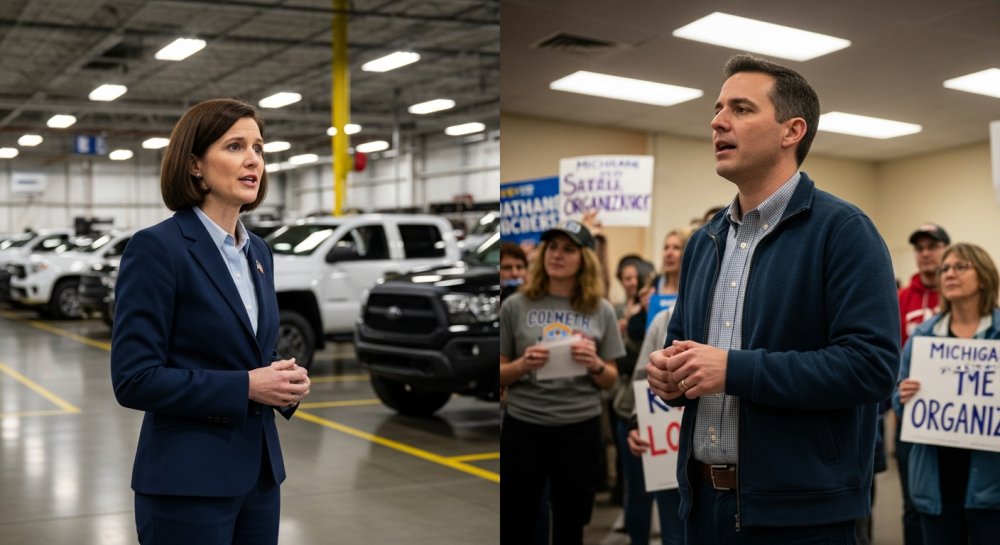
The Democrat Party establishment has abandoned any pretense of neutrality in Michigan’s contentious Senate primary, with retiring Sen. Gary Peters throwing his support behind U.S. Rep. Haley Stevens in a clear effort to block progressive challenger Abdul El-Sayed from securing the nomination.
Peters announced his endorsement Monday, claiming Stevens “will be ready on day one to fight for Michigan.” The move represents a complete reversal from late May, when he told The Associated Press he would remain neutral in the August 4 primary.
The Democrat establishment’s concern is palpable as they work to maintain control of the Michigan seat in their uphill battle to reclaim the Senate majority. Party leaders have lined up behind Stevens, a four-term congresswoman they view as more electable in November’s general election against Republican Mike Rogers.
Stevens has focused her campaign on traditional issues like manufacturing, jobs, and Michigan’s auto industry. El-Sayed, a former Michigan health director who has never won elected office, is running on a far-left platform including government-run healthcare and sweeping campaign finance restrictions.
El-Sayed has also made the Gaza conflict a centerpiece of his campaign, highlighting the deep fractures within the Democrat Party over Middle East policy and Israel.
Peters’ endorsement arrived weeks after State Sen. Mallory McMorrow withdrew from the race, leaving Stevens and El-Sayed as the only major Democrat candidates competing for the nomination.
“Senator Peters knows what it takes to win in Michigan, and he knows what Michigan needs from our next U.S. Senator: grit, effectiveness, hard work, and Michigan common sense,” Stevens said in a statement.
“I am honored to have his support.”
Peters won two Senate elections in Michigan and previously led the Senate Democrats’ campaign operations during the 2022 and 2024 election cycles, giving his endorsement particular weight among party operatives.
His backing follows similar support for Stevens from Senate Democrat Leader Chuck Schumer of New York, Sen. Ruben Gallego of Arizona, and Sen. Catherine Cortez Masto of Nevada. El-Sayed has secured endorsements from socialist Sen. Bernie Sanders of Vermont and Sen. Chris Van Hollen of Maryland.
The primary battle has deteriorated into personal attacks in recent weeks as both candidates struggle to define their opponent before voters head to the polls.
El-Sayed has attacked Stevens over tens of millions of dollars in outside spending supporting her campaign, including substantial contributions from the American Israel Public Affairs Committee. Stevens has challenged El-Sayed’s refusal to release his personal financial records.
During a July 7 debate, both candidates traded accusations of running negative campaigns, further exposing the bitter divide within Michigan’s Democrat Party.
The Democrat nominee will face Republican Mike Rogers, a former Michigan congressman running unopposed for his party’s nomination. The general election is expected to be among the nation’s most expensive and competitive Senate contests in November.
Michigan has become even more critical for Democrats after chaos erupted in Maine, where Democrat nominee Graham Platner withdrew following a sexual assault allegation. That unexpected vacancy has increased pressure on the party to avoid additional setbacks in battleground states like Michigan.
The outcome of Michigan’s primary will reveal whether the Democrat establishment can still control its own nominating process or whether the progressive wing continues to gain strength at the grassroots level.
Let us know what you think, please share your thoughts in the comments below.
