Finance
Costco’s Employee Strategy Defies Retail Industry Norms

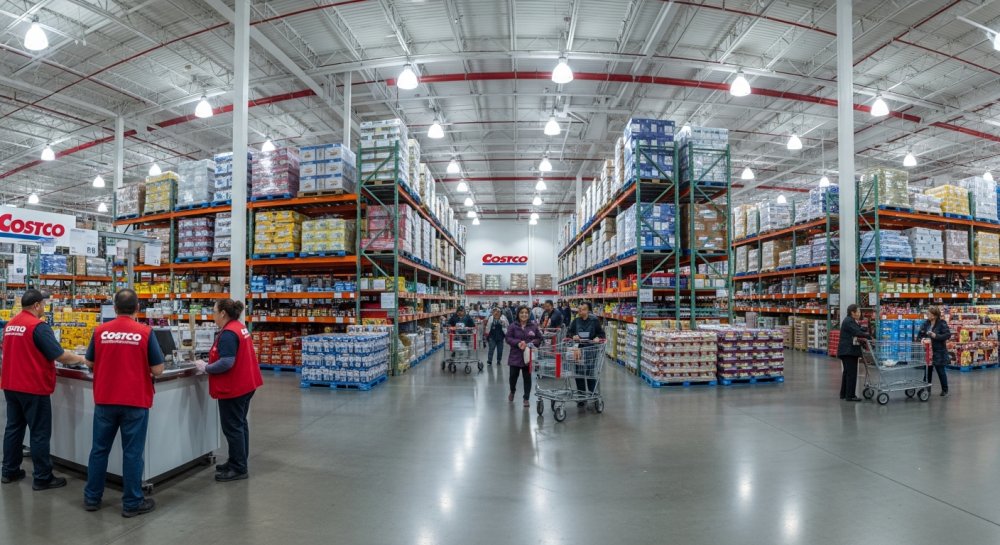
Clear Facts
- Costco pays workers an average of $31.46 per hour, significantly above retail industry standards
- The company maintains a 6% employee turnover rate compared to the retail industry average of 60%
- Costco’s business model prioritizes long-term employee retention over short-term profit maximization
While much of the retail sector struggles with workforce instability, Costco has built a distinctive approach centered on employee compensation and retention. The warehouse giant’s strategy stands in stark contrast to prevailing industry practices, demonstrating that sustainable business growth doesn’t require sacrificing worker wages.
Costco compensates its employees at an average rate of $31.46 per hour, far exceeding typical retail pay scales. This approach has yielded measurable results in workforce stability, with the company reporting just 6% employee turnover annually.
WSJ: He Earns $33 an Hour as a Costco Cashier. Now He’s a Millionaire – Long-tenured workers like cashier Tony Barzar are reliable, experienced and able to speed shoppers through a checkout line. Costco is willing to pay to keep them around https://t.co/HZBTMVXpzR
— Aaron M. Renn 🇺🇸 (@aaron_renn) July 9, 2026
For context, the broader retail industry experiences turnover rates near 60%, creating constant recruiting and training costs that eat into profitability. Costco’s model suggests these expenses can be redirected toward higher wages with better long-term outcomes.
The company’s approach extends beyond hourly wages. Costco provides comprehensive benefits packages and promotes from within, creating career pathways rather than dead-end jobs. This philosophy reflects a traditional American business ethic: treat workers well, and they’ll deliver consistent value.
Critics of minimum wage increases often point to potential job losses or reduced hours. Costco’s success complicates that narrative. The company remains highly profitable while paying well above mandated minimums, suggesting the issue may be more nuanced than ideological talking points allow.
From a conservative business perspective, Costco’s model embodies free-market principles working as intended. The company chose higher wages not because of government mandates, but because management determined it made sound business sense. No regulation forced this decision—it was pure market-driven strategy.
The warehouse retailer’s membership-based model also aligns with conservative economic values: customers pay upfront for access, the company operates on thin margins with high volume, and both parties benefit from the transaction. It’s capitalism without the cronyism.
Costco’s approach offers lessons for the broader business community. Stability matters. Institutional knowledge has value. Training costs add up when employees constantly cycle through positions. Sometimes the cheapest labor isn’t the most cost-effective labor.
This model won’t work for every business, and it shouldn’t be mandated by Washington. Different industries face different market pressures and operate on different margins. The key takeaway is that businesses have options beyond the race-to-the-bottom wage approach.
For American workers seeking stable employment with growth potential, Costco represents a proven alternative to gig-economy uncertainty. For business owners, it demonstrates that competitive wages can coexist with healthy profit margins when the broader strategy is sound.
Let us know what you think, please share your thoughts in the comments below.
