Politics
Federal Judge Strikes Down Philadelphia’s Attempt to Handcuff Immigration Enforcement

Clear Facts
- U.S. District Judge Chad Kenney blocked Philadelphia’s law restricting federal officers from wearing masks and concealing identification during enforcement operations
- The judge ruled the city ordinance violated the Constitution’s Supremacy Clause, which establishes federal law takes precedence over local regulations
- Philadelphia’s Democrat mayor declined to sign the bill, citing significant legal problems, but allowed it to become law without her signature
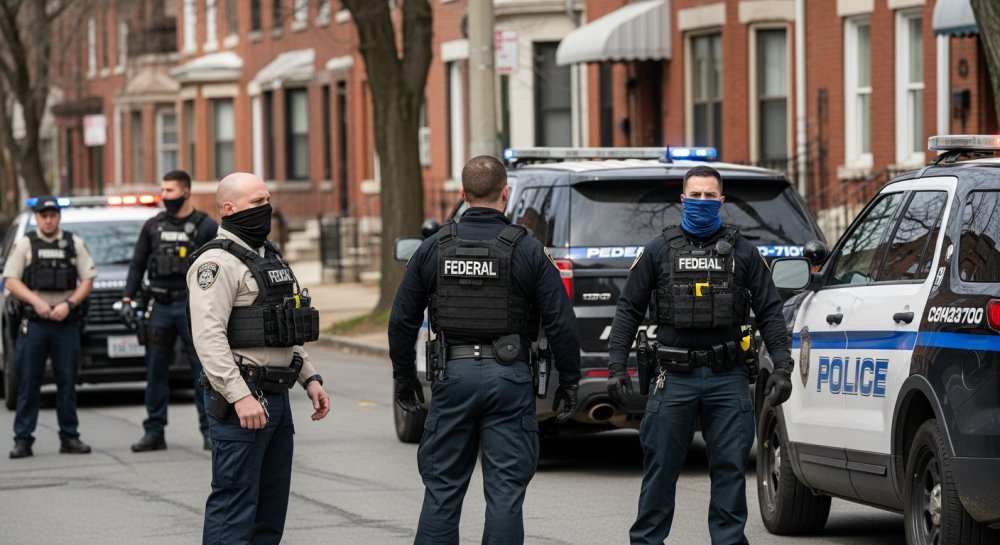
A federal judge delivered a decisive blow to Philadelphia’s attempt to regulate federal immigration enforcement, blocking the city from imposing restrictions on how federal officers conduct their operations. U.S. District Judge Chad Kenney issued a preliminary injunction Thursday stopping the enforcement of a local ordinance that would have banned federal agents from wearing masks, concealing their identities, or using unmarked vehicles.
The ruling came just days before the restrictions were set to take effect on Tuesday. Judge Kenney sided firmly with the Justice Department, which had sued the city last month, calling the measure a “blatantly unconstitutional” attempt to interfere with federal law enforcement.
“When the Philadelphia City Council voted to pass Bill No. 260060 … it attempted to sidestep the Constitution’s clear mandate and disregarded this fundamental principle of law that has informed American jurisprudence for over 200 years,” Kenney wrote in his decision.
The judge cited the Constitution’s Supremacy Clause, a foundational principle establishing that federal law preempts state and local law when conflicts arise. His ruling made clear that municipalities cannot dictate operational procedures for federal agents.
“Endorsing the City of Philadelphia’s position would mean … municipalities could decide whether to pass their own laws regulating how, when, where, and whether federal law enforcement officers can conceal their identities,” Kenney added.
The Philadelphia ordinance was part of a broader legislative package passed by the City Council earlier this year. The measure would have banned covered officers from wearing masks or shielding their identities while on duty and interacting with the public, with limited exceptions for medical masks, religious coverings, certain tactical equipment, and hazardous conditions. Officers would also have been required to wear visible badges and use marked vehicles in specific circumstances.
Violations of the ordinance could have subjected officers to both civil and criminal penalties. The law applied to local, state, and federal law enforcement, though Thursday’s injunction specifically protects federal officers from enforcement.
“This type of direct regulation of the federal government by a municipality is blatantly impermissible,” Kenney wrote.
In an unusual twist, Philadelphia’s Democrat Mayor Cherelle Parker declined to sign the bill, with her office acknowledging it presented significant legal problems. Judge Kenney praised this decision in his ruling.
“Parker acted with civic wisdom and courage to stand up for the Constitution and follow the rule of law where it led,” Kenney wrote.
However, Parker did not veto the measure, allowing it to become law in May without her signature—a move that set up the current legal confrontation.
In a statement, the Justice Department praised the court’s ruling and reaffirmed its commitment to protecting federal enforcement operations.
“The department will keep fighting jurisdictions that try to obstruct President Trump’s immigration enforcement with policies that endanger agents and public safety,” the Justice Department said.
This ruling represents the latest chapter in an escalating series of legal battles between the Trump administration and Democratic-controlled jurisdictions attempting to restrict federal immigration enforcement operations. On Tuesday, a federal judge blocked a similar law in Virginia that would have barred federal law enforcement from wearing masks. In February, another federal judge halted a California law with identical restrictions on federal officers.
The Justice Department has also filed suit against New Jersey to block a comparable mask ban targeting federal officers, signaling the administration’s determination to preserve operational flexibility for immigration enforcement across the nation.
The pattern emerging from these court decisions suggests a clear judicial consensus: local governments cannot impose operational restrictions on federal law enforcement, regardless of political disagreements over immigration policy. Judge Kenney’s ruling reinforces the constitutional principle that has guided American federalism for more than two centuries—federal authority cannot be undermined by local ordinances, no matter how popular they may be in certain jurisdictions.
Let us know what you think, please share your thoughts in the comments below.
