U.S. News
Oregon Man Caught Wrestling Protected Sharks After Months-Long Wildlife Investigation

Clear Facts
- Connor Seifert, 27, of Oregon faces nine misdemeanor counts and one gross misdemeanor for illegally catching protected sharks in Washington’s Puget Sound
- Washington Department of Fish and Wildlife conducted months-long surveillance operation after receiving 14 complaints about the suspect’s social media posts showing him wrestling sharks
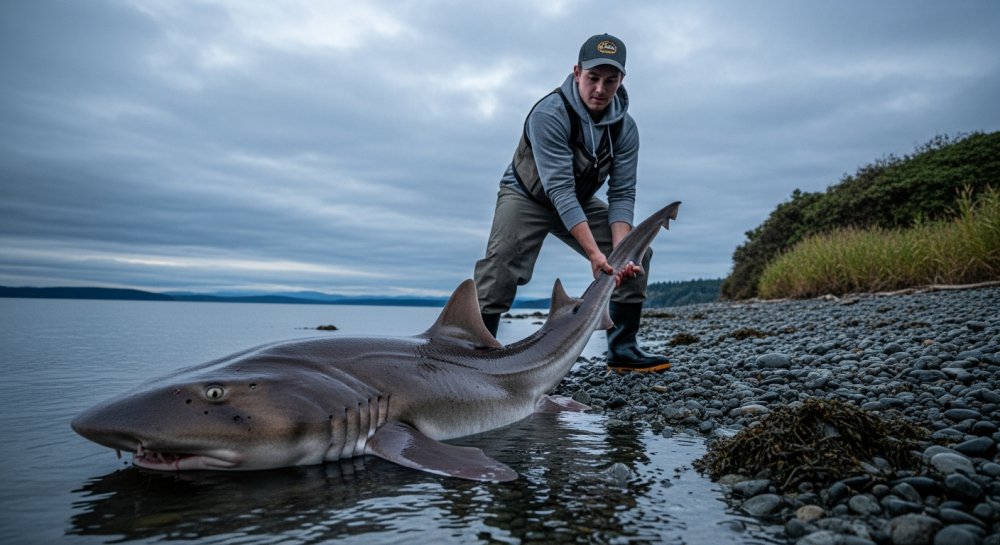
- Both bluntnose sixgill and broadnose sevengill sharks are protected species, with Puget Sound serving as a critical nursery habitat where catching them can kill unborn pups
An Oregon man is facing serious wildlife charges after a months-long investigation revealed he was allegedly targeting and wrestling protected shark species in Washington waters. The case highlights growing concerns about social media-driven wildlife violations.
The Washington Department of Fish and Wildlife released body camera footage from June showing officers confronting Connor Seifert, 27, in Pierce County. The footage captured the conclusion of an extensive surveillance operation.
“You know your shark rules,” the officer told Seifert in the video. “You can’t fully or partially remove sixgill from the water.”
“When you wrestle a sixgill to shore like that, you hop on its back, you expose its gills to the air,” the officer continued. “You know as well as anybody else does that Puget Sound is a nursery for these sharks. There has been a direct correlation between catching these sharks in this stage in their lives and the mortality of the pups inside the moms.”
“Once they exhaust themselves being fought to shore, then all of their babies die. And then, sooner than you know it, you’re not going to have sixgill and sevengill returning to Puget Sound anymore.”
Wildlife officers spent months tracking Seifert’s movements and monitoring his social media posts before setting up surveillance to catch him in the act. The extensive investigation demonstrates the seriousness with which Washington authorities treat violations of wildlife protection laws.
Seifert has been charged with nine counts of unlawful recreational fishing in the second degree and one count of making a false or misleading statement to a public servant. The fishing violations are misdemeanors carrying potential penalties of up to $1,000 in fines and 90 days in jail. The false statement charge is a gross misdemeanor with maximum penalties of $5,000 in fines and one year in jail.
“Fishing for sixgill and sevengill sharks is unlawful, and unfortunately, officers are seeing a growing number of online posts showing these sharks targeted and then unlawfully removed from or partially removed from the water,” the department said in a statement about the charges.
Despite Seifert’s claims that he accidentally caught the sharks rather than targeting them, his own social media posts contradicted this defense. Videos allegedly showed him holding a shark’s mouth open while sitting on its back, holding it by its tail on the shore, and wrestling with the animals as they attempted to escape back to the water.
The Department of Fish and Wildlife received 14 separate complaints about Seifert, the majority related to his alleged targeting of the protected sharks.
Puget Sound serves as critical nursery habitat for both bluntnose sixgill and broadnose sevengill sharks before they migrate to the open ocean. This biological reality forms the foundation of the strict protections.
“This is one of the primary reasons why it is unlawful to target these sharks locally, as the anglers fishing for these creatures are targeting them during a highly volatile era in the animals’ lives,” the department explained.
Both shark species carry official designations recognizing their conservation status. Washington State lists them as “Species of Greatest Conservation Need.” The International Union for Conservation of Nature categorizes bluntnose sixgills as “near threatened” and broadnose sevengills as “vulnerable.”
The case underscores a troubling trend of individuals violating wildlife protection laws for social media content, putting vulnerable species at risk for online attention.
Let us know what you think, please share your thoughts in the comments below.
