Science & Tech
Air-Powered Clothing Could Help Seniors Stay Independent at Home

Clear Facts
- South Korean and Stanford researchers have developed self-dressing clothes with soft, air-powered robots built into the fabric that help guide garments into place
- The system can dress someone in a full suit in approximately 10 seconds, with individual garments taking between 13-21 seconds to position
- The technology targets older adults and those with limited mobility who struggle with daily dressing tasks that often determine whether they can live independently
Most Americans get dressed every day without a second thought. But for millions of older adults dealing with arthritis, shoulder problems, or balance issues, this simple morning routine becomes a painful challenge that threatens their independence.
Now researchers from South Korea’s KAIST and Stanford University have created an innovative solution: clothing that dresses itself. The self-wearing garments use soft, air-powered robots built directly into the fabric to help guide the clothing into place while the wearer moves naturally.
Getting dressed ranks among the basic activities that determine whether someone can live independently in their own home. When mobility or dexterity declines, Americans may need a spouse, family member, or professional caregiver to help with this deeply personal routine. The researchers designed their system specifically to restore that lost autonomy.
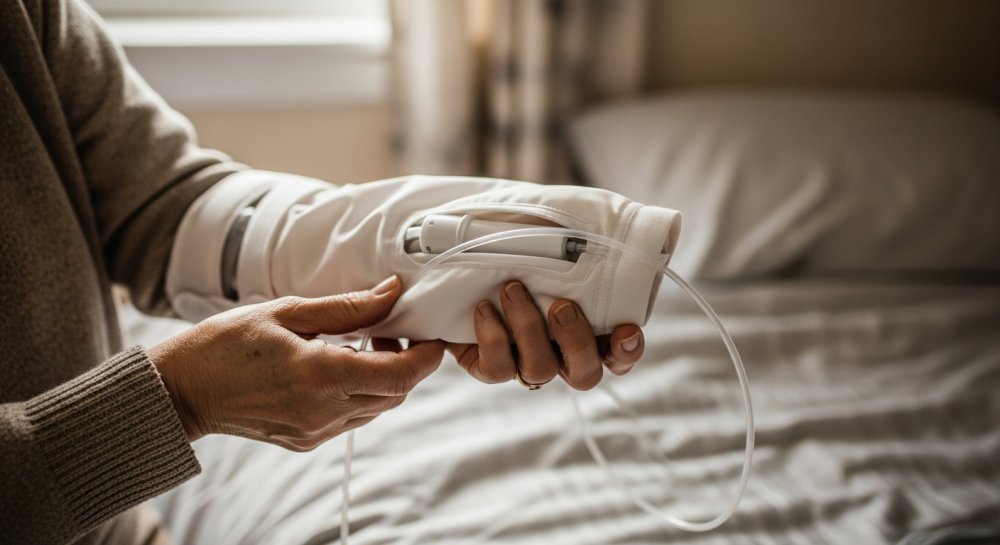
The system works by using flexible robotic tubes woven into the clothing. Air pressure causes these soft structures to unfold and advance along the body, turning the garment inside out as it moves into position. This approach follows the person’s natural shape while reducing uncomfortable friction between fabric and skin.
The idea began when KAIST researcher Nam Gyun Kim was riding his bike in the rain. He wondered how helpful it would be if a raincoat could put itself on while he kept moving. That simple question led to a much bigger innovation: clothing that helps dress the person wearing it.
“Instead of making your body do all the pulling, reaching and twisting, what if the clothing could move into place on its own?” Kim asked.
The researchers call their invention SWAG, which stands for Self-Wearing Adaptive Garment. Kim says putting on a full suit takes about 10 seconds. Individual demonstrations showed a jacket moving into place in approximately 13 seconds, pants in about 21 seconds, and a sleeve prototype in roughly 14 seconds.
The team has successfully tested sleeves, jackets, and pants. Their results demonstrated that garments could unfold along the body while maintaining contact forces within safety limits. Importantly, the system relies on its physical design rather than complicated computer programs, which could eventually simplify the technology needed.
Traditional dressing robots use rigid mechanical arms that must carefully handle loose fabric while avoiding uncomfortable contact with the person. They also typically require someone to hold a fixed pose during the process. That setup feels awkward inside a bedroom or bathroom.
The KAIST and Stanford design takes a different approach by placing the robotic mechanism inside the garment itself. Because the system uses soft materials, it bends around the body naturally rather than approaching with hard mechanical structures. This design reduces physical strain and provides safer contact.
Older adults and Americans with disabilities represent the primary use case for this technology. KAIST also sees possibilities for rehabilitation patients who need temporary assistance after injury or medical procedures. Industrial workplaces may adopt the innovation sooner, particularly for semiconductor employees who frequently don protective cleanroom clothing or emergency workers who need to suit up quickly.
The published study discusses possible medical applications, such as helping healthcare workers apply protective coverings or compression bandages efficiently. However, the current system remains a research prototype connected to a pneumatic base station. Researchers have not announced a consumer price or release date.
Several practical questions remain unanswered. The garments would need to fit different body shapes and movement patterns reliably. Designers must also address washing, storage, and portable air power requirements. The research team says future versions may use adjustable materials to fit a wider range of bodies and automated loading processes.
Most importantly, clinical trials involving people with actual mobility impairments will be essential. Those tests will show whether the clothing feels comfortable and works reliably outside the laboratory environment. Researchers also need to develop how the garment comes off, since current work focuses mainly on the dressing process.
This research offers a preview of where assistive technology may be heading for American families. For older adults determined to maintain their independence, the biggest benefit could be control over a private daily routine. Clothing that handles part of the pulling and positioning could make mornings less exhausting and preserve dignity.
It could also delay the point when someone needs another person present simply to get dressed each day. That possibility depends on successful testing, affordability, and a design people feel comfortable wearing in their own homes.
The need behind self-dressing clothes is straightforward. Arthritis, limited mobility, or recovery from surgery makes getting dressed frustrating and exhausting for millions of Americans. For older adults who want to age in place, a garment that helps guide itself into position could mean more privacy, less reliance on caregivers, and more confidence starting each day.
The KAIST and Stanford system still faces significant development challenges. Researchers need to make it portable, test it with people who have real mobility limitations, and prove it works safely in home environments. Even so, the innovation demonstrates how technology can support American independence through something as familiar as the clothes we wear.
Let us know what you think, please share your thoughts in the comments below.
