Politics
Blue State Residents Face Energy Crisis of Their Own Making

Clear Facts
- California, New York, New Jersey, and Hawaii residents pay significantly higher energy costs than most Americans due to state policies
- These states have implemented restrictive regulations that limit energy production and increase consumer costs
- Energy policy decisions at the state level directly impact household budgets and economic competitiveness
Americans living in deep-blue states are experiencing the painful reality of their own electoral choices. Rising energy costs across California, New York, New Jersey, and Hawaii aren’t the result of corporate greed or federal policy failures — they’re the direct consequence of state-level decisions made by the very politicians these voters continue to elect.
The numbers tell a stark story. While residents in energy-producing states enjoy some of the nation’s lowest utility rates and gas prices, those in heavily regulated blue states face bills that can run double or even triple the national average. This isn’t coincidental — it’s by design.
State governments in these regions have systematically blocked energy development, banned fracking, shut down pipelines, and mandated expensive renewable energy transitions without adequate infrastructure. Each policy decision, marketed as environmental progress, has added costs that everyday families must bear. The working-class voters who can least afford these increases are the ones hit hardest.
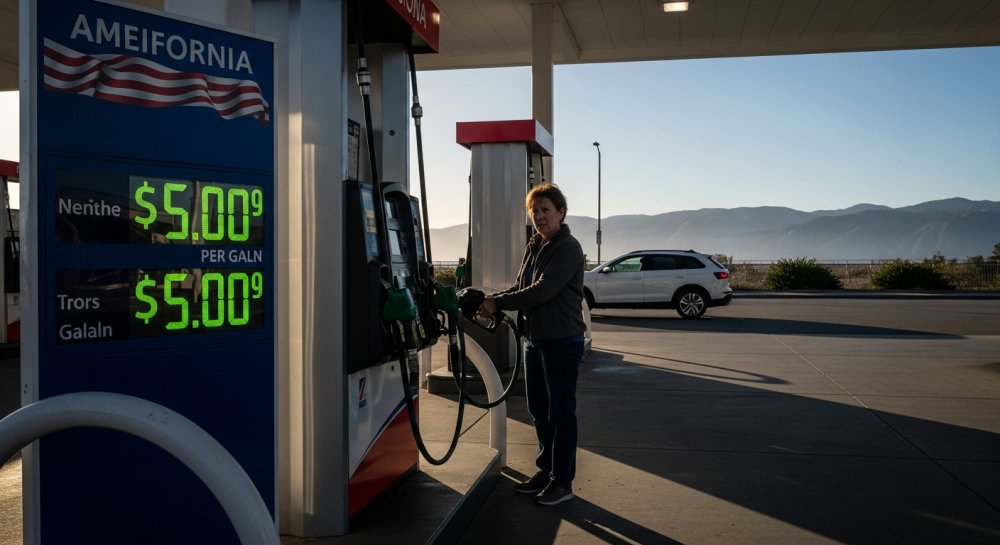
California leads the nation in gas prices, regularly exceeding $5 per gallon while Texas residents fill up for under $3. The Golden State’s refinery regulations, carbon taxes, and fuel blending requirements create an isolated market where competition is stifled and prices soar. State leaders celebrate their climate leadership while residents struggle to afford their commutes.
New York has taken a similar path, blocking natural gas pipelines while simultaneously banning new gas hookups in buildings. The state sits atop the gas-rich Marcellus Shale formation yet imports energy from neighboring states at premium prices. Governor Kathy Hochul’s administration continues to pursue policies that restrict supply while demand remains constant — basic economics predicts the outcome.
Hawaii’s energy challenges are compounded by geography, but state policy choices have made a difficult situation worse. Despite abundant geothermal and solar potential, regulatory hurdles and utility monopolies have kept prices among the nation’s highest. Residents pay the price for bureaucratic inertia masquerading as environmental stewardship.
The pattern repeats itself: voters elect politicians who promise green energy utopias, those politicians implement policies that restrict traditional energy production, and consumers face the inevitable price increases. When residents complain about costs, those same politicians blame oil companies, out-of-state producers, or federal policy — anything except their own regulatory regimes.
Conservative states offer a contrasting model. Texas, Louisiana, Oklahoma, and other energy-producing regions maintain lower costs through lighter regulation, diverse energy portfolios, and recognition that affordable energy is essential to economic prosperity. Their residents enjoy the benefits of practical policy that balances environmental concerns with economic reality.
The solution for blue-state residents frustrated by high energy costs is straightforward: demand accountability from state leaders or elect representatives who prioritize affordability alongside environmental goals. Federal policy changes can help at the margins, but the core problem is local.
Energy independence and affordability aren’t partisan issues — or at least they shouldn’t be. Every American benefits from reliable, cost-effective energy. The states that recognize this reality enjoy economic advantages that extend far beyond utility bills. Lower energy costs attract businesses, support manufacturing, and leave families with more disposable income for other needs.
For voters in high-cost states, the mirror offers an uncomfortable truth. The policies causing financial pain were implemented by politicians they elected, often repeatedly. Campaign promises about clean energy and climate leadership sounded appealing, but the real-world costs were predictable and are now unavoidable.
The energy crisis in blue states isn’t a mystery requiring investigation. It’s a case study in how well-intentioned but economically illiterate policies produce predictable results. Until voters in these states demand different priorities from their leaders, they’ll continue paying premium prices for basic necessities.
The choice belongs to the voters. They can continue supporting politicians who prioritize symbolic environmental gestures over practical energy policy, or they can demand leaders who understand that affordable energy is the foundation of prosperity. The high prices they’re paying today are the cost of the former approach.
Let us know what you think, please share your thoughts in the comments below.
