Politics
California Law Forces Businesses to Dig Up Slavery Ties From 1849

Clear Facts
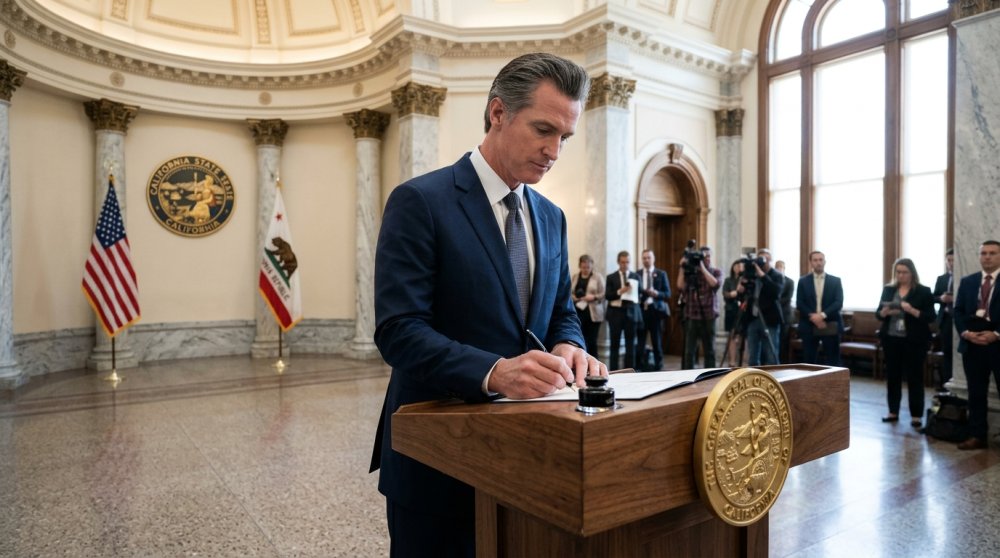
- Gov. Gavin Newsom signed AB 2599 on September 30, requiring companies earning over $100 million annually that existed before 1965 to search records dating back to 1849 for any ties to slavery.
- The law mandates public disclosure of insurance policies, loans, or collateral involving enslaved people, with first filings due by January 15, 2029.
- California’s latest test scores show only 33.7% of Black students meet English standards and 21.5% meet math standards.
California has enacted a new law that compels large corporations to search their records for any historical connection to slavery.
The measure applies to businesses operating in the state that earn more than $100 million worldwide and existed before the end of 1964.
“This is a bill that requires large companies that operated before 1965 to search their records for ties to slavery going back to 1849 and then we make it public,” Gov. Gavin Newsom said.
“These are insurance policies on enslaved people. Human beings used as collateral, quite literally as collateral for loans.”
The law creates a permanent online database of corporate confessions made under oath.
Activists behind the measure have already signaled that disclosure is only the first step.
“Once the public has this disclosure and we have a full accounting of the impact, then it’s up to us to decide what that means and what we’re going to do about it,” said Democratic Assemblymember Isaac Bryan.
California’s education system continues to fail Black students at alarming rates.
State test results released October 15 show just one in three Black students meeting English standards.
Only one in five met math standards.
Instead of addressing these failures, state lawmakers have chosen to focus on corporate records from 1849.
“A single check is not going to holistically repair our communities,” said Kristin Nimmers of the California Black Power Network.
“A harm-based approach, so whoever was harmed should be entitled to that repair.”
The law places corporations in an impossible position where fighting disclosure risks public condemnation.
Companies will likely issue statements of regret and fund programs to purchase their own innocence.
This creates a cycle where past grievances are used to justify present demands.
Meanwhile, the children who need strong schools are told that records from 1849 are what hold them back today.
Let us know what you think, please share your thoughts in the comments below.
