Politics
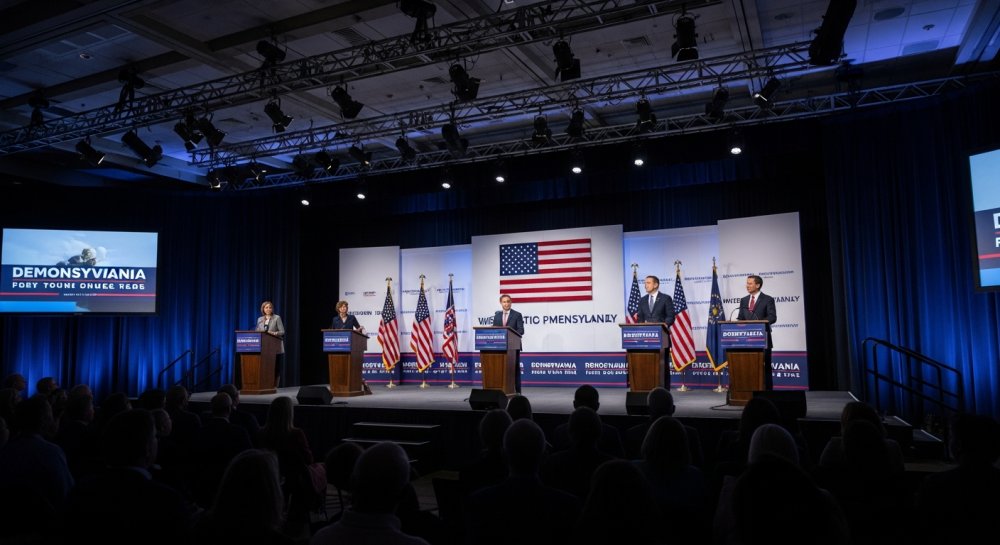
Establishment Democrats Rush to Defend Pennsylvania Senate Primary Against Progressive Threat

Clear Facts
- Pennsylvania’s Democratic Senate primary has become a battleground between establishment and progressive wings of the party in a critical 2026 swing state race.
- Establishment Democrats are mobilizing resources to counter a progressive challenge that threatens their preferred candidate’s path to the general election.
- The primary contest reflects deeper tensions within the Democratic Party over ideology and strategy heading into the midterm elections.
Pennsylvania’s high-stakes Democratic Senate primary has forced establishment party leaders into defensive mode as progressive challengers threaten to upend their carefully laid plans for the crucial swing state.
The primary battle showcases the ongoing ideological rift within the Democratic Party, with traditional moderates facing pressure from their left flank in a state that could determine Senate control. Party insiders are now scrambling to protect their preferred candidate against a progressive insurgency that has gained unexpected momentum.
A campaign speech that's got everyone scratching their head.
Democratic Senate candidate Haley Stevens is facing a wave of online mockery after an "awkward" campaign pep talk urging supporters to "stick it to them" went viral, with critics zeroing in on her delivery and style. pic.twitter.com/0JyBJXNNlP
— Fox News (@FoxNews) July 15, 2026
HALEY STEVENS: “I gotta let it rip!” pic.twitter.com/HG2h4wTwaE
— Daily Caller (@DailyCaller) July 17, 2026
I want to address a comment of mine from two years ago that was reported today in the Huffington Post and has raised some concern. My words are being taken out of context and weaponized by my political opponents, and I want to set the record straight.
In 2024 I hosted a podcast…
— William Lawrence (@WeWill2026) July 11, 2026
Democrats face a critical choice between nominating an establishment-backed candidate with broader appeal or a progressive favorite who energizes the party’s activist base. The outcome will signal which faction holds sway in one of America’s most competitive political battlegrounds.
One Democratic strategist described the progressive challenge as reflecting grassroots frustration with party leadership.
“A little bit of stick it to ’em,” the strategist said, characterizing the progressive movement’s attitude toward establishment Democrats.
The primary contest arrives as Republicans eye Pennsylvania as a prime pickup opportunity in their efforts to expand their Senate majority. A divisive Democratic primary could complicate the party’s general election prospects in a state where margins are razor-thin and independent voters often decide outcomes.
Pennsylvania has emerged as one of the nation’s premier swing states, with recent statewide elections decided by narrow margins. The state’s political landscape features deeply divided urban-rural dynamics, making candidate selection crucial for Democrats hoping to build a winning coalition.
Establishment Democrats are pouring resources into the race, concerned that a progressive nominee could alienate moderate and independent voters necessary for victory in November. The party’s national apparatus has signaled clear preferences, despite official neutrality in primary contests.
The progressive challenge has forced establishment candidates to address policy positions popular with the Democratic base while maintaining appeal to centrist voters. This balancing act reflects the party’s broader struggle to maintain unity while accommodating divergent ideological factions.
Republican strategists are watching the Democratic primary closely, preparing to weaponize intraparty divisions regardless of which candidate emerges victorious. The extended primary battle provides opposition researchers with months of material for fall campaign advertisements.
Pennsylvania’s Senate race will likely prove pivotal in determining the chamber’s balance of power after 2026. Both parties recognize that victory here could provide the margin needed for majority control, elevating the stakes of the primary contest.
The establishment’s defensive posture demonstrates how progressive activists have successfully shifted the Democratic Party’s center of gravity leftward on numerous issues. What once represented fringe positions within the party now command significant support among primary voters.
As primary day approaches, establishment Democrats face the challenge of mobilizing traditional party supporters while countering progressive enthusiasm. The outcome will reveal which Democratic coalition proves stronger in Pennsylvania—and potentially signal the party’s direction nationally.
Let us know what you think, please share your thoughts in the comments below.
