U.S. News
Texans Send Strong Message on Surveillance Technology

Clear Facts
- A new poll reveals a majority of Texans oppose the installation of Flock Safety surveillance cameras in their communities
- Liberal voters show stronger opposition to the technology than conservative voters
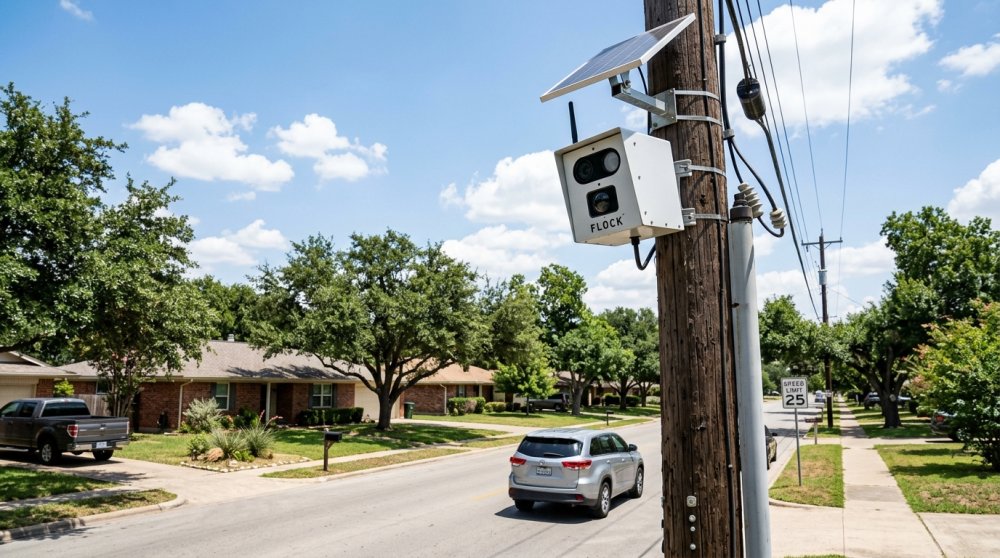
- The cameras use automated license plate recognition to track vehicle movements across neighborhoods
Texas residents are pushing back against the rapid expansion of surveillance technology in their communities, according to exclusive polling data that reveals widespread concern about privacy and government overreach. The survey focused specifically on Flock Safety cameras, automated license plate readers that have been deployed in hundreds of cities nationwide.
The polling shows a clear majority of Texans expressing opposition to these surveillance systems, which continuously photograph and track vehicles as they move through neighborhoods and cities. The technology creates a massive database of vehicle locations and movements, raising concerns about constitutional protections and the potential for abuse.
🎥WATCH: @reaganreese_ asked President Trump about his stance on Flock cameras.
"It's being studied right now… We'll have an answer sort of as to our views on it over the next couple of weeks." pic.twitter.com/8sGmzBdjPe
— Daily Caller (@DailyCaller) August 17, 2026
In an unexpected finding, the data reveals that liberal voters oppose the cameras at higher rates than their conservative counterparts. This cross-ideological concern suggests that surveillance technology has become a rare issue that transcends traditional political divides, uniting Texans around fundamental privacy rights.
Flock Safety cameras have been marketed to municipalities as crime-fighting tools, with the company claiming the technology helps law enforcement solve cases more efficiently. However, civil liberties advocates have raised alarms about the lack of oversight, the potential for mission creep, and the creation of what they describe as a warrantless surveillance infrastructure.
The cameras capture images of every vehicle that passes, recording license plates, vehicle characteristics, and location data. This information is stored in databases accessible to law enforcement agencies, often without requiring a warrant or probable cause. Critics argue this represents a fundamental shift in the relationship between citizens and government surveillance.
Texas has long prided itself on protecting individual liberty and limiting government intrusion into private lives. The polling suggests that many Texans view these surveillance systems as inconsistent with those values, regardless of their marketed public safety benefits.
Law enforcement agencies that have adopted the technology argue it provides valuable investigative leads and helps recover stolen vehicles. Supporters point to cases where the cameras have helped identify suspects or locate missing persons. However, opponents counter that these benefits come at too high a cost to constitutional freedoms.
The debate over Flock cameras reflects broader national tensions about the balance between security and liberty in an age of rapidly advancing surveillance technology. As more communities consider deploying these systems, the Texas polling data suggests significant public resistance may complicate expansion efforts.
Privacy advocates have called for strict regulations governing the use of automated surveillance technology, including provisions for data retention limits, access restrictions, and transparency requirements. Some municipalities have responded by imposing guidelines, while others have installed the cameras with minimal public input or oversight.
The finding that liberals oppose the technology more strongly than conservatives challenges assumptions about partisan attitudes toward law enforcement tools. It suggests that concerns about civil liberties and government surveillance can override typical ideological patterns when citizens perceive direct threats to their personal privacy.
As surveillance technology becomes more sophisticated and pervasive, the Texas data indicates that Americans across the political spectrum may be reaching a breaking point. The question now is whether elected officials will respond to constituent concerns or continue expanding surveillance infrastructure despite public opposition.
Let us know what you think, please share your thoughts in the comments below.
