U.S. News
Five Years Later: Afghan Allies Still Waiting on America’s Promise

Clear Facts
- Nearly 70,000 Afghans were evacuated to the U.S. after the 2021 withdrawal, most on temporary humanitarian parole rather than permanent visas
- Average wait time for Special Immigrant Visa processing now exceeds 1,000 days, with zero principal applicants issued SIVs in 2026
- The Afghan Adjustment Act, which would create a pathway to permanent legal status, has failed to pass despite bipartisan support since 2022
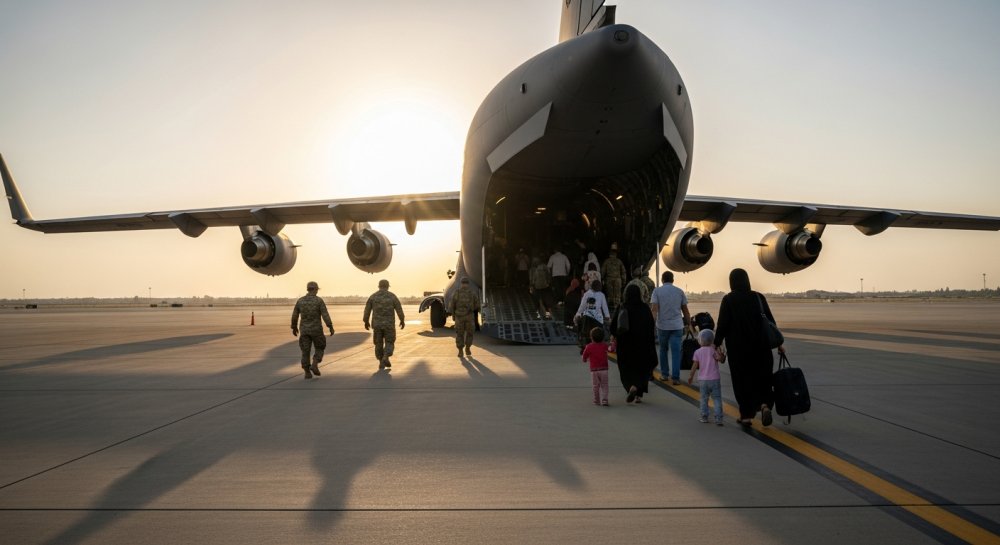
When the United States withdrew from Afghanistan in 2021, the chaotic scenes at Kabul airport revealed the human cost of two decades of American involvement. Among those desperate to escape Taliban rule were thousands of Afghans who had worked directly with U.S. forces as translators, drivers, and support staff. Their service made them targets, and America made them promises.
Nearly five years later, those promises remain unfulfilled. The men and women who risked their lives supporting American troops are stuck in bureaucratic limbo, their futures uncertain despite assurances from the U.S. government.
The immediate response to the crisis united Americans across political lines. Conservative evangelical leader Franklin Graham organized widespread support for Afghan evacuees. Churches opened their doors, and donations poured in to organizations like World Relief. Veterans’ groups, understanding the debt owed to those who served alongside our troops, mobilized to bring mission partners home through Operation Allies Welcome.
Polling at the time showed majority support among evangelicals for welcoming Afghan refugees. The support was rooted in both faith principles and American values of keeping our word.
But good intentions met bureaucratic reality. The urgent nature of the evacuation meant most of the roughly 70,000 Afghans brought to America arrived on humanitarian parole—a temporary status that allows work authorization but offers no path to permanence. Some later received Temporary Protected Status, which, as its name indicates, is also not a lasting solution.
The Special Immigrant Visa program, designed specifically for Afghans who assisted the U.S. government, has become a case study in dysfunction. Average processing times now exceed 1,000 days. In 2026, not a single principal SIV applicant has been issued a visa.
The Afghan Adjustment Act was introduced in 2022 to fix this problem by creating a pathway to green cards and citizenship for evacuees with no realistic prospect of returning home safely. The legislation has bipartisan endorsements and backing from numerous evangelical Christian organizations. Despite this diverse coalition, the bill has failed to advance, leaving tens of thousands in legal uncertainty.
The situation has deteriorated further under the current administration. In July 2025, Temporary Protected Status was terminated for nearly 12,000 Afghans, despite objections from evangelical leaders. The U.S. Refugee Admissions Program has been effectively closed except for a small favored group. For Afghan allies still waiting in Afghanistan or refugee camps in neighboring countries, pathways to safety have been shut down.
A new legislative proposal, the Afghanistan TPS Act of 2026, has been introduced in both the House and Senate to restore temporary protection and buy time for a permanent solution. This represents an urgent stopgap measure for evacuees facing removal.
For the churches and faith communities that stepped forward in 2021, the moral imperative remains clear. Scripture commands believers to welcome the stranger and love their neighbor. For veterans who served alongside these Afghan allies, the obligation is equally plain—America gave its word.
The practical consequences of breaking that word extend beyond morality. Future allies watching how America treats those who helped us will think twice before cooperating with U.S. forces. That calculation puts American service members at greater risk in future conflicts.
Five years ago, Americans showed what we were capable of when we united around a common cause. Churches mobilized, veterans advocated, and communities welcomed strangers fleeing persecution. That work is unfinished.
Congress must act on the Afghanistan TPS Act and the Enduring Welcome Act. The refugee resettlement program must reopen to all eligible mission partners. These are not radical proposals—they are the fulfillment of commitments already made.
The choice facing America is straightforward. Either we honor our commitments to those who stood with us in harm’s way, or we prove ourselves untrustworthy. Either we complete the mission of protecting our Afghan allies, or we abandon them to an uncertain fate.
This is not just about immigration policy. It is about American credibility, the value of our word, and whether we will keep faith with those who kept faith with us. The need has been clear since Kabul fell. The political will existed through early 2025. We cannot allow that momentum to dissipate.
Our Afghan neighbors risked everything to support American troops and the American mission. They deserve more than temporary status and bureaucratic delays. They deserve the permanent welcome that was promised—and that America has the power to deliver.
Let us know what you think, please share your thoughts in the comments below.
