U.S. News
Republican Candidates Break with Trump on Data Centers as Voter Backlash Intensifies

Clear Facts
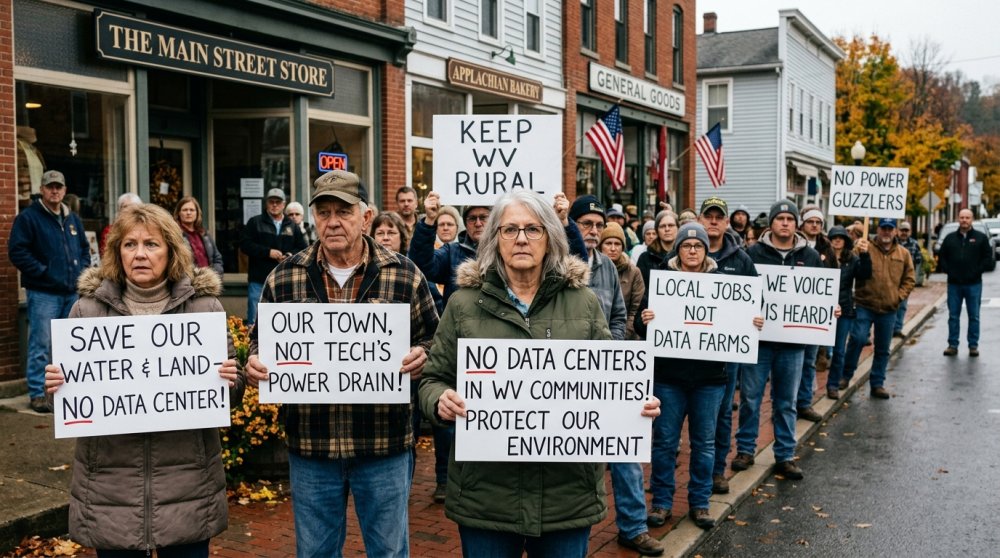
- 70% of voters oppose new data center construction in their communities, with only 40% of Republicans and 46% of MAGA Republicans in support, according to recent polling
- Multiple GOP candidates in key 2026 races are proposing moratoriums or strict regulations on data center development, reversing previous party support
- President Trump continues to champion data centers as essential for winning the AI race with China, while acknowledging Republicans’ right to disagree
A significant divide is emerging within the Republican Party as candidates in critical 2026 races distance themselves from President Donald Trump’s aggressive push for data center expansion. The rift comes as new polling reveals overwhelming public opposition to the facilities powering America’s artificial intelligence infrastructure.
President Trump took to social media Monday with a clear message for skeptical communities. He argued that if they “want to be successful and rich, with far lower taxes and jobs all over the place, let Data Reign.”
But the numbers tell a different story about public sentiment. A recent poll showed 70% of voters want to halt data center construction in their areas, with only 30% in favor. Even among Republicans, support stands at just 40%, while MAGA Republicans register 46% approval.
Rising electricity costs, energy consumption, and water usage concerns are fueling the backlash. GOP strategists now warn that data centers have become politically toxic, forcing candidates to recalibrate their positions mid-campaign.
Former Rep. Mike Rogers, the Republican Senate nominee in battleground Michigan, exemplifies this shift. After previously welcoming data center expansion, Rogers now calls for a one-year moratorium.
“I think we need to take a pause, probably, and make sure that we’re answering all the questions that people have on them,” Rogers said two weeks ago.
He later outlined his position more forcefully, arguing that “Michigan needs stronger guardrails to protect community control, prevent utility price hikes, protect our water, and stop pay-to-play schemes.”
The political pressure extends far beyond Michigan. In Ohio’s crucial Senate race, the National Republican Senatorial Committee issued a stark warning about appointed GOP Sen. Jon Husted’s vulnerability on the issue. Democrats have spent millions on ads labeling Husted “the face of data centers in Ohio.”
“More than any other thing in this race, data centers are the anchor hanging around Husted’s neck,” the NRSC memo emphasized.
Husted has responded by introducing Senate legislation to prevent average Americans from bearing data center energy costs. But whether that’s enough to neutralize the issue remains uncertain.
In Texas, Attorney General and U.S. Senate nominee Ken Paxton unveiled a four-point plan last month to curb rapid data center growth and address public concerns over resource strain. Gov. Greg Abbott, seeking a fourth term, halted new data center connections to the state’s power grid pending a comprehensive regulatory audit.
Ohio Republican gubernatorial nominee Vivek Ramaswamy has pledged a first-day executive order halting approval of all new data center projects until proposed safeguards are enacted. In Wisconsin, Rep. Tom Tiffany, the GOP nominee for governor, has made data centers a centerpiece of his campaign, branding his Democratic opponent as “Data Center David Crowley.”
Pennsylvania Treasurer and Republican gubernatorial nominee Stacy Garrity has called for a temporary pause on new and uncontracted major data center developments in her battleground state. The pattern is clear: Republicans facing voters are responding to constituent concerns.
Not all GOP candidates are backing moratoriums, however. Rep. Byron Donalds, the Republican gubernatorial nominee in Florida who opposes bans, introduced legislation requiring large AI data centers to generate their own power and water rather than draw from public utilities. Donalds’ primary campaign received significant backing from the AI industry.
President Trump remains unwavering in his support for data center development, recently calling Gov. Abbott’s decision to pump the brakes a “mistake.” The president frames the issue in stark national security terms.
“If we kill the Golden Goose, you will only have yourselves to blame,” Trump said Monday.
The president warned that “China could not be happier with this anti Data Center movement,” positioning the debate as central to winning the AI race with America’s chief geopolitical rival. Trump has made data center development a cornerstone of his strategy to maintain U.S. technological supremacy.
Yet Trump appears to be giving Republican candidates some latitude on the contentious issue.
“If a Republican’s against a data center, that’s OK with me,” Trump said.
Veteran Republican strategist Matt Gorman sees wisdom in the president’s approach.
“Trump is smartly taking the long view of this,” Gorman told reporters.
He added that “Republicans on the ballot this year are being responsive to the very real concerns people have,” while noting that “these companies and their champions have to do more to make the case.”
The AI industry is now scrambling to respond to the political backlash. Build American AI, an industry-aligned group backed by top AI leaders, launched a multi-million-dollar public engagement campaign this week aimed at building support for “clear, strong, and commonsense policies governing the development of the data centers and energy infrastructure.”
The group emphasized that policies “should protect residential ratepayers, safeguard the environment and water resources, require developers to pay their fair share, and preserve the right of every community to decide whether it wants to welcome data center investment.”
“We can protect ratepayers, safeguard our natural resources, respect the right of communities to decide whether they want to welcome this investment, and still build the infrastructure America needs to lead the world in artificial intelligence,” Build American AI stated.
The tension between national strategic interests and local community concerns presents a genuine policy challenge for Republicans. Trump’s focus on maintaining American technological leadership against China represents a critical long-term priority. But candidates facing voters in 2026 must address immediate constituent concerns about utility costs, environmental impact, and community autonomy.
The outcome of this debate will likely shape not only the 2026 elections but also America’s approach to AI infrastructure development for years to come. Whether Republicans can find common ground between Trump’s strategic vision and voters’ local concerns remains to be seen.
Let us know what you think, please share your thoughts in the comments below.
