Politics
Americans Resist Data Center Invasion as China Connection Emerges

Clear Facts
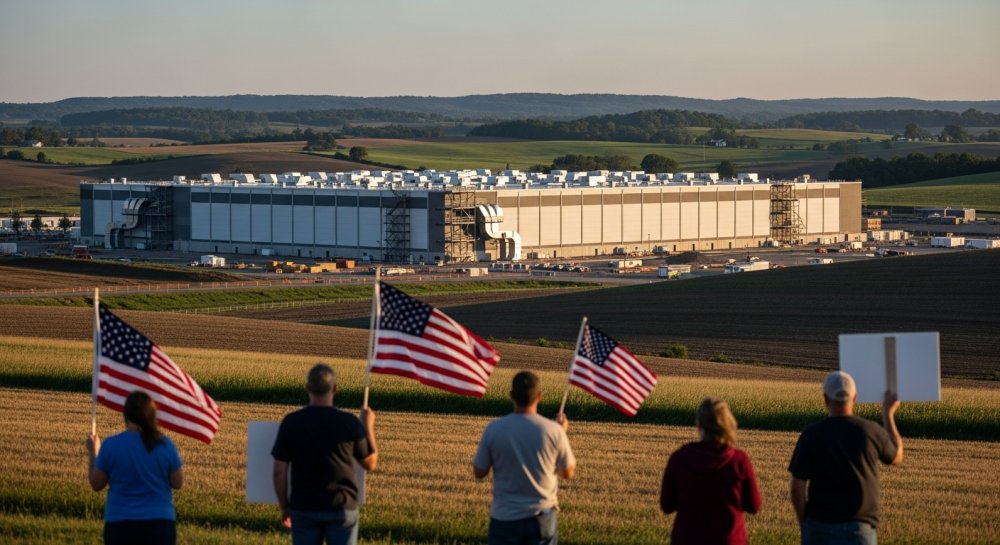
- Rural communities across America are blocking massive data center projects, citing concerns over Chinese Communist Party involvement and national security risks
- Major investment firms with ties to China are funding multi-billion dollar data center expansions in strategic U.S. locations
- Congressional investigators have identified potential foreign intelligence threats in the rapid data center infrastructure build-out
A growing resistance movement against data center construction is sweeping through American communities, and lawmakers now believe they understand why. The concerns go far beyond local property values and power consumption—they point directly to Beijing.
Congressional investigators and prominent investors are raising alarms about Chinese Communist Party influence in America’s data infrastructure boom. The massive facilities, which require enormous amounts of electricity and often locate in rural areas, are being built at an unprecedented pace with funding sources that merit closer scrutiny.
Who would want us to stop building our electrical grid? Who would wanna stop us from having compute capacity to develop AI? Which adversary would want that? There’s only one. It’s China. We noticed an immediate spike in misinformation on two platforms, Instagram and X, formerly… pic.twitter.com/2vpNRP0zQ3
— Kevin O’Leary aka Mr. Wonderful (@kevinolearytv) May 11, 2026
“This is the CCP,” one congressional source told investigators, referring to the pattern of investment and strategic placement of these facilities across the United States.
The data centers in question aren’t just any tech facilities. They represent critical infrastructure that could process sensitive American data, making their ownership and control a matter of national security. Communities that initially welcomed the economic development are now questioning whether they’re inadvertently opening the door to foreign surveillance capabilities.
Investment firms with documented ties to Chinese state-owned enterprises have poured billions into American data center projects. These facilities often locate near military installations or in areas with access to critical communications infrastructure—a pattern that national security experts find deeply troubling.
Local opposition has intensified as residents learn more about the foreign connections behind these projects. What began as concerns about power grid strain and environmental impact has evolved into a broader awakening about America’s vulnerability to foreign influence in critical infrastructure.
The timing of this data center expansion coincides with increasing tensions between the United States and China over technology, trade, and national security. American communities are effectively serving as the front lines in a new kind of strategic competition—one fought through infrastructure investment rather than traditional military means.
Congressional oversight committees are now investigating the extent of foreign investment in American data infrastructure. The findings could lead to new restrictions on who can build and operate these critical facilities on U.S. soil. Traditional American values of protecting sovereignty and maintaining control over strategic assets are driving this reassessment.
The revolt against data centers represents a broader awakening among ordinary Americans about the dangers of allowing foreign adversaries to gain footholds in critical infrastructure. Rural communities, often dismissed as unsophisticated, are proving to be the first line of defense in protecting American interests.
This situation underscores the need for greater scrutiny of all foreign investment in American infrastructure, particularly when that investment originates from nations with hostile intentions toward the United States. The Chinese Communist Party’s strategy of gaining influence through economic means rather than military force requires Americans to remain vigilant at every level.
Let us know what you think, please share your thoughts in the comments below.
