U.S. News
Supreme Court Blocks Trump IEEPA Tariffs Path

Clear Facts
- The Supreme Court ruled 6-3 that President Trump cannot impose tariffs under the International Emergency Economic Powers Act (IEEPA), but tariffs under other statutes remain active.
- The administration is now facing questions about how to handle refunds of billions collected under IEEPA tariffs, as companies pursue reimbursement.
- Justice Brett Kavanaugh, joined by Justices Thomas and Alito, dissented, warning that the ruling could cause serious financial and trade implications for the U.S.
President Trump is taking alternative steps to maintain tariffs after the Supreme Court limited his authority under IEEPA. The Court’s decision left open the status of existing collected revenues and the timeline for potential refunds.
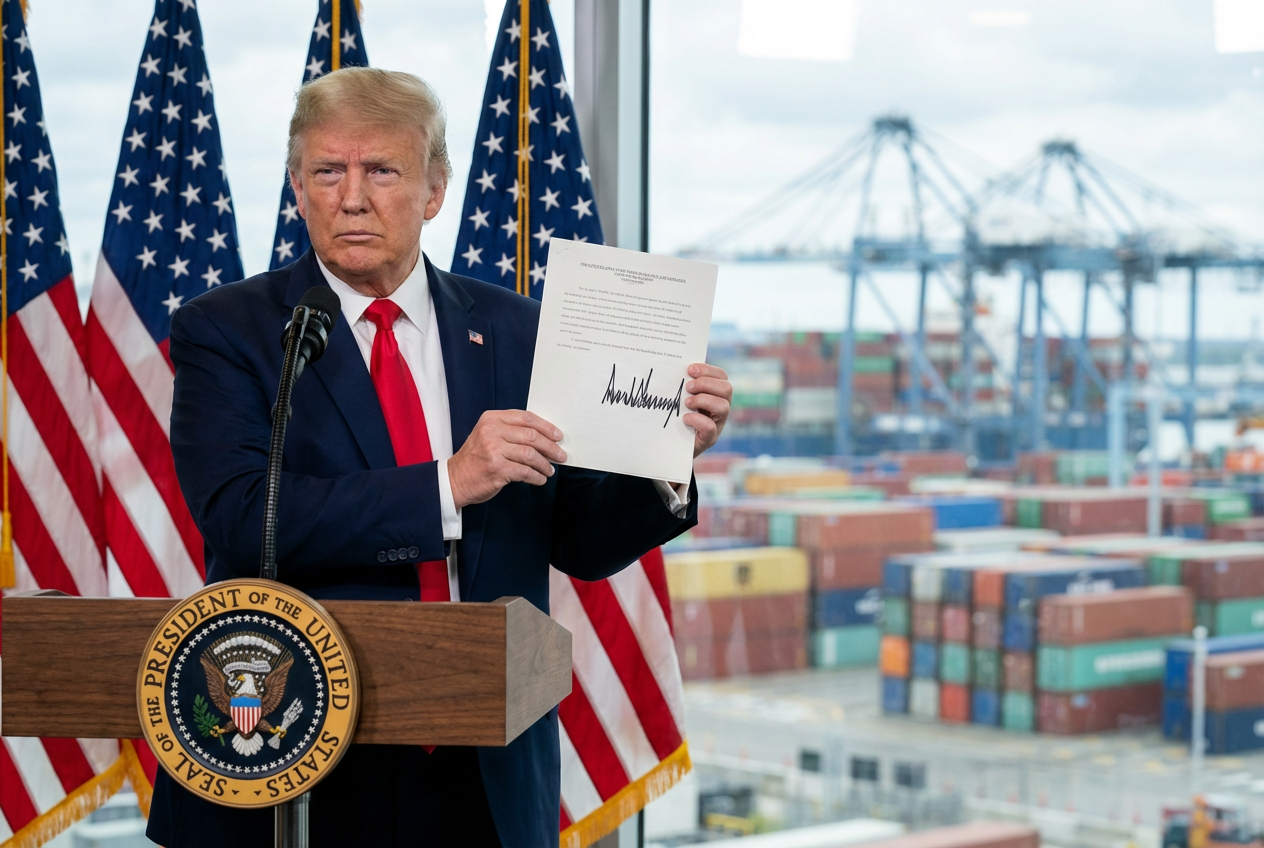
“Effective immediately, all national security tariffs under Section 232 and existing Section 301 tariffs — they’re existing, they’re there — remain fully in place and in full force and effect,” Trump said.
He explained, “Today, I will sign an order to impose a 10% global tariff under Section 122, over and above our normal tariffs already being charged.”
President Trump later raised this tariff to 15%.
He expressed disappointment with the Court’s judgment. “I am ashamed of certain Members of the Court for not having the Courage to do what is right for our Country,” he posted on Truth Social, describing the ruling as “deeply disappointing” and suggesting the Court was influenced by foreign interests.
President Trump questioned the lack of direction regarding the billions collected from tariffs.
“Wouldn’t you think they would’ve put one sentence in there saying keep the money or don’t keep the money?” he asked. “I guess it has to get litigated for the next two years.”
The Penn Wharton Budget Model estimates up to $175 billion could be refunded. As of December, the federal government had collected more than $133 billion through these tariffs.
Justice Brett Kavanaugh issued a dissent highlighting the fiscal consequences. “Refunds of billions of dollars would have significant consequences for the U.S. Treasury,” Kavanaugh wrote.
“The Court says nothing today about whether, and if so how, the Government should go about returning the billions of dollars that it has collected from importers.”
Kavanaugh cautioned that the Court’s ruling might create uncertainty for trade agreements, as IEEPA tariffs played a role in high-stakes negotiations with countries such as China and the United Kingdom. Justices Clarence Thomas and Samuel Alito joined Kavanaugh’s dissent.
Some businesses, including Costco, filed actions in the Court of International Trade to preserve their right to potential refunds.
Treasury Secretary Scott Bessent said in January that any refunds would be a lengthy process and not immediate.
“It won’t be a problem if we have to do it, but I can tell you that if it happens — which I don’t think it’s going to — it’s just a corporate boondoggle,” Bessent said. “Costco, who’s suing the U.S. government, are they going to give the money back to their clients?”
Bessent also argued that losing the tariffs would hurt U.S. leverage in global trade negotiations, especially in fighting the fentanyl crisis.
“It’s an emergency authority, and what was an emergency if it wasn’t the fentanyl crisis? We are seeing Canada, Mexico, [and] China come to the table to stop this scourge of the American people,” Bessent said in an interview.
Wilbur Ross, former Secretary of Commerce, stated the administration would likely resist the idea of refunds, and that further court battles loom.
The majority opinion, delivered by Chief Justice John Roberts, stated that Congress did not specifically grant the president power to impose tariffs under IEEPA.
Trump argued after the decision that the ruling clarified and strengthened the president’s authority under trade law, since other regulations — like blocking or restricting trade — remain in place through IEEPA.
Kavanaugh acknowledged the president can use other statutory avenues for tariffs, but that these require extra procedural steps that IEEPA bypassed as an emergency measure.
Chief Justice Roberts explained, in a footnote, that other statutes regulating tariffs have clear limitations and agency requirements, unlike IEEPA.
“We do not speculate on hypothetical cases not before us,” Roberts clarified.
Earlier in February, President Trump cited the fentanyl crisis as justification for tariffs on Canada, China, and Mexico under IEEPA.
Let us know what you think, please share your thoughts in the comments below.

Lizzy Holzer
February 24, 2026 at 9:50 am
2026!! Start getting paid every month Thousands Dollars online.
TEB ON my name and read more
JJ
February 24, 2026 at 3:03 pm
Scam alert!