U.S. News
Congress Targets Universities With Foreign Ties in New Crackdown

Clear Facts
- Bipartisan lawmakers are introducing legislation to ban federal funding to universities with branch campuses in adversarial nations or accepting research funding from hostile countries
- The bills target countries including China, North Korea, Qatar, Venezuela, Iran, Russia, and Turkey for sensitive research fields like AI, biotech, and quantum computing
- Rep. Elise Stefanik leads the effort alongside Sen. Rick Scott and Rep. Josh Gottheimer, building on previous successful actions against Confucius Institutes
A bipartisan coalition in Congress is taking decisive action against foreign influence infiltrating American higher education. The legislative package aims to cut off federal funding to colleges maintaining financial relationships with nations hostile to U.S. interests.
The proposed measures would prohibit federal funding to universities operating branch campuses in adversarial countries or accepting research grants from these nations in critical fields. These sensitive areas include artificial intelligence, biotechnology, and quantum computing — disciplines vital to America’s national security and economic competitiveness.
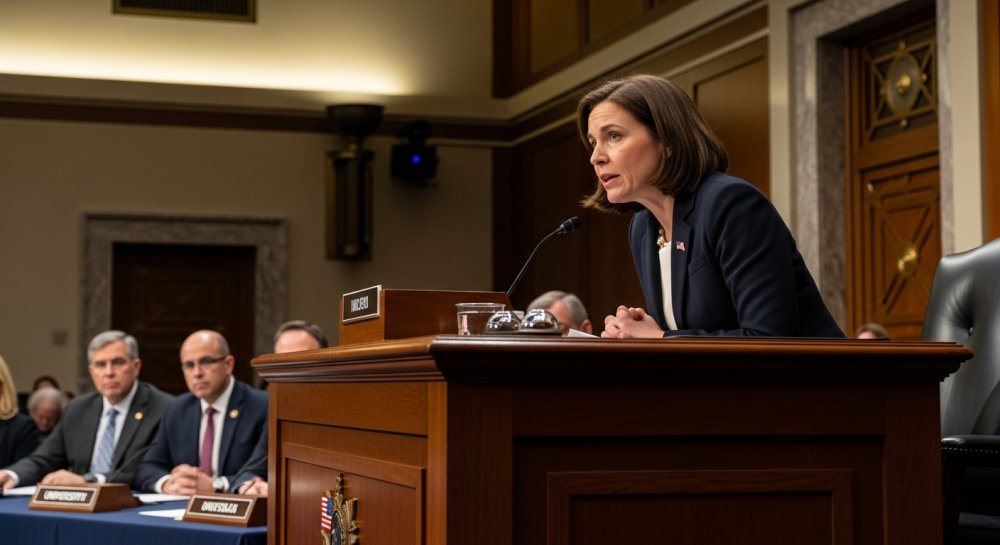
Rep. Elise Stefanik, R-N.Y., has emerged as a leading voice in protecting American education from foreign manipulation. She previously gained national attention for her congressional hearing on campus antisemitism, which resulted in the resignation of multiple university presidents.
“I introduced the No Branch Campuses in Hostile Countries Act with Senator Rick Scott, and this is part of the broader higher education reform effort that I have been leading on in the Congress,” Stefanik said in an exclusive interview.
“One of the challenges that I’ve seen is the influence of foreign adversaries sowing discord on our higher education campuses. And part of this has been coming from the foreign dollars flowing in, but also the existence of branches in these foreign adversarial countries.”
The problem extends beyond isolated cases. Major universities in New York, Chicago, Washington, and other cities maintain branch campuses in China, creating potential vulnerabilities for American research and student safety.
Building on previous success, Stefanik noted that Confucius Institutes and classrooms were recently banned through the national defense bill. That effort enjoyed bipartisan support, as does her current legislative push.
The Defending American Research Act represents the second prong of this education security initiative. It would bar any higher education institution from receiving federal research funding for five years if it accepts money from designated foreign countries including Qatar, Venezuela, Turkey, and North Korea.
Stefanik’s recent book, “Poisoned Ivies,” examines the dangerous elements pervading modern campus life, from foreign interference to antisemitism.
“[Ours] was the most viewed hearing in the history of Congress. It led to multiple university presidents’ resignations, but importantly, it set off an earthquake in higher education reform. There have been seismic shifts in higher-ed, both in the marketplace, as you’re seeing parents and students voting with their wallets and feet, as it’s shifted,” Stefanik said.
She added that many American students are now choosing southern schools where liberal coastal influence carries less weight.
Sen. Rick Scott, R-Fla., and Rep. Josh Gottheimer, D-N.J., are partnering with Stefanik on this initiative. Scott delivered a blunt assessment of the current situation.
“Countries like Communist China and terror-supporting Qatar should not be able to use America’s colleges and universities as outposts to spy on us, steal sensitive research, and spread anti-American propaganda, but we’ve been letting them do it for years,” Scott said.
“This legislation is critical to America’s national security and the future of our higher education system — neither of which should be for sale.”
While nations like North Korea, Cuba, and China appear as expected entries on the adversarial list, Qatar’s inclusion may surprise some observers. Despite its cooperation on certain national security matters — including evacuations from Afghanistan and intelligence on Iran — Qatar has drawn scrutiny for its financial influence on American universities.
Stefanik’s research uncovered billions of dollars flowing from Doha to U.S. institutions, money she believes has propped up antisemitic interests and what she calls “pro-terror professors” at universities including those in New York.
“I think that’s one of the major ways we need to push back on this foreign influence that’s really shifting away from the founding missions of these higher education institutions,” she said.
The complete list of targeted nations includes the Bolivarian Republic of Venezuela, Islamic Republic of Iran, and the Russian Federation, in addition to those previously mentioned.
The bill sponsors hope their legislation will force American universities to make a choice: sever ties with adversarial governments or forfeit federal funding. It’s a straightforward equation designed to protect American students, research, and national interests.
Let us know what you think, please share your thoughts in the comments below.
