Science & Tech
Scientists Deploy Living Cockroaches as Underwater Rescue Technology

Clear Facts
- Researchers from NTU Singapore and Waseda University developed a flexible diving suit enabling cyborg cockroaches to survive underwater for up to three hours
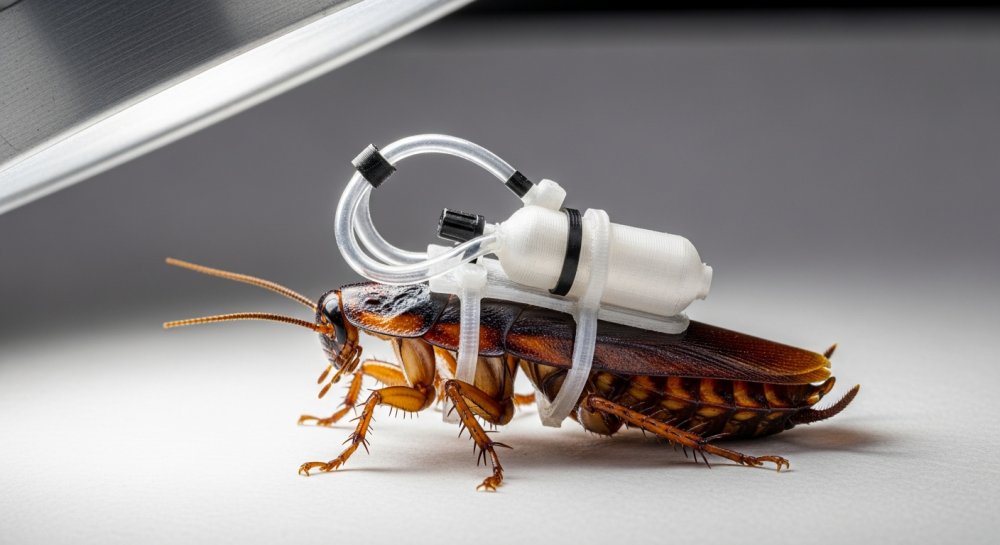
- The suit includes a 3D-printed oxygen-generation tank using manganese dioxide and hydrogen peroxide to provide breathable air through silicone tubes
- Testing showed equipped cockroaches successfully navigated flooded tunnels and 2-centimeter gaps where traditional robots cannot operate
- The technology targets disaster scenarios including floods, earthquakes, and infrastructure failures where conventional rescue equipment faces limitations
American researchers are pushing the boundaries of rescue technology by transforming Madagascar hissing cockroaches into amphibious search tools capable of operating in disaster zones too dangerous or inaccessible for traditional equipment. The development represents a practical approach to longstanding challenges in emergency response.
Scientists from NTU Singapore and Waseda University published their findings in Nature Communications, detailing how they equipped cyborg cockroaches with miniature diving suits. These suits enable the insects to survive and function underwater for up to three hours while navigating spaces blocked to conventional rescue robots.
The technology addresses a fundamental problem in disaster response. When earthquakes strike or floods sweep through communities, rescue teams face collapsed structures, standing water, blocked drainage systems, and gaps too narrow for standard equipment. Current robotic solutions require substantial battery power and often cannot navigate the tight, waterlogged spaces where survivors may be trapped.
A cyborg cockroach uses its own muscle system for movement, requiring minimal external power compared to motor-driven robots. However, cockroaches breathe through small openings called spiracles and cannot extract oxygen from water. The new diving suit solves this biological limitation through innovative engineering.
The suit features a 3D-printed oxygen-generation tank, a flexible waterproof shell, and four silicone oxygen tubes. Inside the tank, researchers placed a sponge treated with manganese dioxide, then added diluted hydrogen peroxide. This chemical reaction slowly releases oxygen, which travels through tubes attached directly to the cockroach’s breathing openings.
Testing demonstrated clear results. Cyborg cockroaches wearing the suit remained active underwater for three hours. Without the suit, control specimens suffocated within approximately two minutes. The equipped insects successfully navigated plastic tunnels simulating rescue conditions, including sections filled with carbon dioxide followed by water.
The team selected Madagascar hissing cockroaches for their research because these insects are large, sturdy, and wingless, making them suitable for carrying electronic guidance systems. With implanted electronics rather than bulky external equipment, the cyborg cockroaches moved through 2-centimeter-high underwater crevices where many small robots would become stuck.
The practical applications center on scenarios where conventional technology falls short. After heavy rainfall, earthquakes, or infrastructure failures, these cyborg insects could inspect flooded pipes, drainage systems, tunnels, or damaged buildings. Future iterations may carry sensors or cameras to provide real-time information to rescue coordinators.
Researchers acknowledge significant work remains before this technology reaches operational deployment. They are focused on testing the system in more realistic disaster environments, improving suit durability, and integrating navigation tools and sensors for field applications.
The development reflects broader innovation in rescue technology, where solutions increasingly combine biological systems with electronic guidance. Rather than building every component from scratch, this approach leverages the cockroach’s natural movement capabilities while adding the technological elements needed for expanded functionality.
Critics may question the use of living insects in rescue operations, but the technology’s supporters point to its potential advantages in time-critical situations. When minutes determine whether trapped individuals survive, having additional tools that can access previously unreachable spaces could prove decisive.
The research team continues refining the system with an eye toward eventual field testing. If successful, this unconventional approach could give emergency responders new options when traditional methods encounter physical barriers. The technology demonstrates how American innovation tackles complex problems through creative engineering rather than simply scaling up existing solutions.
Future development will likely focus on integrating communication systems and environmental sensors, transforming these equipped insects from simple exploratory tools into comprehensive reconnaissance assets. Such capabilities could accelerate search operations and improve information available to rescue teams making critical decisions about resource deployment.
Let us know what you think, please share your thoughts in the comments below.
