Politics
Supreme Court Must Protect Reporter Sources in Herridge National Security Case

Clear Facts
- Catherine Herridge faces renewed $800 daily fines unless the Supreme Court reverses lower court orders compelling her to reveal confidential sources in a 2017 national security report.
- The case stems from a Privacy Act lawsuit filed by Yanping Chen, an alleged former PLA colonel whose University of Management and Technology lost federal contracts after the Fox News investigation exposed her military background.
- Herridge’s legal team argues the D.C. Circuit’s permissive standard for forcing source disclosure threatens investigative journalism and national security reporting.
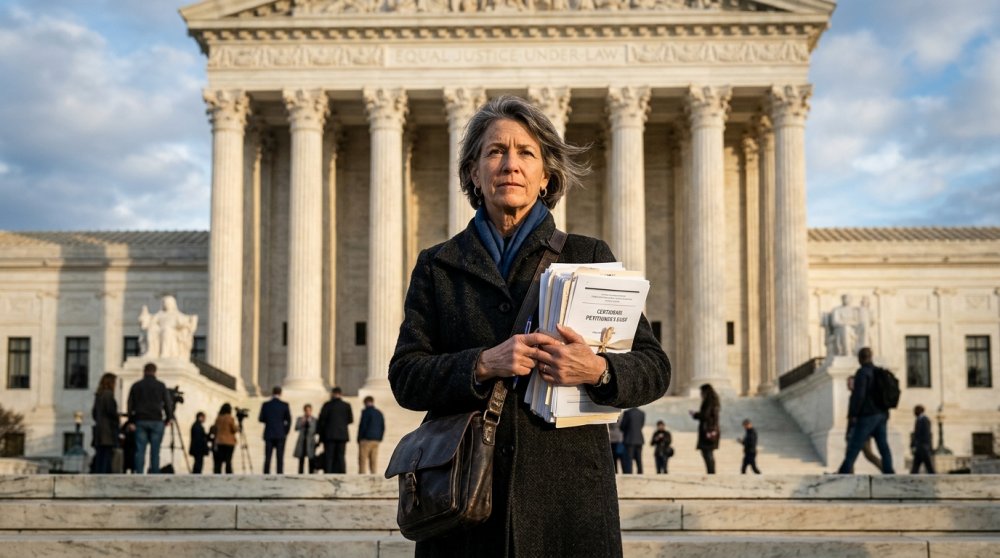
Former Fox News investigative reporter Catherine Herridge has been ordered to pay $800 each day until she reveals her confidential sources from a 2017 national security story. The fines come from her children’s college savings.
An alleged former colonel in the Chinese People’s Liberation Army is seeking to increase those fines to $5,000 per day. A court temporarily rescinded the penalties, but they return unless the Supreme Court intervenes.
“She is now back on a final appeal, hoping four justices will let her present her case. They should grant this petition and address the morass left by the ill-considered 1972 precedent in Branzburg v. Hayes.”
Yanping Chen ran the University of Management and Technology, which served U.S. service members. Federal investigators found the school posed national security risks due to Chen’s Chinese military background.
The Department of Justice declined to prosecute Chen, yet terminated government contracts with UMT after Herridge’s report exposed the connections. Herridge documented Chen in PLA uniform and showed evidence that student military data was accessible from China.
Chen chose not to sue for defamation. Instead, she filed under the Privacy Act, claiming government sources violated her privacy by speaking to Herridge. Her lawyers subpoenaed the reporter for source identities.
“Chen needed only to show that (1) the source is central to her case and (2) she has exhausted other avenues of discovery. That test could have allowed Nixon officials to force Watergate reporters Bob Woodward and Carl Bernstein to disclose the identity of Deep Throat as a Privacy Act violation.”
Federal courts in Washington, D.C., have applied weaker protections for journalists compared to other circuits. Judge Christopher Cooper, an Obama appointee, ordered Herridge to identify her sources in 2023.
Herridge refused and was held in contempt. The D.C. Circuit upheld the ruling. Justice Brett Kavanaugh indicated he would have granted relief when the Supreme Court declined to intervene earlier.
“Herridge is not asking for immunity. She is seeking to establish a fair standard, so a court can balance interests in cases such as hers.”
The case presents an opportunity for the Supreme Court to clarify the unclear standard from Branzburg v. Hayes. The current approach leaves reporters vulnerable to tactics that bypass traditional press protections.
Chen’s lawsuit repurposes the Privacy Act to target national security reporting. An alleged former PLA colonel whom the Defense Department deemed a security threat could use privacy claims to expose sources protecting American military information.
Let us know what you think, please share your thoughts in the comments below.
