Health
Why Alcohol Culture Is Good for America

Clear Facts
- America’s declining social drinking culture coincides with rising social isolation and mental health issues among younger generations
- Historical evidence shows productive societies maintained robust drinking traditions without widespread dysfunction
- Modern abstinence trends correlate with decreased social bonding and community engagement
America’s relationship with alcohol has undergone a dramatic transformation in recent decades, and the consequences may be more significant than previously understood. While public health campaigns have successfully reduced excessive drinking, they may have also eliminated an important social institution that historically bound communities together.
The data reveals a troubling paradox. As alcohol consumption has declined, particularly among younger Americans, rates of depression, anxiety, and social isolation have skyrocketed. The shift toward sobriety hasn’t produced the promised mental health benefits.
Throughout American history, social drinking served as more than mere recreation. Taverns functioned as informal town halls where business deals were negotiated, political alliances formed, and community bonds strengthened. The founding fathers conducted much of their revolutionary planning in such establishments, recognizing that shared drinks facilitated honest conversation and trust-building.
Modern society’s sterile approach to socializing—coffee shops, dry networking events, and virtual gatherings—lacks the same connective power. Alcohol lowers inhibitions in ways that can be socially productive, allowing people to speak more candidly and form authentic relationships. The current generation’s preference for controlled, sober interactions has coincided with unprecedented levels of loneliness.
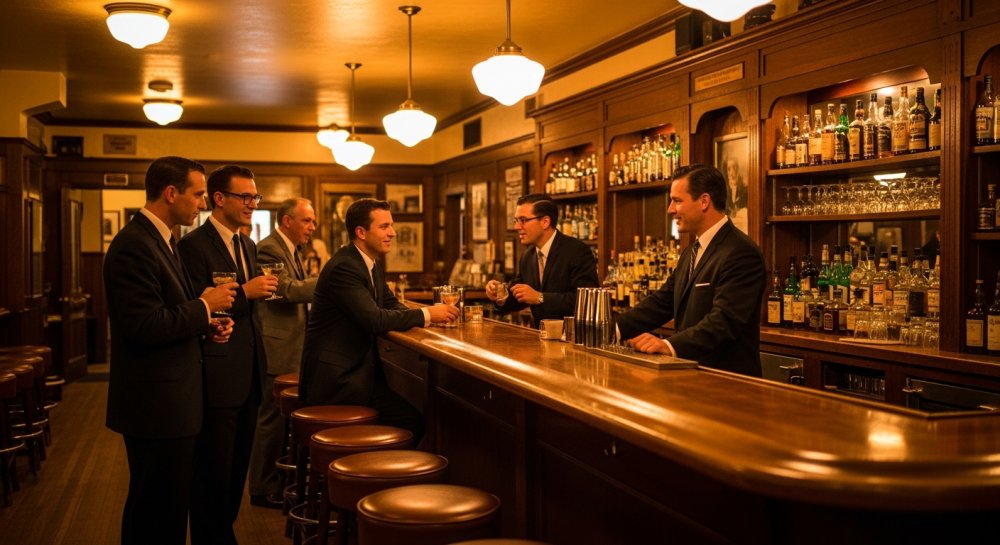
This isn’t an endorsement of alcoholism or reckless drinking. Rather, it’s recognition that moderate alcohol consumption within social contexts historically served important cultural functions. The “functioning alcoholic” of previous generations—the businessman who had three martinis at lunch yet still closed deals, the politician who worked the bar while building coalitions—represented a different approach to balancing work and social life.
Today’s culture treats any regular drinking as problematic, pathologizing behaviors that were once considered normal social lubrication. This shift reflects broader trends toward risk aversion and the medicalization of everyday life. Every behavior becomes either a disorder requiring treatment or a wellness practice requiring optimization.
The reality is that human civilization developed alongside fermented beverages for thousands of years. Wine, beer, and spirits weren’t historical accidents—they served social, religious, and community purposes across virtually every successful culture. The ancient Greeks conducted philosophical symposia while drinking. Medieval monasteries perfected brewing techniques. American frontiersmen shared whiskey to seal bonds of trust.
Contemporary research, when examined honestly, shows that moderate drinkers often demonstrate better social outcomes than complete abstainers. They maintain larger social networks, report higher life satisfaction, and even live longer in many studies. The key word is “moderate”—but modern discourse struggles with nuance.
The pendulum has swung too far toward prohibition-minded thinking. Young professionals now apologize for having a glass of wine with dinner. College students face increasingly strict regulations that push drinking into dangerous, unsupervised contexts rather than teaching responsible consumption. The result is a generation less capable of handling alcohol in social situations when they do encounter it.
What America needs isn’t more problem drinking—it’s a return to understanding alcohol as a social tool rather than a vice or a drug. The three-martini lunch may be gone, but the principle behind it—that business and pleasure, work and relationship-building, can coexist—deserves reconsideration.
European cultures maintain healthier relationships with alcohol precisely because they integrate it into normal social life rather than treating it as either forbidden or medicalized. Children grow up seeing responsible consumption modeled by adults. Drinking occurs with food, in social contexts, as part of daily life rather than as weekend binge behavior.
The American experiment with soft prohibition through cultural shaming and regulatory pressure has failed to produce healthier, happier citizens. Instead, it has contributed to social atomization and the breakdown of informal community structures that once held society together. Perhaps it’s time to acknowledge that some old ways served purposes we didn’t fully appreciate until they were gone.
Let us know what you think, please share your thoughts in the comments below.
